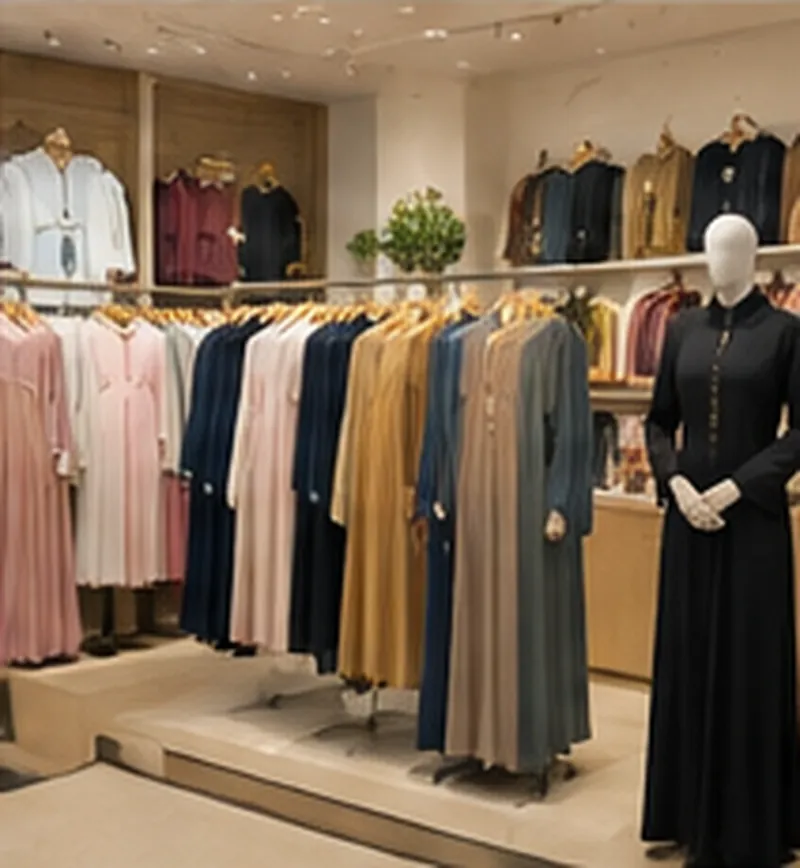
Muslim clothing in the USA: no single look
Muslim clothing in the United States is best understood as a conversation between many traditions. American Muslims trace their roots to Arab countries, Pakistan, India, Bangladesh, Somalia, Nigeria, Bosnia, Turkey, Iran, Indonesia and beyond, and a large share are African Americans whose families have practised Islam for generations. Each group has its own preferred cut, colour and fabric, and all of this Muslim clothing is sold under the same sky.
In practice, this means a Friday prayer crowd might include a Somali woman in a flowing dirac, a Pakistani father in a crisp kurta, a college student in jeans, a long cardigan and a printed hijab, and a Senegalese family in embroidered boubous. Nobody seems out of place because the country itself is accustomed to variety.
Scholars have different views on how much covering is required and how it should look. Most American Muslims follow the teaching of their local imam or the tradition they grew up in, and choose clothes accordingly.
Regional habits add further texture. In big coastal cities, long black abayas share sidewalks with colourful wax-print wrappers, while in smaller Midwestern towns the local mosque may be the main place where women exchange tips about tailors, fabric stores and trusted online sellers. Younger designers of Islamic clothing, many of them women who began sewing at home, now sell to a national audience.
Everyday halal clothing from coast to coast
Everyday American wardrobes lean toward casual, and halal clothing adapts to that. Long maxi dresses and skirts, wide-leg trousers, tunics worn over jeans and layered cardigans are common among women, together with jersey hijabs in solid colours. Men wear regular trousers and shirts, sometimes with a kufi or a skullcap, and switch to thobes or kurtas for Friday prayers and holidays.
Abayas and jilbabs, the classic Islamic clothing for mosque visits, are popular for mosque and community events, while open abayas in lightweight fabrics work as duster-style outer layers over regular outfits. Teenagers often favour hoodies and long sweatshirts as an easy form of modest dress, and sports brands now offer long-sleeved tops that fit the need.
- Maxi dresses, long skirts and layered tunics for daily wear.
- Open abayas and kimonos as light outer layers.
- Kurtas, thobes and kufis for prayer and celebrations.
- African prints and boubous for community events.
Workplaces shape the choices as well. A woman in an office might wear a tailored blazer over a long skirt, a nurse may choose a scrub hijab that can be washed at high temperature, and a teacher may favour soft knit scarves in school colours. Practical modest clothing needs to move with the person, so stretch fabrics and secure but comfortable scarf fastenings matter.
Modest clothing for four-season weather
The United States covers desert heat, humid southern summers, mild coasts and harsh northern winters, so modest clothing and halal clothing have to cope with very different conditions. In Arizona or Texas a loose cotton abaya, linen trousers and a light scarf are far kinder than polyester, while in Minnesota or upstate New York a hijab sits beneath a hat, and a down coat covers a long dress.
Many women layer thermal leggings under skirts in winter and use wool or fleece-lined scarves. Hand-knit scarves wrapped as a hijab are practical and familiar. Waterproof boots and long parkas are indispensable in snowy regions.
In summer, sun protection is a good reason for long sleeves, and light, loose fabrics keep the heat bearable. Swimmers often use full-coverage swimwear at beaches and pools, and these are sold widely online.
Where Americans buy Islamic clothing
Islamic clothing is sold in several ways. Neighbourhood shops in cities with sizeable communities, such as the Detroit area around Dearborn, parts of New York, Chicago, Houston and Los Angeles, sell abayas, hijabs, prayer outfits and thobes. Many are family businesses that also carry gifts and books.
Bazaars at mosques and large community conventions, as well as pop-up sales before Eid, let small designers and home sellers reach customers directly. Online stores dominate for convenience, and independent makers on marketplaces often take custom orders. Mainstream department stores and mall chains offer modest clothing in the form of long skirts and loose pieces that fit many women's needs.
Because the country is large, shipping times and costs vary. Look for sellers that state processing times, show the fabric clearly and offer exchanges.
Fabric stores and South Asian bridal shops are also useful, since many families still commission shalwar suits, jilbabs and wedding dresses from local tailors who can adjust sleeves, necklines and lengths to personal preference.
Religious dress and the law at work and school
The First Amendment of the Constitution protects the free exercise of religion against government interference, and Title VII of the Civil Rights Act of 1964 requires most employers to reasonably accommodate an employee's religious practice, including dress, unless doing so would cause undue hardship. In EEOC v. Abercrombie & Fitch Stores, decided in 2015, the Supreme Court ruled in favour of an applicant who wore a headscarf and was not hired.
The US Equal Employment Opportunity Commission handles complaints of workplace discrimination, and the rules differ for small employers. Public school students generally can wear religious clothing, though uniform policies and safety rules may be applied in specific cases, so it is wise to talk to the school first.
This is a general outline and not legal advice. Anyone facing a dispute should contact a legal aid organisation or an attorney.
Consumer protection when shopping for halal clothing
Retail law for halal clothing in the United States is split between federal agencies and the states. The Federal Trade Commission enforces rules on deceptive advertising and requires clothing to carry fibre-content and care labels, so check these before buying. Terms like halal on a dress are marketing language, not an official certification.
There is no general federal right to return a purchase, so return and exchange policies are set by each store. Read them before buying, particularly for custom or sale items, and keep receipts. Sales tax and shipping charges differ by state. Credit card issuers often provide dispute procedures for goods that never arrive.
State attorneys general and consumer protection offices accept complaints about unfair business practices.
Holiday seasons influence sales too. Before Ramadan many shops promote prayer sets, comfortable house dresses and gifts, and early planning prevents disappointment when sizes sell out.
Eid, weddings, travel and community life
American Muslims dress up for Eid prayers, often in rented halls or stadium-sized convention spaces, where new outfits and family photographs are part of the day. Families coordinate colours, and children wear miniature thobes or shalwar suits. Weddings may mix a nikah ceremony in modest gowns with a reception in Pakistani, Arab or Somali formal wear.
Travelling by air, women who wear headscarves may be asked to undergo additional screening of the head covering, and wearing a simple, easily removed scarf makes this less awkward. Neutral layers help on long flights.
Campus life has produced its own style of Muslim clothing: university Muslim students' associations often organise modest fashion shows and swap sales, and local designers use social media to reach a wider audience. The result is a fashion culture that is distinctly American and still deeply rooted in faith.
Frequently asked questions
Is religious dress protected in American workplaces?
Title VII of the Civil Rights Act generally requires employers to accommodate religious dress unless it causes undue hardship. The Supreme Court's 2015 Abercrombie decision supports this. Individual cases vary, so consult an attorney or legal aid group.
Where do Americans buy abayas and hijabs?
In neighbourhood shops in cities with large Muslim communities, at mosque bazaars and conventions, through independent makers online and in mainstream stores that stock long, loose garments. Always compare return policies.
Can I return Islamic clothing bought in the US?
No federal law gives a general right of return, so it depends on the store's policy. Read the terms for sale and custom items, keep your receipt and ask before ordering from small online sellers.
What should I wear in a northern winter?
Layer thermal leggings, a long wool or fleece dress and a down coat that reaches below the knee, with a warm scarf or hat over the hijab. Waterproof boots keep long hems clean in snow.