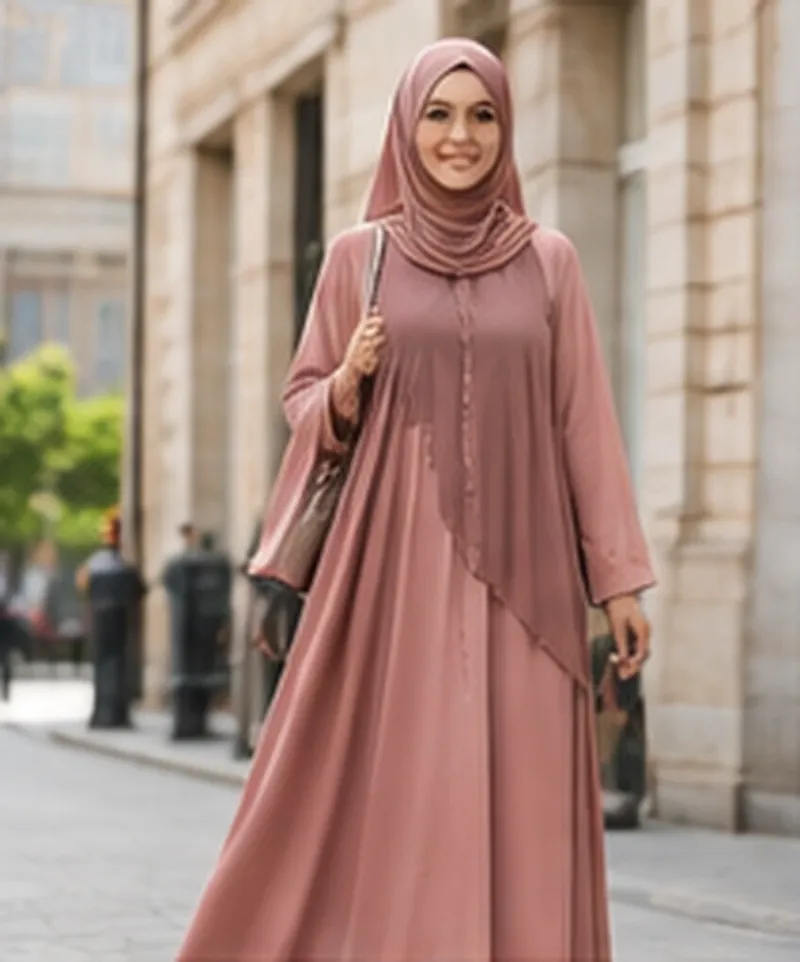
Mourning clothing in Islam: no fixed uniform
Mourning clothing in Islam is a topic where custom and law need to be kept apart. The sources do not prescribe a mourning uniform, a colour or a ritual wardrobe. What they offer instead is a set of attitudes: grief is natural, but it should be expressed without despair, without violent gestures and without anything that suggests protest against God's decree. Dress follows from these attitudes, so mourning clothing is a question of tone more than of tailoring.
As a result, the way people dress after a death varies widely. In some regions dark colours are chosen, in others plain white, and in many places families simply wear their ordinary modest clothes. What the texts do address is a limited period of reduced adornment, with a longer, more defined one for a widow. The sections below look at both, and at the cultural practices that grew around them.
Limits on grief and what the Prophet taught
Reports describe the Prophet weeping at the death of his infant son and saying that the eyes shed tears and the heart grieves, without saying anything that displeases God. This gave later generations a model: sorrow is allowed, tears are allowed, and the believer is asked to remain patient.
Other reports condemn practices known in pre-Islamic times, such as wailing aloud, slapping the cheeks and tearing one's garments in grief. Tearing clothes as a sign of mourning is therefore discouraged, and such acts are described as contrary to the patience that Islam asks of those who suffer loss.
This is relevant to mourning clothes in a practical sense. There is no requirement to dishevel one's appearance, to neglect washing or to go out in torn or deliberately shabby clothes. A simple, clean and modest appearance is entirely suitable for someone who is grieving.
The three-day rule and ordinary bereavement
A well-known report states that it is not lawful for a woman who believes in God and the last day to mourn for the dead for more than three days, except for a husband. The scholars understand this to mean that, for relatives such as parents, siblings and children, a short period of subdued behaviour is natural and acceptable, but it should not drag on in outward display.
In practical terms, a person mourning a parent may choose plainer mourning clothes, avoid festive events and postpone celebrations for a few days. After that the person returns to normal life, though inner grief of course continues. Offering condolences, preparing food for the bereaved household and visiting are encouraged during the early days.
Scholars add that these limits are about public displays. Remembering the deceased, praying for them and giving charity on their behalf may continue for as long as one wishes.
A widow's mourning dress and the period of ihdad
For a widow the rules are different. The Quran sets a waiting period, iddah, after the husband's death, of four months and ten days, and the sources add a corresponding period of restraint called ihdad. During it, the widow avoids adornment such as perfume, make-up, ornaments and decorative clothing intended to attract attention.
Reports mention that a mourning widow, whose mourning dress is the most discussed case, should not wear dyed garments meant for beauty, with an exception for a plain type of Yemeni cloth, and scholars have debated what that implies today. Most agree that she may wear ordinary, modest, clean clothes in plain colours, and that she need not wear black or any particular shade.
In some communities a widow's mourning dress is shaped by custom, for example white garments or a simple dark scarf. These practices reflect local culture, not a religious requirement, and a widow may follow the shorter guidance of the texts. Opinions among the legal schools diverge on whether a woman may step outside when necessity requires it, which makes her own circumstances a matter for an informed teacher.
Mourning clothes: black, white and cultural traditions
Colour symbolism in mourning clothing differs from region to region. In large parts of the world black is associated with grief, and many Muslims who live in those cultures choose dark clothes for funerals out of habit and respect for attendees. In other regions white is the colour of mourning, and elsewhere there is no particular colour at all.
Black has a specific place in some Shia traditions, where mourners wear it during Muharram and on commemorations of the family of the Prophet. This is a devotional custom attached to those occasions and has no bearing on how Sunni communities dress at ordinary funerals.
The rule of thumb among many scholars is that cultural colours are acceptable as long as they do not involve forbidden acts or excess, and as long as no one is made to believe that they are religious obligations. If a family prefers to wear everyday modest dress, that is perfectly valid.
Practical advice on mourning clothes for families and workplaces
In the days after a death, simple clothing makes life easier, and mourning clothes need not be bought specially; what is already in the wardrobe is usually enough. A modest, dark or neutral outfit for the funeral, comfortable shoes for the cemetery and a spare scarf or shawl for women can cover most needs. Men often wear a plain thobe or long shirt and trousers, and women a long coat or abaya with a headscarf, reflecting normal modest dress.
At work or school, tell managers or teachers what is happening. Many employers allow leave after a bereavement, and in some places a widow's longer period of restraint can be accommodated if she explains her needs. A short, polite note usually suffices.
Children can be dressed in their ordinary clothes. It helps to explain gently why adults look quiet and subdued, and to involve them in simple acts such as prayer or giving charity in the name of the deceased.
Seeking guidance and being gentle with oneself
Questions about ihdad can be detailed: whether a widow may wear a wedding ring, what she may do about necessary appointments, how the rule applies to a woman who is pregnant or to a woman who lives abroad. Scholars have given thorough answers, and these differ somewhat by school. Someone with proper religious training in your local community is best placed to answer.
Perhaps the most important point is not about cloth at all. Mourning is a time when people are fragile, and the traditions on clothing exist to help, not to burden. A bereaved person who dresses simply, keeps to prayer and accepts the help of relatives is acting in the spirit of the teaching.
If grief feels overwhelming, seeking support from family, friends, a counsellor or the imam is not a lack of faith. It is part of the community care that the sources praise.
Frequently asked questions
Do Muslims have to wear black when mourning?
No. Islamic sources do not prescribe black or any colour for mourning. Some regions use dark clothes or white by custom, and many families simply wear ordinary, modest, clean clothing.
How long is mourning for a relative?
For relatives other than a husband, a report limits visible mourning to three days, while remembrance and prayer continue. For a widow, the Quran sets a waiting period of four months and ten days.
What is ihdad?
Ihdad is the restraint a widow observes during her waiting period, avoiding perfume, make-up, ornaments and showy clothing. Details vary between schools, so consult a qualified scholar about practical situations.
Is tearing clothes in grief allowed?
Reports disapprove of tearing garments, wailing and striking the face as signs of grief. Patience and dignified sorrow are encouraged, and wearing clean, modest clothes is considered fully appropriate for the bereaved.