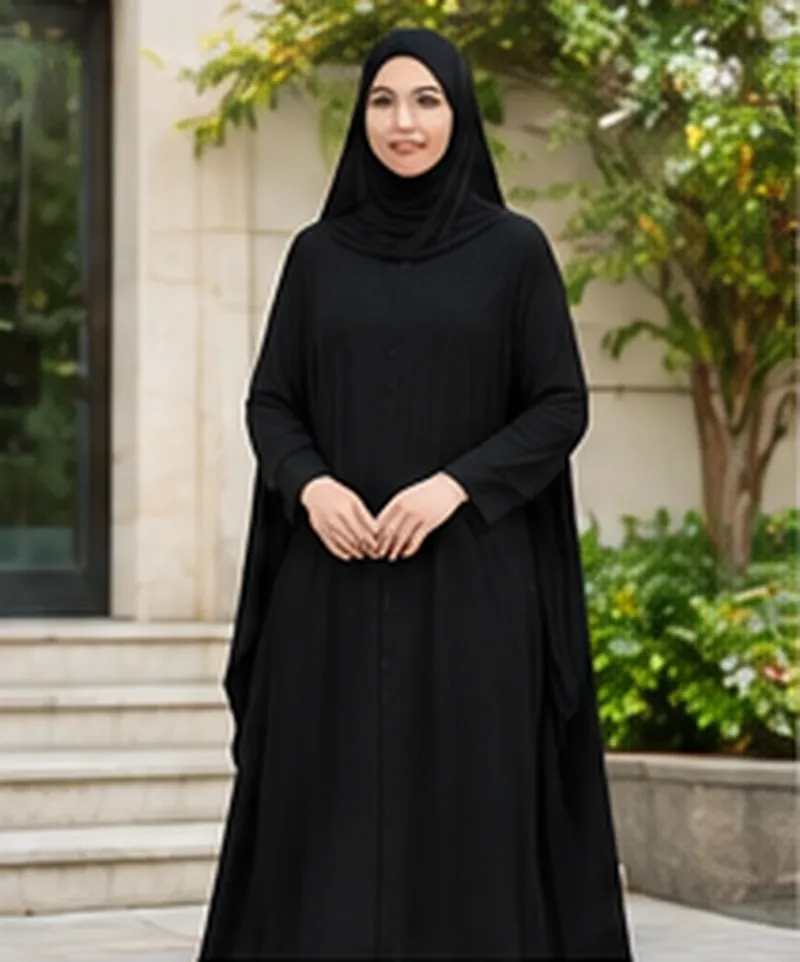
What an Al-Amira hijab is and how it is built
The Al-Amira hijab is a pull-on design that comes in two parts. The first is a snug cap, often with an open front, that holds hair and forms a smooth base. The second is a loop of fabric, open at the top and bottom like a short tube, that is pulled over the head and falls over the neck and shoulders. Because the two pieces are made to fit together, the result looks neat without any adjustment, and it can be put on in a few seconds.
Some versions are made in one piece, with the cap attached to the scarf, but the traditional two-piece form remains the most recognised. The name is associated with the Gulf region and has spread widely through online shops, where the design is sold under several labels. It appeals especially to women who find draped scarves fiddly, to teenagers learning to wear a hijab, and to anyone who needs a dependable result in a hurry. Compared with a rectangular scarf, which can be folded in dozens of ways, the design trades variety for reliability, and many women keep both kinds in their wardrobe for different moods and occasions.
Why a pull-on hijab suits busy routines
The main advantage of an instant hijab is time. There is nothing to fold, no pins to place, and no need to practise a wrapping technique in front of a mirror. For women balancing work, study and family, that saved time adds up across a year. It also makes the garment easy to put on after prayer or after a change of clothes during the day.
A pull-on hijab also helps with consistency. The same look appears every day, and the cap prevents the headscarf from sliding backwards. Women who dislike the sensation of pins near the neck often find this style more comfortable, and parents appreciate it for older children who start wearing a headscarf to school or to the mosque. Travellers value the style as well, since a few sets fit in hand luggage and need no ironing after a long journey.
Fabrics for the Al-Amira hijab
Cotton jersey is the standard material: soft, stretchy, breathable and forgiving. Lycra and elastane blends improve recovery, so the tube keeps its shape after many washes. Viscose jersey is lighter and drapes more, while modal blends feel particularly smooth against the skin. For summer, thin cotton and bamboo-style blends keep the head cooler, and for winter a thicker knit adds warmth. Seams are usually flat, and good makers finish the edge with a narrow hem so that it does not curl or roll when stretched.
Chiffon versions exist for formal use, usually with a jersey cap beneath, but they are less common because chiffon does not stretch. Check the weight: a very thin jersey can be see-through at the edge of the face, while a heavy one can feel hot. Matte surfaces are practical for work, while a subtle sheen is often chosen for visits and celebrations.
Sizes, lengths and fit
Most brands offer a standard size, with some adding a larger version for fuller heads or women who prefer extra length. Length matters for the look. A short Al-Amira reaches the collarbone, a medium version covers the chest, and a long one falls to the waist. Choose according to the outfit and to your own idea of coverage, which differs between women and between scholars.
Fit around the face is important. The cap should be snug without pressing on the forehead, and the tube should not pull sideways. If it does, the scarf is likely too small or the cap is not aligned. Women with long or thick hair often tie it up before putting on the cap, or choose a model with a more generous crown. If you are between sizes, choose the larger one for the scarf and the smaller one for the cap, as a firm base keeps the whole assembly steady.
Wearing it for sport, school and work
For exercise, a lightweight two-piece hijab in a sweat-wicking fabric is useful because it does not come loose during movement. Many sports brands now make versions with mesh panels. At school, the pull-on style is easy to remove for gym and to put back on, and spare scarves in school colours can be kept in a bag.
At work, a simple pull-on hijab in a neutral shade gives a tidy appearance. Safety rules in some jobs, for example around machinery, favour garments that do not hang loose, and a snug cap and tube can fit these requirements. Always check workplace rules and ask about alternatives if needed. A tidy appearance also helps in interviews or customer-facing jobs, where a hijab that stays put without adjustment lets the wearer concentrate on the conversation.
Styling a ready-to-wear hijab
The tube can be worn as it is or adjusted. Pulling it slightly forward gives more coverage at the forehead, while smoothing it back creates a lighter look. A brooch or a small clip at the shoulder adds interest without affecting the fit. Layering a second scarf over the top can transform the same base into a more elaborate style for an occasion. Some women add a thin underscarf tie around the neck to hold the tube against the shoulders in strong wind.
Colour choices follow the same logic as other hijabs: neutrals for flexibility, and a few bolder shades to lift a plain outfit. Many women buy a pair of cap and tube in matching colours and keep a few extra caps, which wear out faster than the scarf.
Caring for an instant hijab
Follow the washing symbols on the tag, normally a delicate programme with the pieces placed inside a laundry net. Avoid high heat in the dryer, which weakens elastane, and hang the pieces to dry. Because the cap sits against the scalp and takes more sweat, it benefits from more frequent washing than the outer layer.
Store the pieces flat or rolled rather than folded tightly, to stop creases. If the tube stretches over time, replace it instead of stretching it further. Rotating between several sets prolongs their lifespan. Keep white or pale sets separate from dark ones in the wash, as dye can transfer in the first few cycles.
What to check before buying
Ask whether the cap and tube are sold as a set or separately, whether the colours match in daylight, and whether the fabric is opaque. Read comments about shrinkage after washing. If you have sensitive skin, look for seams placed away from the forehead and for fabrics free from rough finishes. It is also worth comparing the stretch of the opening, because a tube that is too tight can leave marks on the forehead and cheeks.
The right pull-on hijab is the one that you forget you are wearing. Because understandings of modest dress differ, choose the length and coverage that suit your own beliefs, and consult a qualified scholar for religious questions.
Frequently asked questions
What does Al-Amira mean in hijab shopping?
In shopping, Al-Amira refers to a two-piece pull-on hijab consisting of a fitted cap and a tube-shaped scarf that slips over the head. The Arabic word means princess, and the style became popular for its ease and neat finish.
Is an Al-Amira hijab suitable for beginners?
Yes. It needs no pins or wrapping, so it is a common first hijab for girls and for adult women who are new to wearing one. Choose a soft, stretchy jersey and a size that fits snugly without pressing.
How long does an instant hijab last?
Lifespan depends on fabric quality and washing habits. Washing gently, avoiding high heat and rotating several sets can keep it in good shape for a long time, though caps often wear out sooner than the outer tube.
Can I wear an Al-Amira hijab for sport?
Yes, especially in lightweight, stretchy or moisture-wicking fabrics. The cap holds the scarf in place during movement, and many people keep a dedicated sport set that is washed after every session.