Silk clothing in Islam: what the question covers
Silk clothing in Islam is the subject of a long legal and ethical discussion about whether, and by whom, garments made of true silk may be worn. The word silk in this debate normally means fabric spun from the thread of the silkworm, called harir in Arabic, rather than modern lookalikes made from other fibres. Because the topic touches on dress, vanity, modesty and the difference between the sexes, it appears in almost every handbook of Islamic jurisprudence, usually in the chapter on clothing and adornment.
Readers often meet two blunt summaries: wearing silk is forbidden for men and allowed for women. Those summaries reflect the majority position, but the detail is richer. Scholars ask how much silk counts, whether blends are affected, what applies in cases of illness or necessity, and whether the same reasoning reaches materials that only feel like silk. What follows lays those points out calmly, so that you can put better questions to a qualified teacher.
Silk garments and the reports behind the discussion
The discussion rests mainly on reports attributed to the Prophet Muhammad, preserved in the major hadith collections. In several of them he is described as taking silk in one hand and gold in the other and saying that both were prohibited for the men of his community and lawful for its women. Other reports speak of silk being worn in this world by those who will not wear it in the next, a phrase scholars read as a warning against luxury and display.
Alongside these reports sit accounts of silk garments being given as gifts, and of the Prophet disliking a particular silk robe once worn. Jurists weigh such narrations against one another, asking which are firmly established, which are general and which are specific. That weighing explains why a shared starting point still leads to different practical rulings from one school and one era to another.
Most of the material is about silk as a garment worn on the body. Silk garments are one thing; silk used for cushions, curtains or saddle cloths is treated separately, and some scholars are stricter about it than others.
Wearing silk: why men and women are treated differently
Classical scholars offered several explanations for the distinction. One is that silk, like gold, belongs to a category of adornment that Islamic law reserves for women, while men are asked to keep a certain restraint in dress. Another stresses a general discouragement of softness, extravagance and showing off among men, a concern that appears throughout the sources on clothing.
Many jurists add that the ruling is a matter of obedience to the text and does not depend on a worldly reason being fully understood. Others look more closely at purpose and ask whether an exception might apply when the purpose is absent, for example when the silk is hidden or needed for health.
For women, the permission is widely accepted, though modesty rules still apply. A woman may wear silk garments, but the garment should still meet the principles of covering and looseness that her community teaches, and extravagance or display for its own sake is discouraged for everyone.
Exceptions, necessity and borderline cases
Several narrations are cited for limited exceptions. One tells of two Companions who were allowed silk because of a skin complaint, which led many scholars to permit wearing silk for medical need. Another is the permission for a small border, band or patch of silk on a garment, with scholars discussing how wide such a trim may be without turning the whole garment into silk.
Some schools also discuss wartime wear, such as silk used where it protects the body, and the case of someone who has nothing else to wear. These points are debated rather than agreed, and each school sets its own conditions.
A question people ask often is about children. Views differ on whether the restriction applies to boys before adulthood, and on whether the adult guardian carries any responsibility for what a small child wears. Where a family follows a particular school, the safest course is to ask someone trained in that school and not to generalise from a single quotation.
Blends, satin and modern fabrics
Fabric labels today are far more varied than anything the early jurists saw. Satin, for example, is a weave and not a fibre: it can be made of silk, but is commonly made of polyester or other materials. Viscose and rayon are sometimes sold as artificial silk, yet they are made from plant cellulose, not from silkworm thread.
Because the classical rulings speak of true silk, many contemporary scholars hold that these other fabrics are not covered, even when they shine and drape like silk. Others advise caution with anything marketed under the name of silk until the composition is known. Blends raise a separate question, and opinions on them tend to depend on which fibre dominates and whether the silk is visible on the surface.
A practical habit is to read the composition tag before you buy. It gives you the facts you need to put a clear question to a scholar, instead of relying on the sales description.
Choosing abayas, scarves and thobes in practice
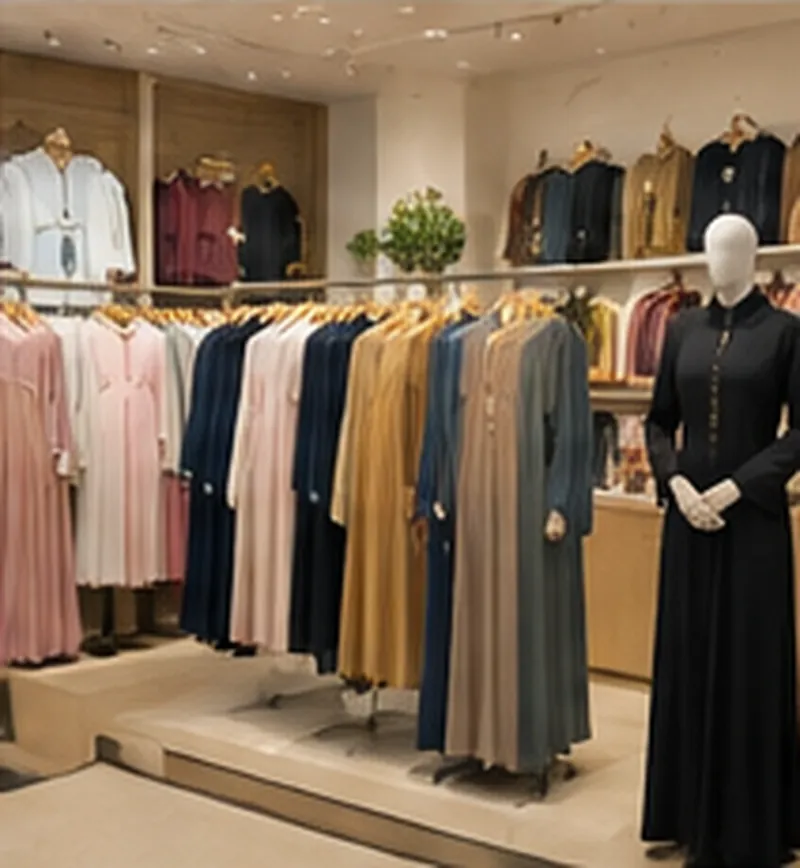
Shoppers meet silk clothing and accessories in many forms: lightweight scarves, linings, embroidery thread, prayer-hat bands, ties and the fine cloth of festive abayas. For women, wearing silk scarves and dresses is usually acceptable under the majority view, although the opaque, non-clinging cut that modesty guidance asks for still matters. A translucent silk can fail that test even if the fibre itself is not an issue.
Men who follow the stricter reading often pay attention to details that others overlook: a satin-look lining in a jacket, a silk tie, the thread used in decorative collar work. Many simply choose cotton, linen or wool and avoid the question altogether. These fibres are also practical in hot or cold weather and are easier to wash.
Gift buying deserves the same care. If you are choosing a present for a relative, check the fibre and the occasion, and keep the receipt so that an unsuitable piece can be exchanged.
Respecting differences between schools and scholars
The topic is a good example of how Islamic law works in practice. The main schools of jurisprudence share the broad distinction between men and women, yet they diverge on exceptions, on blends and on the amount of silk that counts. Contemporary scholars add their own judgments on new fabrics and on medical situations.
Nothing here is a ruling for any individual reader. When the choice carries weight for you, such as clothes for a marriage ceremony, a present or a health issue, put it to a trained scholar of your own community who understands your situation.
It also helps to keep the subject in proportion. Most Muslims never face a difficult case, because everyday clothing is made of cotton, wool, linen or synthetic fibres. The question of wearing silk mostly arises around celebrations and gifts, where good manners and open conversation between relatives matter as much as the fabric itself.
Frequently asked questions
Is silk clothing allowed for Muslim women?
The majority view among scholars is that silk is lawful for women, based on reports that treat it as permitted for them. The principles of covering the body and wearing loose cuts remain in force, and a trained scholar is able to rule on any specific piece of clothing.
Why is silk restricted for men?
Reports attributed to the Prophet describe silk as prohibited for men. Scholars connect this to restraint in adornment and to discouraging extravagance, while many also treat it simply as a matter of following the text, with differing views on exceptions.
Does satin count as silk?
Not necessarily. Satin is a weave that may be made of silk or of polyester and other fibres. Because classical rulings speak of true silk, many scholars do not apply them to synthetic satin, but it is wise to read the label.
Are there exceptions to the restriction on silk for men?
Some scholars allow it for medical need, citing reports about a skin complaint, and many allow small trims or borders on a garment. Each school of law sets its own conditions, which is why your personal case belongs with a trained scholar.