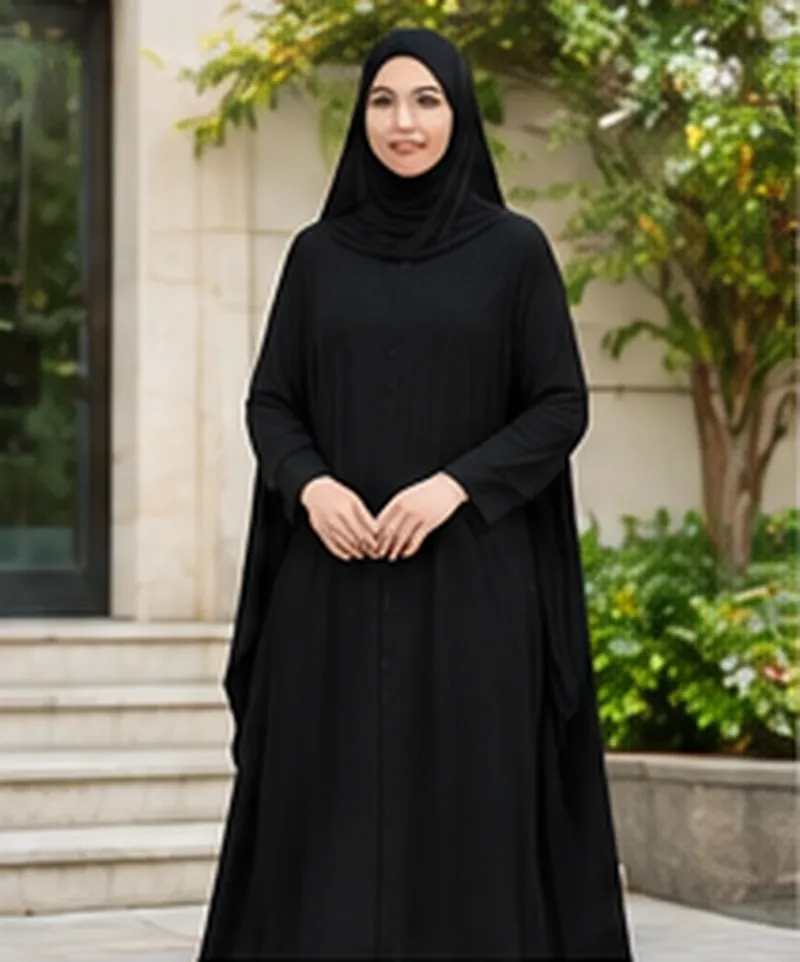
Opaque slip dresses as an inner layer
Opaque slip dresses are the quiet workhorse of a layered modest wardrobe. They sit under a visible outer garment and do the job of providing coverage and a neat line, so the top layer can be as light and airy as it likes. Open abayas, chiffon kimonos, linen duster coats and long cardigans all look better and feel more secure over a solid base.
The word opaque matters. A slip designed for lingerie can be fine, shiny and slightly translucent, which defeats the purpose. An inner dress for layering is cut from cloth that does not show the skin or underwear through a single thickness, even in sunlight or under shop lighting.
How a slip dress differs from other inner pieces
A camisole or vest covers only the torso. A half-slip covers the legs. A full slip dress combines both in a single garment that falls from the shoulder or chest to mid-calf or ankle. That continuity reduces bunching at the waist, avoids a second hem sitting under the first, and makes dressing faster.
Compared with a tunic worn as an inner layer, a slip dress is thinner and closer to the body without being tight. Compared with a petticoat, it covers the chest and upper arms as well. Some women keep a sleeved version for cooler months and a strappy version, worn with a wrap or cardigan on top, for summer.
Fabrics that stay opaque and comfortable
For any slip dress, cotton jersey is soft and breathable, though it can cling in dry weather. Viscose jersey drapes beautifully and feels cool. Modal and bamboo-viscose blends are silky and gentle on the skin. Satin-finish polyester gives a smooth glide beneath thicker outer layers, but it is less breathable and can feel warm in summer.
- Cotton or modal for everyday comfort and humid weather.
- Viscose crepe for a stable, matte appearance and elegant movement.
- Polyester satin for a slippery surface that reduces friction against heavy outer fabrics.
- Lined mesh or double layers only where you want extra structure, for instance a bodice.
To test opacity, hold the fabric over your hand and look at it in daylight. If the outline of your fingers is clear through one layer, the dress is likely to show shadows when worn, and a second layer or a different fabric is a better choice.
Cut, neckline and sleeves of an underdress
A slim, unfitted A-line cut travels well under outerwear. Avoid heavy gathers at the waist, which add bulk under a closed coat. A straight or lightly flared hem keeps the leg free for walking and sitting.
Round or boat necklines stay discreet under open outer garments. Deeper necklines may be fine when the outer layer closes high, but check how they look when you bend forward. If you prefer more coverage, choose a slip with a higher round neck or add a separate neck cover.
Sleeves change the whole function. Long sleeves with a snug wrist cuff give full arm coverage under a sheer kimono; sleeveless versions are lighter but will require arm sleeves or a long-sleeved outer layer to provide the coverage you want.
Waist seams matter too. An empire line that sits just under the bust gives the most freedom, while a seam at the natural waist can show as a ridge under a thin outer layer. Many women prefer a seamless, column-shaped underdress that slides on easily over a hijab without disturbing it.
Matching an inner dress to the outer layer
A slip dress that is longer than the outer garment can peek out at the hem, which some people like as a design touch and others find untidy. For a clean line, choose a slip that finishes a few centimetres above the outer hem. If you want a visible contrast, make it deliberate and consistent, such as a lace edge or a contrasting shade.
Colour matters when the outer layer is semi-transparent. A slip in a skin-neutral shade can vanish and look natural, while a stark white can glow through ivory or lace. A darker slip under a pale chiffon gives depth but may show. Try the combination in daylight before an event.
Think about the way the outer layer moves. A flowing open abaya will swing away from the body and reveal the inner dress for a second, so the slip should look intentional at every angle. Check the back view as well, especially where a vent or split opens, and make sure the hem of the layering dress stays level and covered when you sit.
Practical issues: static, heat and movement
Static is the most common complaint. Synthetic slips cling to tights and to each other, riding up the legs. Natural fibres or blends with viscose reduce this. A light spritz of water on the inside of the garment, or a quick wipe with a damp hand, also dissipates charge.
Heat management is another concern. A fine cotton or modal slip adds very little warmth, while a thick polyester one can trap heat. In hot weather, a sleeveless slip with a loose outer layer lets air circulate, and in winter a long-sleeved slip works like thermal underwear.
Finally, think about movement. A good slip has enough width at the hem to allow a full stride and not twist around the legs. Try walking, sitting and climbing steps in it before buying.
Washing frequency is another practical point. An inner dress touches the skin all day, so having at least two in the same colour lets you rotate them without rethinking the whole outfit, and it keeps the outer pieces fresher for longer.
Who wears them and in which settings
Women who like open abayas, duster coats and long cardigans often keep two or three slips in neutral shades, such as black, taupe and white, to cover most outfits. Brides and guests dressing for weddings use fuller or lace-trimmed slips under embroidered kaftans. Mothers like the practicality of a stretchy fabric that lets them move easily.
In communities where tradition favours closed outer garments, the slip can serve for private or domestic settings, worn on its own with a cover-up. This reflects practical habit, not a ruling, and opinions on what is acceptable at home or in mixed company vary between traditions and families.
Students and office workers often prefer plain, mid-calf versions that disappear under a coat. Travellers like crease-resistant jersey that packs small and doubles as sleepwear. Women who run a household and are on their feet all day value the freedom of a stretchy but opaque layering dress that never feels tight.
Choosing and caring for them
When shopping, look for flat seams, soft neck edges and strap or sleeve attachments that will not dig in. Ask whether the fabric is opaque in all colours, since lighter shades are often more transparent. Buy one size by comfort across the hips and bust, not only by label.
Wash according to the care label, using a gentle cycle and a mesh bag to protect straps. Avoid fabric softeners that coat fibres and make them cling. Hang to dry, as heat from a dryer encourages static and shrinkage, and iron on a low setting only if the label allows it.
If you are unsure about size, try the dress with your thickest outer layer to check that the seams do not twist, and keep the receipt in case the fabric turns out to be thinner than the listing suggested.
Frequently asked questions
What makes a slip dress opaque?
The combination of fabric weight, weave and colour. Dense jersey, crepe or lined satin hides the skin, while thin, loose-woven or very pale cloth may show shadows. Test it in daylight over your hand before buying.
Can a slip dress be worn alone?
It can be worn alone in private or at home, though many people layer it with a cardigan or a kimono. Whether it suits you outside depends on your own standard of coverage and the advice of a scholar you trust.
How do I stop the slip from clinging to tights?
Choose natural-fibre or viscose fabrics, avoid softener residue, and use a bit of anti-static spray on the inside. A slightly longer, looser cut also reduces friction around the thigh. Washing the slip inside out also helps.
Should the slip match the abaya colour?
Matching gives a seamless look, but a close tonal shade is just as good. If the outer layer is sheer, choose a slip a shade darker than your skin tone or the outer fabric to avoid glow-through.