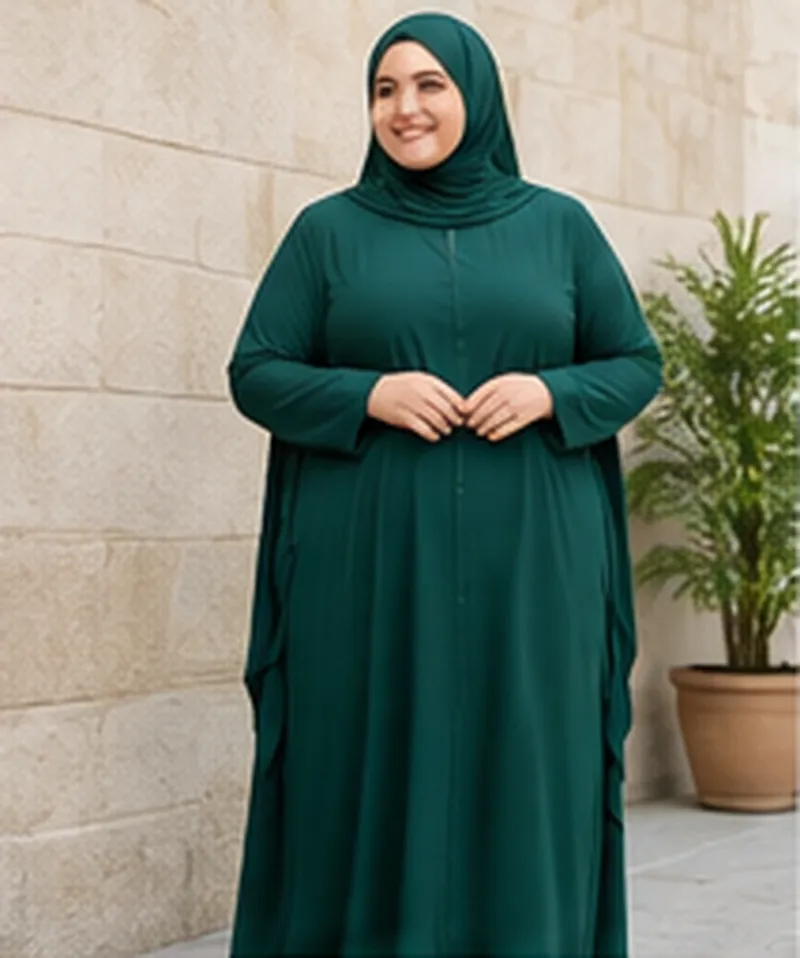
What plus size modest clothing needs to do
Plus size modest clothing has two jobs at once. It must cover the body in the way the wearer considers appropriate, and it must fit the real measurements of a larger frame. A garment that is simply a standard pattern enlarged often fails, because bust, hip and upper arm do not grow in equal proportion.
Women in larger sizes have historically found fewer choices in specialist shops, which is one reason many resort to altering clothes or sewing their own. Today more designers grade their patterns properly, adding room across the bust, shoulder and sleeve while keeping the length balanced.
The aim is comfort and dignity. A well-cut piece lets you sit, bend, pray and carry children without pulling, riding up or gaping at buttons. That is the real test of plus size modest clothing: not a label, but how the day feels while wearing it.
Cuts that work for halal clothing for plus size women
A-line shapes that skim the hip and flare gently towards the hem are consistently flattering and comfortable. Wrap fronts, empire seams below the bust and open-front kimonos allow adjustment through the day and accommodate weight changes without needing new purchases. These are the cuts to look for when choosing halal clothing for plus size women.
Raglan and dolman sleeves give freedom through the shoulder and upper arm, where many ready-made garments feel tight. Side slits in a long tunic, set high enough to ease walking, prevent the cloth from dragging on the hip.
Avoid stiff, boxy cuts that add width, and equally avoid very clingy knits that outline the body. A drape that moves with you is easier to wear and looks more elegant.
Fabrics that drape rather than cling
Crepe, soft viscose and good-quality jersey fall vertically and keep a clean line. Cotton blends with a little stretch are comfortable for everyday wear, while rayon challis and chambray give airiness in summer.
Heavy, stiff fabrics such as thick brocade can make a garment bulky. If you love embroidery or sequins, look for them on lightweight bases or confined to cuffs and hems so the main body of the garment remains fluid. Fabric choices of this kind keep modest fashion in larger sizes light on the body.
Check opacity thoroughly. Stretch across the hips and bust can thin the cloth, and pale or white fabrics may become see-through under bright lights. A matching slip or a lined design avoids the problem.
Reading size charts and measuring correctly
Brand sizes are unreliable across makers, so rely on measurements. Take your bust, waist, hip, upper arm and back length, then compare them with the garment dimensions provided by the seller, not just the label size.
Look for a stated ease allowance. Loose garments should have extra width beyond the body measurement, usually enough to move freely, and the sleeve opening should allow comfortable bending of the elbow.
Length should be measured from the shoulder to the point you wish the hem to reach. Remember that taller or shorter women may need to adjust the hem or order a different length option.
Keep a small notebook or phone note with your measurements and the sizes that worked from each seller. Shopping from the same maker again becomes far quicker once you know which size and length you need.
Layering and structure without extra bulk
Layers add coverage and create balance. A long open cardigan or an unfastened abaya over a column dress creates a vertical line, and a thin belt placed at the natural waist can define the shape for those who want it. Curvy modest wear benefits from layers that follow the body gently and do not bunch.
Choose underlayers of smooth, thin fabric so they do not add volume. Seamless camisoles, long slips and stretch leggings under dresses reduce friction and keep the outer garment hanging freely.
Footwear, scarves and bags can balance proportions. A scarf draped to fall across the chest, rather than tight around the neck, tends to be more comfortable, and a mid-sized bag sits better than a very small or very large one.
Where to look for modest fashion in larger sizes
Specialist modest labels increasingly list extended ranges, and some focus entirely on larger sizes. Searching for a stated size range, rather than a vague claim of one-size-fits-all, is the best way to filter results.
General plus-size shops are another resource. Long cardigans, maxi dresses, wide-leg trousers and tunics are common there and can be styled modestly with a scarf. Check sleeves and necklines, as some garments need a layer underneath.
Local tailors can make an abaya or dress to measure, and the cost may be reasonable considering the perfect fit. Bring a favourite garment as a guide and discuss fabrics, lining and hem allowance in advance.
Second-hand platforms sometimes list larger-sized abayas and dresses at modest cost, often barely worn. Ask for measurements before purchase because labels differ.
Sleeves, necklines and trousers that behave
Sleeves are a common frustration. Cuffs that are too tight pinch the wrist, and set-in sleeves that are too narrow limit reaching. Look for sleeves cut with a little extra at the upper arm and an elasticated or buttoned cuff that can be adjusted. Plus size modest clothing succeeds or fails on details like these.
Necklines should lie flat and stay closed. Crossover fronts, high round necks and keyhole openings with a button loop are practical, whereas plunging styles need a modest inner layer. A scarf pinned neatly can also secure a gaping neckline.
For trousers, a high, elasticated waistband with a flat front is comfortable under a tunic, and wide legs avoid clinging at the thigh. Pleats at the waist can add bulk, so a smooth finish is often more flattering.
Pockets are welcome in skirts and trousers, provided they are set in the seam and lie flat. Side pockets cut too shallow tend to gape, so test them in the fitting room.
Dressing for different occasions
For work, a long tunic over straight trousers with a structured jacket gives a professional line. Dark colours are slimming for some people, but many prefer rich jewel tones such as emerald or plum.
For celebrations, choose a flowing kaftan or a lace-trimmed long dress, and use embellishment at the neckline or sleeve instead of across the widest part of the body. A statement scarf or brooch focuses attention upward. Curvy modest wear for celebrations can still be light and fluid.
For prayer and home, soft cotton sets, roomy two-piece prayer outfits and long skirts with elastic waists give freedom of movement. Comfort at home is a legitimate priority and not a luxury.
Confidence, comfort and care
Clothing should serve the person, not the other way round. If a garment pinches, pulls or demands constant adjustment, it will not be worn regardless of how attractive it looked online. Modest fashion in larger sizes deserves the same care as any other range.
Care instructions matter, especially for stretch fabrics. Wash in cool water, avoid high-heat drying that can shrink fibres, and hang long garments to keep their fall. Mend seams early, since larger garments bear more tension at stress points.
Finally, treat plus size modest clothing as a worthwhile investment in daily comfort. Wardrobe-building one dependable piece at a time, and keeping notes of the cuts and brands that fit well, makes later shopping much easier.
Frequently asked questions
Which cuts are most comfortable for larger sizes?
A-line dresses, wrap fronts, raglan sleeves and open-front layers are generally comfortable because they give room without clinging. Fabrics with soft drape, such as crepe or viscose, help the garment fall smoothly over the body.
Are dark colours the only option?
No. Dark shades are popular, but jewel tones, earth colours and soft pastels all work. Tone-on-tone prints and vertical details look balanced. Choose colours that make you feel comfortable and that suit your complexion and your wardrobe.
How can I stop the fabric riding up when I walk?
Wear a smooth slip or leggings underneath, choose fabrics with a little weight, and look for dresses with a slightly wider hem. Side slits, set high enough to ease stride, also help the cloth move freely.
Should I buy from tailors or ready-made shops?
Both can work. Ready-made garments are quicker and suit standard proportions, while tailors can match unusual measurements. If you use a tailor, bring a garment that fits you well and agree on fabric, lining and hem allowance first.