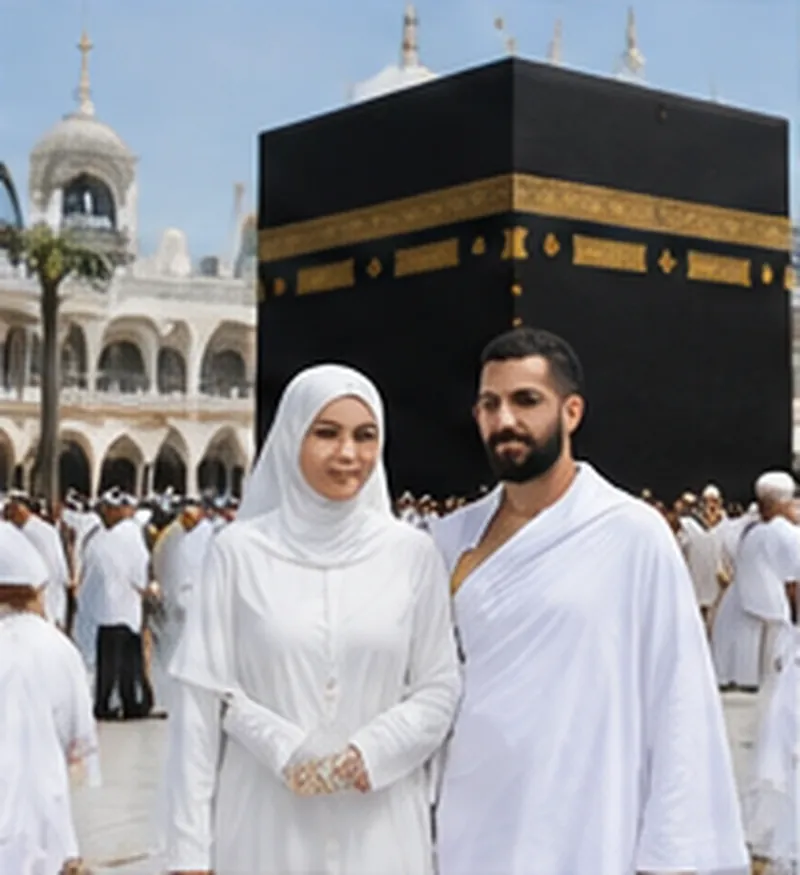
Ihram clothing and what it stands for
Ihram clothing refers to the garments that a pilgrim wears while in the state of ihram, the condition of consecration that begins at a designated boundary called the miqat and lasts until the rites are completed. The word ihram also names the state itself, which is why people speak of putting on or wearing ihram.
The purpose of ihram clothing is humility and equality. Rich and poor, king and labourer stand together in nearly identical white, and the usual markers of status, such as tailoring, brands and jewellery, fall away. Many pilgrims describe this as one of the most moving parts of the journey, since it recalls the simple shrouds in which all people are laid to rest.
Rules about what may be worn, and the acts that are not permitted during ihram, are drawn from the Quran, the practice of the Prophet and the scholarly tradition. The schools of law agree on the main outline but differ on certain details, so the guidance of your group's scholar or your travel organiser is important.
Men's ihram: the izar and the rida
A man's ihram consists of two pieces of plain, unstitched cloth. The lower piece, the izar, is wrapped around the waist and reaches below the knees. The upper piece, the rida, is draped over the torso, with the right shoulder uncovered during the circling of the Kaaba in the tawaf of arrival, and covered at other times by most accounts.
Most sets of ihram clothing are white cotton or a terry weave, the latter being absorbent and light. Fabric should be opaque enough to preserve modesty when wet. Quality umrah clothing from specialist suppliers are sized to wrap comfortably, and many men carry a spare set so that they can wash one and wear one.
Men do not wear stitched garments that follow the shape of the body, such as shirts and trousers, or headwear that touches the head, during ihram. Scholars generally permit a plain belt or a pouch to hold money and documents, and a ihram belt with zip pockets is a common purchase, though you should confirm your own school's view. Many pilgrims use safety pins with caution, as opinions about them vary.
Women's pilgrimage clothing and umrah dress for women
Unlike men, women do not wear a prescribed uniform. Women's pilgrimage clothing is ordinary modest dress that covers the body except the face and hands, and it is often white, cream or another plain, sober colour for convenience and unity. A long, loose abaya or a loose tunic and wide trousers with a headscarf is typical.
The chief rule concerns the face and hands. According to the dominant scholarly position, a woman in ihram does not wear a face veil that is attached to her face, such as a niqab, nor gloves; she can however use a scarf or the end of her headcovering to keep her face away from strangers when needed. Jurists differ on the details and on how much covering is permitted, so ask a qualified scholar.
For pilgrimage clothing, look for breathable fabric, a long hem that will not trip you on steps, and a hijab that stays in place without constant adjustment. Many women prefer a jersey or crepe headscarf without pins, because sharp pins are a nuisance in crowds.
Umrah clothing versus Hajj clothes on other days
Umrah clothing is the same as hajj clothes in principle, since both are performed in ihram. The difference is time. An Umrah can be completed in a matter of hours and may be done at any season, so the dress is worn for a short stretch before the pilgrim returns to ordinary clothes.
Hajj, performed on specific days of the Islamic year, involves a longer period in ihram, travel between Mina, Arafat and Muzdalifah, and nights in tents, so durability and comfort are much more important. Pilgrims often take several sets of hajj clothes and plan time to wash them. After the partial release from ihram that follows the stoning and the shaving or trimming of the hair on the day of sacrifice, men may wear stitched clothes again until the remaining rites are done.
For women, the clothing needed outside ihram remains modest everyday dress, and a light cloak or abaya over a comfortable set is practical.
A first-time pilgrim often wonders whether to buy everything at home or in Makkah and Madinah. Shops near the Haram sell ihram sets, abayas and sandals at all hours, which is reassuring, but sizes and quality are easier to judge before departure when you have time to compare.
Sandals, belts and small accessories
Men wear sandals or slippers that leave the heel and the top of the foot open, and women follow different guidance and may wear ordinary closed shoes or socks. Choose sandals that are well broken in, with a supportive sole and a non-slip tread, because the marble floors around the Haram can be slick and the walking distances are considerable.
A carry bag with a strap for sandals is a helpful extra, since pilgrims leave footwear outside the mosques. Other accessories include a small waist pouch, a neck lanyard for the group card, an umbrella to shade the head without touching it, and an unscented wash and lotion.
During ihram, perfume is not applied and scented soaps are avoided, so choose fragrance-free products before departure.
Heat, air conditioning and fabrics
Temperatures in the Hijaz change dramatically with the season, and indoor air conditioning can be cold even when the street is scorching. A thin white shawl or a dedicated lightweight wrap for the upper body can be handy, as long as it respects the rules that apply to you.
Cotton in lighter weights is the most trusted material for hajj clothes, and fast-drying microfibre is useful for items that are washed daily. Avoid synthetic fabrics that trap heat and sweat in hot months. Women should consider pale colours that reflect sunlight and lining layers that do not cling.
Pilgrims who travel in cooler months should pack warmer outer layers for the time outside ihram, such as a long cardigan or a padded coat, as well as thicker socks.
Old hands recommend a small mirror-free routine: dress simply, keep the wrap tied with a stable knot, and check it before every long walk, since adjusting in a crowd is awkward.
Packing and ordering your pilgrimage clothing
Order your umrah clothing and ihram from a trusted supplier well before departure, and try it on at home, practising the wrap until it feels natural. Many travel agencies include a kit of pilgrimage clothing, but the quality varies, so check the fabric and the number of pieces. Mark your garments inside the seam to avoid mix-ups in shared accommodation.
A simple packing list for the journey includes: two or three sets of ihram, a belt or pouch, sandals, a lightweight prayer garment, modest everyday outfits, spare headscarves, plain underwear, a small laundry kit and unscented toiletries. A travelling lock and a document holder protect your passport and permit.
Follow the instructions of the Saudi authorities and your tour operator on health and permits, and take any questions about the rites of dress to an experienced guide before you travel.
Frequently asked questions
What do men wear for Umrah and Hajj?
Men wear two pieces of plain, unstitched cloth, usually white, one wrapped at the waist and the other draped over the upper body, with open sandals. Headwear that touches the head is generally avoided during ihram.
Do women have a special ihram dress?
No. Women wear modest everyday clothing, often white or plain, that covers the body except the face and hands. Opinions differ on face veils and gloves during ihram, so consult a qualified scholar.
Can I wear perfume while in ihram?
Perfume and scented soaps are generally avoided from the moment of ihram. Many pilgrims therefore buy fragrance-free soap, deodorant and lotion before travelling. Details vary between schools, so check with your scholar.
How many sets of ihram should I take?
Two sets are the usual minimum so one can be washed while the other is worn. Hajj pilgrims often take a third. Light cotton or terry cloth dries fairly quickly.