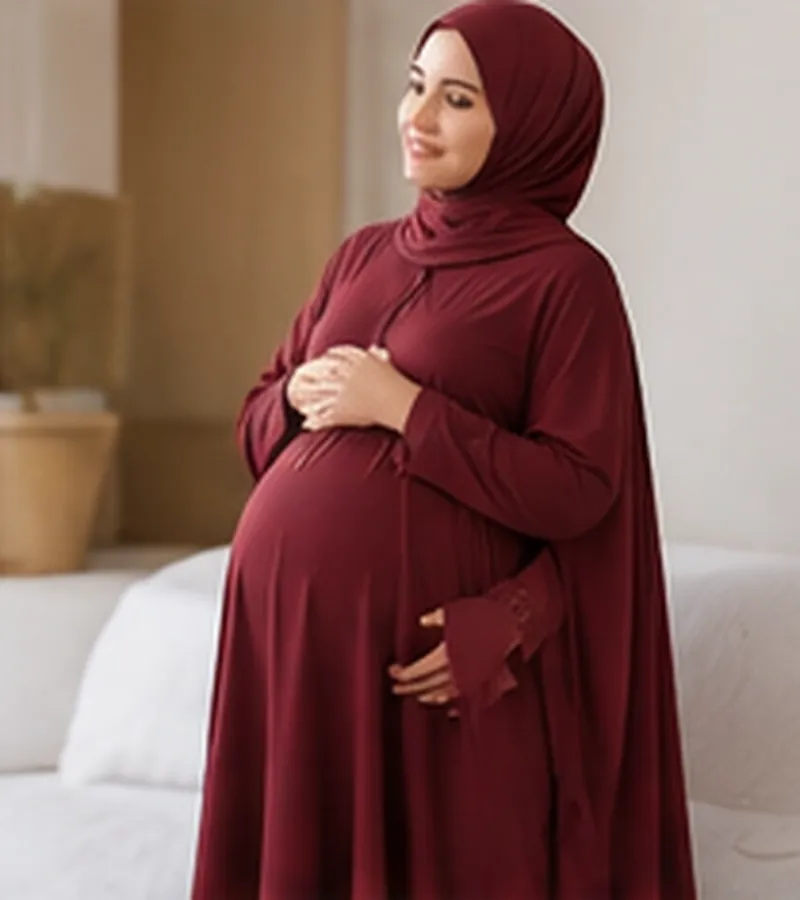
What modest clothing for pregnancy has to do
Modest clothing for pregnancy has to solve a problem that ordinary wardrobes do not: the body changes shape steadily over many months, and clothes bought for one stage may not fit the next. Garments therefore need generous cut, flexible fabric and adjustable details, and still maintain the coverage the wearer prefers.
A looser style in the first months can often be worn again through the later ones. Women with an existing wardrobe of abayas, tunics and long dresses sometimes find that few purchases are necessary, while others prefer dedicated maternity pieces with stretch panels and longer hems at the front.
Comfort is the first criterion. Pregnancy can bring heat, swelling and tiredness, so soft fabrics, no tight bands and easy fastenings are worth prioritising. For health questions about what is safe to wear, consult your midwife or doctor.
Maternity modest wear has grown as a category in recent years, and many designers now offer it, but plenty of excellent options come from ordinary shops. Long jersey dresses, stretch skirts and oversized shirts all qualify when worn with suitable layers.
Islamic clothing for pregnant women across the trimesters
In early pregnancy most women can wear their usual clothes, though tight waistbands may start to feel uncomfortable. Switching to elastic or drawstring waists and longer tunics takes the pressure off and conceals changes for those who are not ready to share the news. Modest clothing for pregnancy in this period is mostly about easing the waist.
In the middle months, the bump becomes noticeable. A-line dresses, empire seams below the bust and wrap tops expand gracefully. Long cardigans and open abayas fall over the front without being pulled tight.
In the later months, the front hemline rises as the bump grows, so choose garments with extra length at the front or a generous hem allowance. Flowing maxi dresses and A-shaped robes are especially useful, and a stretch panel at the side seams gives room for growth.
Fabrics that stay soft, breathable and opaque
Natural or semi-natural fibres tend to be most comfortable. Cotton jersey, modal and bamboo viscose are soft against sensitive skin and stretch gently. Linen and cotton voile keep summer pregnancies cooler, although they crease easily. These materials suit modest clothing for pregnancy in every climate.
Pregnancy often raises body temperature, so steer clear of thick synthetic fabrics that hold in heat. In winter, layering is better than one thick garment, since a cardigan can be removed in warm shops or on public transport.
Opacity still matters. Stretch across the bump can thin pale fabrics, and a slip or leggings in a matching shade beneath a loose dress give reassurance. Choose seams that lie flat and avoid scratchy labels.
Designs that grow with the bump
Some maternity abayas include hidden panels, tie fastenings or elasticated inserts that expand as needed. These are practical for the whole pregnancy and can later double as nursing garments if they open at the front.
Wrap dresses and wrap-style abayas adjust easily by changing the tie. Smocked or gathered bodices stretch with the body, and shirt dresses with buttons can be worn open over a fitted maternity base as the bump increases.
- Empire-line dress with a gathered bodice
- Open-front abaya or kimono with a soft tie
- Long tunic over stretch trousers or leggings
- Maxi skirt with a foldable or panelled waist
Avoid fastenings that dig in at the waist or chest. A soft elastic panel or a drawstring is easier to live with than a stiff zip.
Whenever you can, test an item in the shop: sit down, bend over and stretch your arms overhead in the changing room. A garment that feels roomy standing up can ride high when you sit, which is a frequent complaint about maternity dresses.
Hijab styles and pregnancy outfits for hijabis
Women who wear a scarf often find that they feel warmer during pregnancy. Lightweight cotton, modal or jersey scarves breathe better than thick fabrics, and a looser wrap or slip-on hijab avoids tightness around the neck and head.
Dizziness and tiredness can be made worse by tight underscarves and pins. Try a soft, wide-band cap and magnetic pins, and give yourself time to adjust the scarf before leaving home. Islamic clothing for pregnant women should never leave the wearer feeling restricted.
Colour coordination makes outfits simpler. A soft sage scarf with a cream dress or a plum scarf with a navy abaya looks polished and requires no extra planning. Pregnancy outfits for hijabis are easiest when the scarf is chosen first.
Shoes, support garments and small comforts
Feet can swell, especially in warm weather, so shoes with adjustable straps, soft soles and a bit of extra width are helpful. Flat or low-heeled styles lessen strain on the back, though advice on support footwear should come from a health professional.
Many women use belly bands, supportive leggings or maternity underwear to stay comfortable. These sit under outer garments, so choose seamless designs in a skin-like tone that do not show through fabric.
Pack a cardigan or large scarf for appointments and travel. Clinics are often warm or cold unexpectedly, and the extra layer also gives a feeling of privacy during examinations.
A larger bag is helpful in pregnancy, as it holds water, snacks, medical notes and a spare scarf, and a lightweight cross-body style keeps weight off the shoulder.
Special occasions and prayer while pregnant
Weddings and Eid gatherings do not need to be skipped because of a bump. Flowing kaftans, empire-line evening dresses and wide-sleeved robes in satin or crepe are elegant and roomy, and beading is best placed on the neckline or cuffs. Islamic clothing for pregnant women at such events is chosen for ease as much as beauty.
Prayer clothing should allow bowing, prostration or seated alternatives as comfortable. Spacious two-piece prayer sets and maxi skirts with stretchy waistbands are popular picks. Scholars discuss how pregnancy affects the manner of prayer, and a qualified teacher is the right person to ask.
If you plan to travel for pilgrimage or other journeys while pregnant, speak to your doctor and your travel provider about suitability and any requirements.
Buying wisely and planning for after the birth
Resist the temptation to buy a full set of maternity clothes at once. A few basics, such as two dresses, a long cardigan and stretch trousers, can be built upon as the bump develops. Borrowing from friends or buying second-hand is common, since garments are worn for a relatively short time.
Choose pieces that will work afterwards. Front-opening designs, wrap dresses and soft jersey tunics can be used for nursing and for the first months after the birth, when the body is still adjusting.
Keep the purchases that suited you and pass the rest on. Modest clothing for pregnancy is easy to share between sisters, relatives and friends, and doing so helps families spend less. Maternity modest wear in neutral shades is the easiest to pass on.
Frequently asked questions
Do I need special maternity abayas?
Not necessarily. Loose abayas and tunics you already own may suffice in early months. Dedicated maternity versions offer stretch panels and extra front length for later stages. Choose according to comfort, budget and how long you plan to wear them.
What fabrics are best for pregnancy?
Soft, breathable fabrics such as cotton jersey, modal, bamboo viscose and light linen are popular. They stretch, feel gentle on the skin and help with temperature. Avoid heavy synthetics that trap heat, and check opacity once stretched.
Can I keep wearing my hijab as normal?
Many women do, using lighter, looser scarves and soft underscarves to avoid tightness. If you feel dizzy, hot or have headaches, take breaks, loosen the arrangement and speak to your midwife or doctor about any concerns.
Will these clothes work after the baby arrives?
Many will, especially front-opening designs, wrap dresses and stretchy tunics. They suit the first months after birth and can serve for nursing. Try garments sitting and lifting your arms to check they will remain practical.