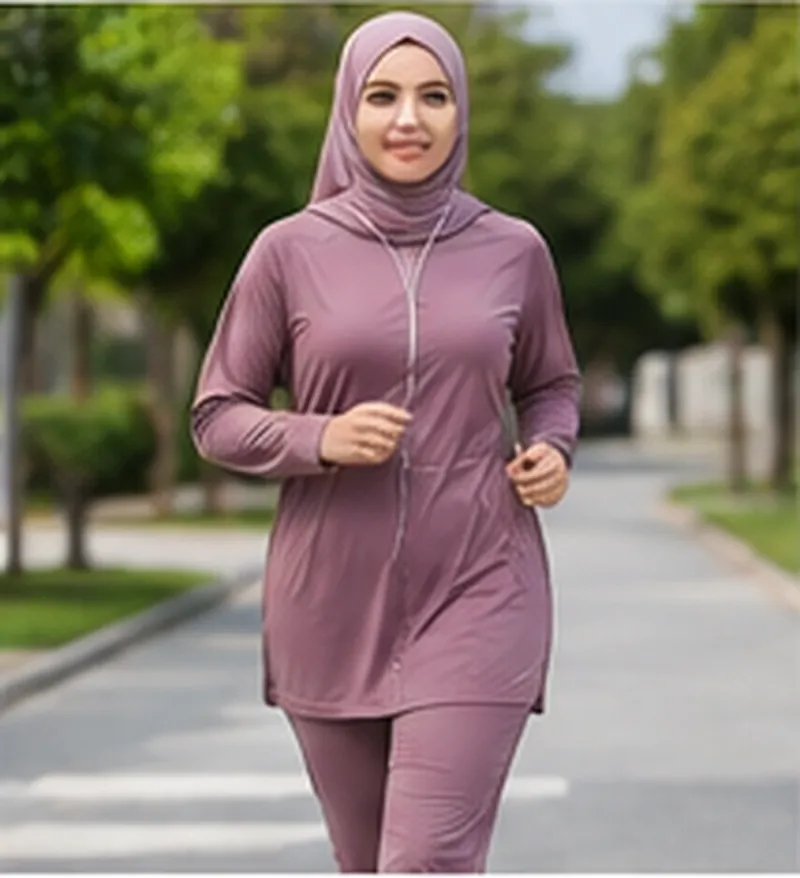
What Islamic sportswear for women is
Islamic sportswear for women is exercise clothing designed for those who wish to stay covered while they train, run, play or take classes. It follows the principles of ordinary modest dress, with loose or non-clinging shapes and full coverage, but uses technical fabrics that wick sweat and dry quickly.
Many women previously exercised in cotton tracksuits and long skirts because few options existed. Today sports brands and specialist labels offer sports hijabs, long-sleeved tops, tunics, wide training trousers and layered sets, which lets women take part in sport without compromising their own understanding of modesty.
The key is to match the clothing to the activity. A yoga class, a football match and a long run each make different demands on fabric, fit and head covering.
Culture and climate shape choices as well. Women in the Gulf may favour breathable abaya-style training coats for walking, runners in Northern Europe often layer thermal tops under windproof jackets, and swimmers choose purpose-made sets. There is no single uniform of modest exercise, only combinations that suit the person and the weather.
The sports hijab: materials and fit
A sports hijab is built to stay put. It is usually made from a stretchy, breathable fabric such as lightweight polyester blend, with a slip-on design or a snug elasticated edge. Some models include a short neck panel that tucks under the top, and a few are designed with a visor or cap for outdoor running. A well-fitting sports hijab makes a larger difference to comfort than almost any other item.
Look for flat seams and a soft inner lining that does not chafe. The scarf should not cling too tightly, as discomfort around the neck or head can distract during effort, and it should allow your ears and face to remain clear for breathing and awareness.
Carry a spare, as sweat soaks the cloth. Washing after each use keeps fabric fresh, and a moisture-wicking underscarf can improve comfort during intense sessions.
If you have sensitive skin, test a new scarf on a short session before wearing it for a long run. Rubbing at the neck and ears is a common complaint, and flat stitching or a softer fabric often solves it.
Tops, tunics and layers for movement
Long-sleeved technical tops in moisture-wicking fabric keep the arms covered without overheating. A longer hem that falls past the hips offers coverage during stretching, and thumb loops stop sleeves riding up when you reach.
Tunics and sports dresses are popular for classes and walking. A split-sided tunic gives freedom to move while the front and back remain long, and a lightweight zip-up jacket can be added for warm-ups or cool weather.
- Technical long-sleeved tops with flat seams
- Longline tunics with side splits for freedom
- Lightweight jackets with zip pockets
- Sleeveless overlays worn above a long-sleeved base
For hot climates, choose light colours and open-weave fabrics, and consider a loose layer that lets air circulate.
Pockets are a practical bonus. A zipped pocket on a jacket or a hidden pocket at the waistband keeps keys and a card safe, and removes the need for a bag during a jog.
Trousers, leggings and skirts for training
Many women prefer wide-leg or straight training trousers that do not outline the legs, but fitted leggings are common when covered by a long top. Choose waistbands that stay put without digging in, and gussets that allow squatting and lunging.
Sports skirts with built-in shorts are popular for tennis, hiking and walking. A modest-length skirt over leggings provides movement and coverage for those who want an extra layer.
Always test your outfit through the range of the exercise. Squat, stretch, lift your arms and run on the spot in the fitting room to check for riding up or transparency.
Pay attention to length at the back. A top that rides up when you bend over a bench or stretch into a pose defeats the purpose, so look for a longer back hem or a tunic cut.
Choosing modest activewear by sport
For running, prioritise light fabrics, a secure hijab and reflective details for visibility at dusk. For the gym, a longer top that covers when bending, along with sturdy leggings or loose training trousers, suits weights and cardio.
For team sports such as football, netball or basketball, check league rules about head coverings and uniform. Many bodies allow sports hijabs, but guidelines differ, so ask your club or governing body for the current rules.
For martial arts, yoga and swimming, equipment is more specialised. A close-fitting hijab, long-sleeved rash top and trousers work in many settings, but instructors can often advise on what is permitted and safe.
Footwear and gear for women who train covered
Good shoes matter more than anything else you wear. Running shoes, cross-trainers or court shoes should be chosen for the activity, with enough cushioning and support. Socks in moisture-wicking blends reduce blisters, and some women add long socks to keep ankles covered.
Accessories are practical. A bag with a separate compartment for damp clothes, a water bottle, a spare scarf and a small towel make sessions more comfortable. Headbands and thin caps can sit under or over a sports hijab for extra grip.
Weather gear counts too. A breathable windproof jacket, thermal base layers and gloves allow outdoor training in colder months, while a visor shades the face in summer. Modest activewear often grows into a layered system, mixing pieces for each season.
Finally, replace worn items. Stretched elastic and thinning fabric reduce both coverage and performance, and a small, regular refresh is better than a large replacement purchase.
Fabrics, colours and care for modest activewear
Polyester blends with elastane are common because they wick moisture and stretch. Merino and bamboo-based fabrics resist odour and feel gentle on the skin. Cotton absorbs sweat and stays damp, so it suits low-intensity activities rather than intense sessions. Islamic sportswear for women is increasingly stocked in ordinary sports shops.
Colour affects comfort and visibility. Dark shades hide sweat marks while light shades keep cooler in sunlight. Reflective trims help at night, and prints can disguise stains.
Wash activewear soon after use in cool water, avoid fabric softener and dry flat or hang. Following care labels keeps stretch and wicking properties for longer.
Access, privacy and confidence in sport
Many leisure centres offer women-only sessions, and some community groups run classes specifically for Muslim women. These can be a welcoming starting point for those who want privacy or support.
Exercise outdoors can be rewarding too. Walking groups, running clubs and cycling groups welcome beginners, and choosing well-lit routes at suitable times helps safety. Tell a friend where you are going.
If you face difficulties with dress rules at a gym or club, you can often resolve them by speaking calmly with management. Laws on discrimination vary, and a local equality or consumer organisation can advise.
Frequently asked questions
What is a sports hijab?
A sports hijab is a head covering made from stretchy, breathable fabric that stays in place during exercise. Many are slip-on, with flat seams and a snug edge, and some include a neck panel. It is designed to reduce slipping and overheating.
Can I wear ordinary sportswear and still be modest?
Yes. Many women combine long-sleeved technical tops, loose trousers and a sports hijab from mainstream brands. The key is covering as you consider appropriate and checking that fabrics stay opaque when stretched.
How do I avoid overheating in covering clothes?
Choose lightweight, moisture-wicking fabrics, loose cuts and lighter colours, and take breaks to drink water. In hot weather, exercise early or late in the day. Speak to a health professional if you feel unwell during activity.
Are sports hijabs allowed in team competitions?
Rules differ between sports and organisations. Many governing bodies permit them, but requirements about materials and design can apply. Ask your club or the relevant governing body for current guidance before a match.