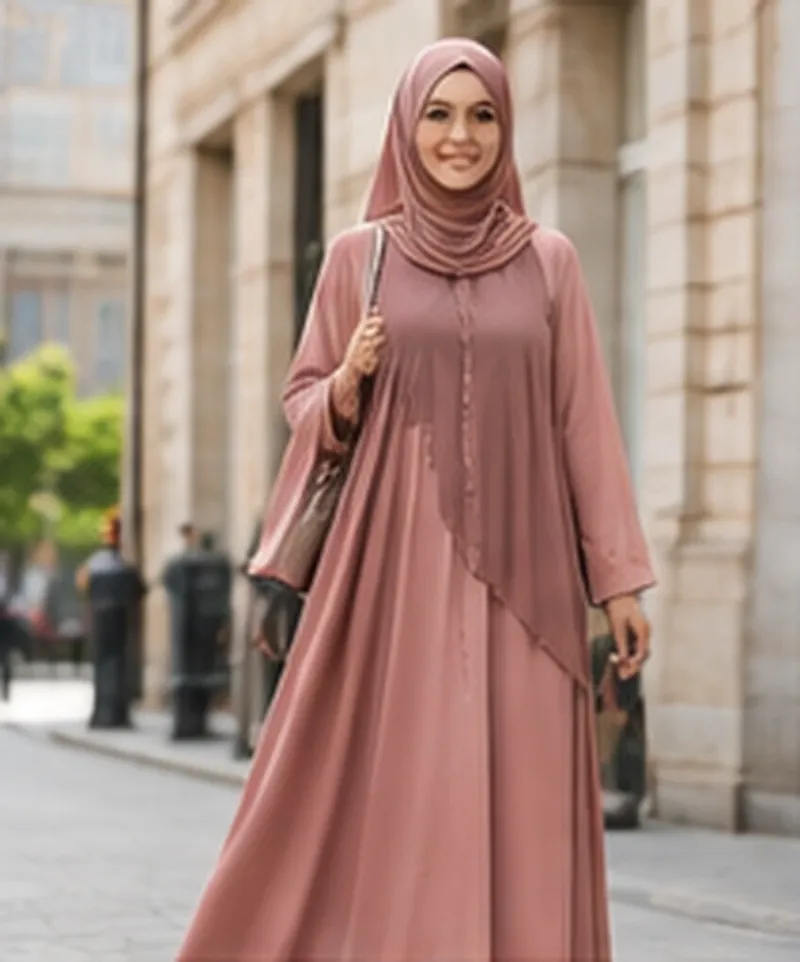
Motifs and inscriptions on clothing in Islam: the main questions
Inscriptions on clothing in Islam, together with motifs and drawings on clothing, cover everything printed, woven or embroidered on a garment: flowers and geometry, animals and people, cartoon characters, brand logos, slogans and sacred calligraphy. Two separate concerns run through the topic. The first is whether drawings on clothing that show living beings are acceptable. The second is whether writing that contains the name of God, a verse of the Quran or a prayer should be put on cloth that will be worn in every kind of place.
A third, more everyday concern follows from the first two. Clothes carry messages, and writing on clothes is read by everyone, so many Muslims ask whether a slogan, an emblem or a picture fits the dignity and modesty they associate with dress. Answers differ between schools, regions and individual scholars, so the sections below describe the common positions and do not settle any single case.
Drawings on clothing and the debate over living beings
Reports from the Prophet warn against the making of images of living creatures and speak severely of those who imitate God's creation. Jurists have debated how far those reports reach. Some read them as covering any picture of an animal or person, including a printed one. Others restrict them to statues and to images made to be worshipped or honoured, and allow flat, small or incomplete depictions.
On clothing specifically, a strict reading discourages garments carrying faces or full figures, while a lenient reading tolerates them when they are modest in size and not meant for veneration. Some scholars distinguish between images on a surface that is trodden on or worn out and images displayed with respect.
Parents often meet the question of motifs with children's wear, where characters and animals are everywhere. Families who prefer the cautious view choose plain fabric, plants, stripes and abstract patterns, while others buy character clothing for small children. Neither group needs to judge the other.
Writing on clothes: verses, names and calligraphy
Arabic calligraphy is among the most admired arts in Muslim cultures, and phrases such as the declaration of faith or a short supplication appear on scarves, caps and shirts. Those who wear them usually do so out of love for the words and a wish to keep them close.
Other scholars urge care. Cloth is laundered, can be stained, may be worn into a bathroom and is eventually thrown away. For that reason some advise against putting Quranic verses or the name of God on ordinary garments, and recommend that if such writing is already present, it is removed or handled respectfully when the item is retired. This is a point of etiquette, adab, for many, and a matter of stricter obligation for some.
Because opinions run along a spectrum, a person who sees calligraphy on a coat or hat in a shop can reasonably ask the opinion of a teacher they trust, and need not assume that everybody else is wrong.
Inscriptions on clothing: slogans, logos and messages
Even when no sacred text is involved, the content of inscriptions on clothing matters. Insults, crude jokes, glorification of violence or drug use, and phrases that contradict Islamic ethics are widely considered unsuitable on clothes worn by a believer. The same applies to garments promoting practices that Muslims regard as forbidden, such as alcohol brands or gambling companies.
Brand logos raise a milder question. A small label on a sleeve is rarely contentious, but large logos that turn the wearer into a walking advertisement sit uneasily with the traditional teaching about humility in dress. Some Muslims also avoid logos in cross-shaped or religious symbol forms that belong to other faiths.
A useful test often mentioned in sermons is to ask whether the message would be comfortable to read in a mosque or in front of one's elders. It is not a legal rule, only a guide to good judgement.
Patterns that most communities accept without difficulty
Plants, flowers, vines and geometric motifs have a long history in Muslim textile art, from Andalusian brocade and Ottoman tulip motifs to Indian block printing and Moroccan embroidery. Because they avoid living beings and sacred writing, they are generally regarded as the least controversial decoration.
Plain colours with tone-on-tone weaving, quiet motifs, tonal embroidery along a hem or cuff, and subtle prints on scarves are popular for the same reason. Many modest-fashion designers lean on this heritage, offering paisley, floral borders or lattice patterns, so that customers who want to steer clear of the debate have plenty of choice.
A practical point is visibility. A pattern that is too bold or too sheer can undermine a garment's purpose, which is to cover and to avoid drawing excessive attention, so even an acceptable motif is worth judging by its effect on the whole outfit.
Choosing clothes in the shop and online
In a shop, check drawings on clothing and writing on clothes by looking at the whole garment before the label: turn the piece over, check the back, the inside of the collar and the cuffs, and read any text printed in a language you do not know. Words in Arabic script can look decorative but may contain a verse, a name or something unrelated to religion altogether.
When buying online, product photos sometimes crop the design. Read the description and the return policy, and write to the seller if an inscription is unclear. A reputable seller will tell you what is printed and in what language.
If you find a piece you like that carries writing you are unsure about, you may be able to unpick the embroidery, cover it with a fabric patch or simply choose another item. Whatever you decide, do not treat the matter as a reason for anxiety. It is one of many small choices in dress where sincere care is appreciated.
Handling worn or discarded items respectfully
When an item bearing sacred writing wears out, some Muslims avoid throwing it in an ordinary bin. Suggested approaches in the books of etiquette include cutting off or unpicking the part with the writing and burying it in clean ground, or keeping it somewhere clean and dignified. Others treat a printed shirt as an ordinary object and apply this care only to the Quran itself.
Donating clothes is a separate matter. Used garments with a logo or neutral design pose no problem, while those with religious text are best given to charities that understand the concern, or the text is removed first.
Households with children can set a simple routine: when the family sorts clothes at the change of season, set aside anything with writing or images that give pause, and ask a teacher what to do with it.
Asking a scholar and keeping a balanced view
The topic shows how Islamic legal thought handles everyday matters. There is a shared concern for reverence toward revealed words, respect for the prohibition on image-making, and decency in public presentation, but there is also real disagreement about details. Mature scholarship allows room for that disagreement without hostility.
Should the matter affect you directly, for example through a work uniform, a school top or a present, take it to a trained scholar within your own community. They can take account of your school of law, your country and your situation, which general writing cannot do.
In daily life, courtesy toward people who choose differently is part of good character. A cautious family and a relaxed family can sit at the same table, share the same prayer line and still dress differently without any bitterness.
Frequently asked questions
Are pictures of animals on clothes forbidden in Islam?
Scholars disagree. Some discourage any image of a living being, while others accept small, flat or non-venerated depictions. Families often choose plants or geometric patterns to avoid the question, and a trusted teacher can advise on specific items.
Can I wear a shirt with a Quran verse on it?
Views range from permissible to strongly discouraged. Concerns include washing, wearing in unclean places and disposal. Many scholars advise against putting verses or the name of God on ordinary clothes, so ask someone you trust.
Are brand logos a problem on Muslim clothing?
Small logos are generally not contentious. Concern grows when logos promote forbidden products or turn clothing into loud advertising, which sits poorly with the teaching on humility in dress. Personal judgement and local scholarly guidance apply.
What patterns are safest for a modest wardrobe?
Geometric shapes, plants, flowers and subtle tonal embroidery are widely accepted because they avoid living beings and sacred writing. Judge the whole outfit as well, since overly bold or sheer designs can work against modesty.