Religious clothing in French public schools: the framework
Religious clothing in French public schools is regulated by a framework that surprises many visitors and new residents. France has a tradition of laïcité, usually translated as secularism, under which the state is neutral between religions and public education is meant to be a shared space where pupils are not set apart by religious affiliation. The principle goes back to the law of 1905 separating the churches and the state and to the creation of free, compulsory and non-religious public schooling in the nineteenth century.
In practice this means that the rules differ from those in countries which protect religious dress in schools. The sections below describe the main texts and decisions in plain terms. This text offers a broad overview and no legal opinion; a family facing a concrete difficulty should turn to the school, the education authority of the area or a solicitor.
The law of 15 March 2004 and conspicuous religious signs
The key text on religious clothing at school is the law of 15 March 2004, now part of the Education Code. It provides that in public primary schools, middle schools and high schools, pupils may not wear signs or clothing by which they conspicuously manifest a religious affiliation. The word used in French is ostensible, meaning visible and demonstrative.
Lawmakers and ministry circulars made clear what falls under the ban: the Islamic headscarf, the Sikh turban or under-turban, the Jewish kippa and a cross of obviously large size. Discreet religious signs, such as a small pendant or a ring, are not covered by the ban. The distinction depends on the visibility and the religious demonstration implied.
The law applies to the school space and school activities. It does not apply to private schools, even those under contract with the state, which have their own rules, and in general it does not apply to universities.
Who is covered by the French school rules: pupils, parents, teachers
The 2004 law on conspicuous religious signs concerns pupils. Teachers and other staff in public schools are public servants, bound by a stricter duty of neutrality that bars any display of religious belief while on duty. That duty has been confirmed over many years by administrative courts.
Parents occupy a more complicated position when it comes to religious clothing. Parents who accompany school trips are not pupils, and for a time the administrative courts ruled in different directions on whether they had to remove religious dress. Guidance from the Conseil d'État, the highest administrative court, pointed to a case-by-case approach, while the Ministry of Education has taken a stricter stance on the neutrality expected from volunteers. Rules continue to be discussed, so ask the school what it expects.
Outside school hours and outside school grounds, pupils remain free to wear what they choose, subject to the general law.
The abaya and the qamis: the 2023 school rule
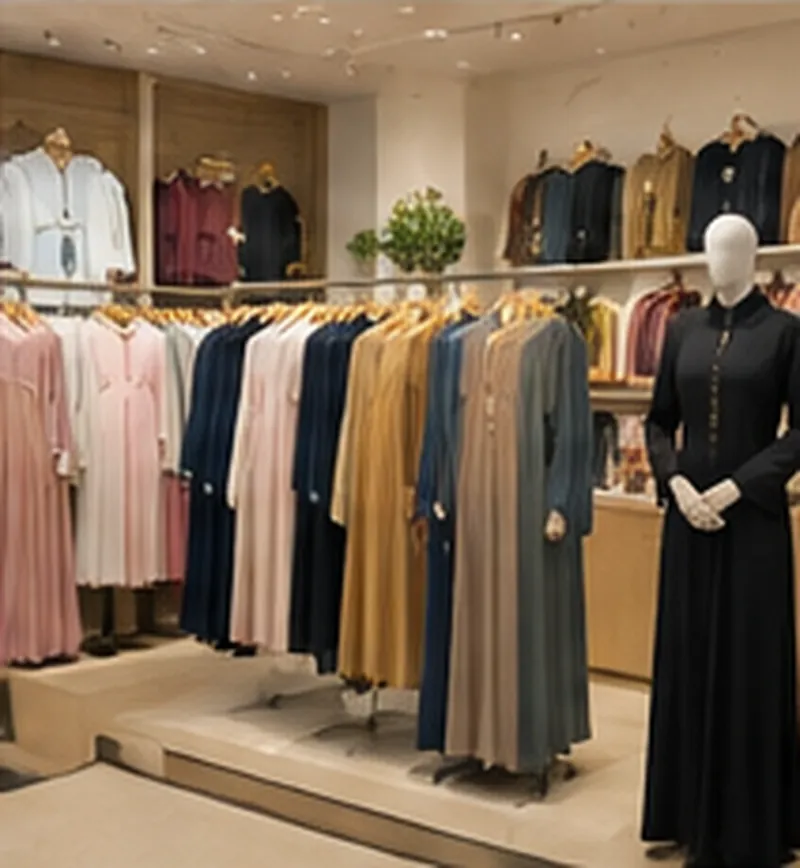
In late August 2023 the Minister of Education at the time, Gabriel Attal, announced that the abaya, a long loose robe for girls, and the qamis, a long shirt for boys, would no longer be allowed in public schools, since they were regarded as religious dress. A ministerial note then gave head teachers guidance on applying the rule, extending the debate about religious clothing in public schools from the headscarf to long robes.
Several associations and unions challenged the measure in court. In early September 2023 the Conseil d'État, ruling on an urgent application, declined to suspend the instruction, concluding that the ministry's position did not seriously and clearly breach fundamental freedoms. This was a ruling on an emergency procedure and not a final decision on every aspect.
The measure was controversial. Supporters argued it clarified how the 2004 law applies to garments that were being worn as religious statements. Critics of the school rules said that it targeted Muslim pupils and treated an ordinary garment as a religious sign. The debate shows how much interpretation lies within the word conspicuous.
Religious clothing at school: what happens in practice
The law provides for dialogue before sanctions. If a pupil arrives wearing a headscarf or an item judged to be a conspicuous sign, the head teacher is expected to talk with the pupil and the family to find an acceptable solution, for example removing the item at the school entrance. Under the French school rules, disciplinary measures are reserved for cases in which dialogue fails.
Pupils whose religious clothing is less obvious, such as a bandana, a headband or a long skirt are not automatically in breach, and schools differ in how they judge them. Intent and context matter, which makes consistency uneven. Families sometimes find that clear conversations with the school at the start of the year avoid conflict later.
If a pupil is excluded, the family has the right to appeal inside the education system and to take the case to the administrative court. The Défenseur des droits, an independent authority, also receives complaints about discrimination and rights at school.
Practical choices for Muslim families
Muslim families respond to the French school rules in various ways. Some girls remove the headscarf at the school gate and put it on again afterwards. Others choose private Muslim schools or Catholic schools under contract, where different rules apply. Others, especially for older teenagers, study at home or through distance courses.
Many families choose modest clothing, which is not religious clothing in the legal sense, that does not meet the definition of a religious sign: ordinary long skirts, loose trousers, long-sleeved tops and plain jackets. The line is not always clear, and what is accepted in one school might be questioned in another, so it is sensible to check before buying a whole wardrobe.
School swimming lessons, sports kits and canteen menus raise related questions. Schools generally expect participation in compulsory lessons, and families who wish to discuss dress for sport can ask the physical education teacher about acceptable options.
Where to look for reliable information
The best sources on religious clothing and school rules are official ones. The Ministry of National Education publishes circulars and guidance, and the Education Code gives the text of the law. The Conseil d'État and other courts publish their decisions. Local education authorities, called académies, can explain how the rules are applied in a given region.
Associations that defend rights, on all sides of the debate, offer advice and publish analyses, though their positions differ. The Défenseur des droits provides a route for individual complaints.
Because this area changes with political debates and court decisions, always check for the latest rules before relying on a general summary. If you are moving to France with a school-age child, contact the school ahead of time. A short, courteous question about the rules on dress will help you plan with confidence.
Frequently asked questions
What does the 2004 French law prohibit?
It prohibits pupils in public primary, middle and high schools from wearing signs or clothing by which they conspicuously show a religious affiliation, such as the Islamic headscarf, the kippa or a large cross. Discreet items are not covered.
Is the abaya banned in French schools?
Since 2023, the education ministry has treated the abaya, and the qamis for boys, as religious dress not allowed in public schools. In an emergency procedure in September 2023, the Conseil d'État refused to freeze the measure.
Does the ban apply to universities and private schools?
The 2004 law applies to public primary and secondary schools. It does not cover universities, and private schools, including those under contract, follow their own internal rules. Check with the institution.
Can parents wear a headscarf on school trips?
Practice has varied. Parents are not pupils, so the 2004 law does not apply to them directly, but school authorities may expect neutrality from volunteers. Ask the school beforehand, and seek legal advice if there is a dispute.