What Islamic shoes for men means
Islamic shoes for men is a marketing and search phrase, not a religious classification. It points to footwear that works well with the clothes and habits of Muslim men: shoes that can be slipped on and off several times a day, that are clean enough to carry into a hallway and that suit long robes or loose trousers.
No text prescribes a specific shoe design for men, although religious teaching places importance on cleanliness and on removing footwear in prayer spaces. Everything else, from colour to material, depends on climate, custom and personal taste. Muslim men's shoes are best judged by how they behave through a full day of walking, standing and praying.
The sensible approach is to start with the outfit and the day. A man who walks to the mosque in a thobe will want something different from one who cycles to an office in a suit.
Regional habits widen the picture. Men in the Gulf often wear light sandals with a kandura, men in Turkey and the Balkans favour leather shoes with trousers, and men in Southeast Asia may wear simple flip-style sandals with a sarong. Islamic shoes for men therefore cover a spread of designs.
Sandals and shoes for thobes and kurtas
With a thobe, sandals are the classic partner. Plain leather sandals with a toe post or a wide strap, sometimes with a heel strap for security, are common across the Gulf. In North Africa, pointed babouche slippers in leather suit the djellaba, and in Pakistan the peshawari chappal and khussa are worn with shalwar kameez. These are the traditional shoes for thobes in many countries.
A strong sole is important because sandals take a pounding on hot pavements. Look for cushioning at the heel and arch, a footbed that does not slip when your feet are sweaty, and straps that do not rub.
In cold or wet weather, sandals give way to closed shoes or leather boots, and warm socks keep the feet comfortable beneath a long robe.
Heat is the other factor. Leather sandals with a cork or rubber footbed stay comfortable in high temperatures, and a light lining prevents sweat from making the leather slippery.
Leather shoes, loafers and trainers among Muslim men's shoes
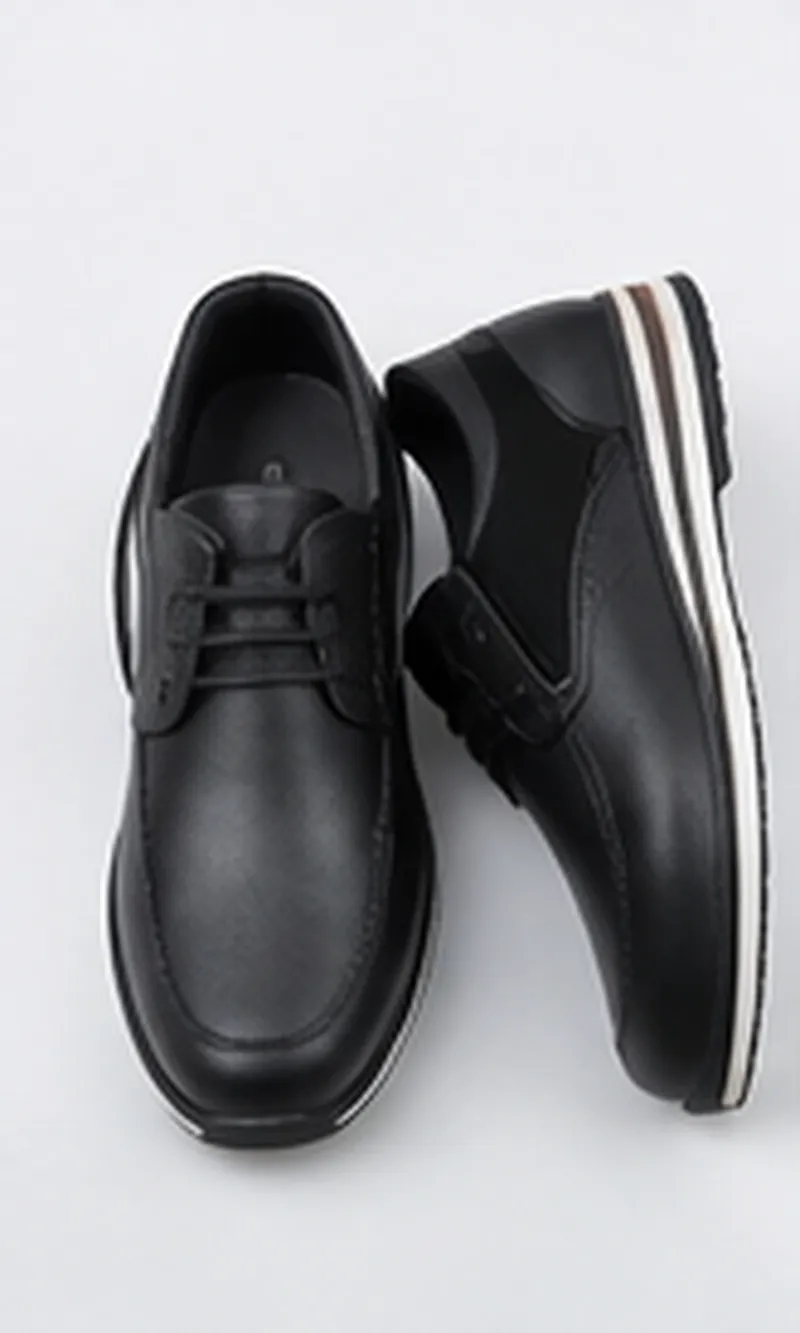
For trousers and shirts, simple leather shoes in black or brown provide a durable base. Lace-up styles, for instance black with white soles, work for casual and smart-casual looks, whereas loafers and slip-ons are quicker to remove when you reach the mosque door.
Trainers in plain colours are popular for daily wear and for walking. Choose light, flexible soles and breathable uppers, and try them with the socks you wear in practice.
- Leather lace-ups for work and formal prayers
- Loafers and slip-ons for quick removal
- Plain trainers for long walks and casual days
- Sturdy boots for winter, rain and building sites
Whatever the style, avoid shoes with bulky buckles or complicated lacing if you remove them several times a day.
Work boots and safety shoes are a separate category for men in trades. Many employers supply them, and a pair with an easy lace system and a removable insole is practical when prayer breaks are taken on site.
Matching Islamic shoes for men with long garments and loose trousers
Footwear should work with the hem. A thobe ending at or above the ankle shows the shoe, so a clean, understated pair looks right. Wider trousers can bunch over bulky shoes, and slim trainers or low-profile loafers avoid that problem.
Colour matching is straightforward. Brown suede with olive, navy or cream outfits, black leather with grey or white garments and white trainers with relaxed cotton trousers all look neat. Matching your belt and shoes, where you wear a belt, adds polish.
Socks complete the picture. Plain dark socks work with trousers, and white or cream socks suit thobes with closed shoes. Those who prefer longer hems should check that socks and shoes do not clash with the fabric.
Younger men who dress in streetwear often pair loose trousers and long shirts with chunky trainers. This works when the trouser hem is wide enough to sit over the shoe without catching. Men's footwear for modest outfits does not need to be formal.
Mosque etiquette and practical shoe habits
Shoes are removed at the door of a mosque or prayer room, and many mosques provide racks or cubbies. Choose shoes that you can step out of quickly, and do not leave valuables inside them. Islamic shoes for men that come off easily make each visit smoother.
Clean soles matter. Wipe your shoes before entering and consider carrying a small bag for them in places where racks are limited. Clean socks are also sensible, as prayer often takes place on carpets shared by many people.
When performing ablution, shoes and socks are removed. Some men use thin leather socks that, according to many scholars, allow wiping over them under certain conditions; the details differ between schools, so a qualified scholar is the person to ask.
If you pray at work, keep a clean pair of socks and a small cloth in a drawer. These small habits save time and show care for shared spaces.
Materials, comfort and care
Leather is long-lasting and breathes well, particularly full-grain leather, but it needs polish and protection. Synthetic leather is cheaper and wipes clean but may crack with age. Canvas and mesh are lighter and cooler, yet they offer less protection from rain. Islamic shoes for men in leather repay a little regular care.
Pay attention to the fit around the toe box and heel. Feet swell during the day, so try shoes in the afternoon, wearing the socks you intend to use. A thumb's width in front of the longest toe is a common guide.
Rotate pairs so they dry between wears, use shoe trees and clean regularly. Replace worn soles to avoid knee and hip strain, and keep sandals clean, especially if you wear them on the prayer carpet.
Odour control matters, particularly for closed shoes worn with socks all day. Natural insoles, cedar inserts and a day of rest between wears keep shoes fresh, and washing socks frequently makes a bigger difference than any spray.
Buying advice and budget
A small collection serves most men: a pair of sandals, a pair of leather shoes, a pair of trainers and boots for winter. Buying quality in the shoes you use most often is more economical than frequent replacements. Shoes for thobes deserve the same attention as the robe itself.
Online shoppers should compare size charts, since regional sizing differs, and check the returns policy. Reviews that mention sole stiffness, width and durability are more useful than general praise. Reviews of Muslim men's shoes that mention sole stiffness are especially useful.
Local cobblers can resole, stitch and polish shoes at a fraction of the cost of new pairs, extending the life of good leather.
Gift ideas are easy too. A pair of good leather sandals is a thoughtful present for Eid or a wedding, provided you know the recipient's size and taste.
Frequently asked questions
Are there religious rules for men's footwear?
No particular style is prescribed. Teaching emphasises cleanliness and removing shoes in prayer spaces. Beyond that, choices depend on climate, culture and taste. For specific questions, consult a qualified scholar from your community.
What shoes go with a thobe?
Leather sandals or slippers are traditional, while closed leather shoes or clean trainers also work, especially in cold or wet weather. Choose a neat, understated style that matches the hem length and colour of the garment.
Which shoes are easiest for the mosque?
Slip-on loafers, sandals and shoes with elastic laces are quick to remove and put on. Avoid complex straps and laces, keep socks clean, and carry a small bag if the mosque has limited shoe racks.
How can I keep leather shoes in good condition?
Wipe them after use, apply polish or a nourishing cream regularly, use shoe trees to hold their shape and rotate between pairs. Resoling worn pairs at a cobbler is cheaper than replacing good leather.