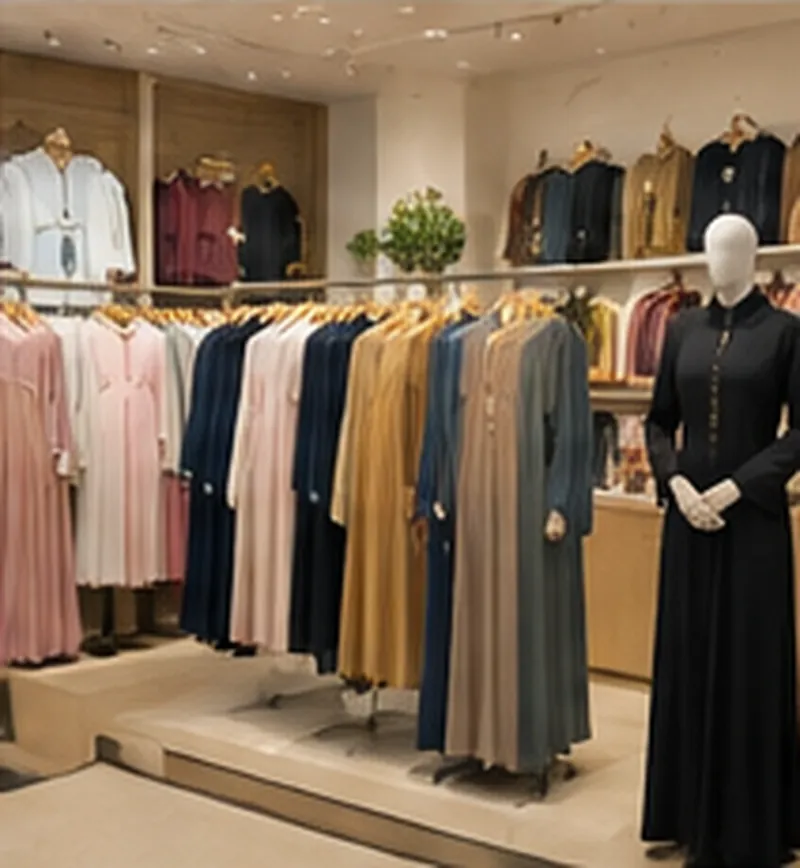
Muslim clothing shops in Vietnam: an honest overview
Muslim clothing shops in Vietnam are not as numerous or as large as in Malaysia, Indonesia or the Gulf, and it is better to say so plainly. Vietnam is a country with a Buddhist and folk-religious cultural background, and its Muslims form a small minority. As a result, a shopper looking for an abaya, a prayer set or a long hijab usually combines several sources and does not expect a single street of specialist stores.
What exists is a patchwork. Some small Muslim clothing shops near mosques and in Muslim neighbourhoods sell scarves, caps and prayer clothes. Fabric markets and tailors supply made-to-measure outfits. Online sellers fill the gaps with imports from Malaysia, Indonesia and the Middle East. Each source works differently, and the sections below describe what to expect from them.
The communities that shape the market
Two communities stand out. The Cham Muslims, descendants of the old Champa civilisation, live mainly in the Mekong Delta province of An Giang, in and around Ho Chi Minh City, and in a few other provinces. Separately, Cham communities in the south-central coast follow a distinct local form of the faith, called Bani, with its own customs. Alongside them, in Ho Chi Minh City there is an urban Muslim population of different origins, including South Asian and Malay families, and a transient community of expatriates and students.
Each group has its own dress traditions, and so its own idea of Islamic clothing. Cham Muslim women often wear a headscarf with a long loose dress or a blouse and wrap skirt, and men may wear a sarong and cap for prayer and festivals. These traditions influence what local sellers stock.
The Cham villages of the Mekong Delta are known for traditional weaving, and visitors sometimes find hand-woven scarves and sarongs there. Because weaving is a living craft, quality and patterns vary from workshop to workshop.
Muslim clothing shops in Ho Chi Minh City and Hanoi
Ho Chi Minh City has the most Muslim clothing shops. Around the mosques of central Saigon, small shops and kiosks sell scarves, caps, prayer mats and modest wear, and halal restaurants in the same streets draw regular visitors. Because of the city's size and its large markets, a variety of other items can be found elsewhere.
The Cholon area has wholesale fabric markets, such as Binh Tay and the Soai Kinh Lam fabric market, where buyers can find cotton, voile and other cloth for long dresses and scarves, and the stalls will point you to tailors. Ben Thanh Market and the surrounding streets have ready-made clothing and tourist stalls, where loose-fitting trousers and long cotton blouses are easy to find.
Hanoi has a smaller Muslim community, and specialist Muslim clothing is harder to find. Residents there often order online or bring garments from abroad, and they use tailors to adapt ordinary garments to be more covering.
Tailors and fabric markets: the practical answer to modest clothing
Vietnam has a strong tailoring culture, and this is the most practical resource for Muslim clothing. Tailors in cities and in towns such as Hoi An are accustomed to making clothes to measure and often work quickly. A customer can bring a photograph or a favourite garment, choose fabric in a market and have an abaya-style dress, a long tunic or a loose jacket made in a few days.
To obtain a good result, explain the requirements clearly: full-length sleeves, a high neckline, a loose cut, a hemline that reaches the ankle and an opaque fabric. Ask for a lining where the fabric is thin, and arrange a fitting. Agree on a price and a delivery date in advance, and take photographs of the sample.
The traditional áo dài, a long tunic split at the sides and worn over trousers, is naturally close to modest dress when made with long sleeves and a high collar and in an opaque fabric. Many Muslim women in Vietnam wear it on festive occasions with a scarf.
Climate and fabric choices for Muslim clothing
Vietnam's climate is tropical and monsoonal in the south, with hot, humid weather throughout the year and a rainy season. The north has a cooler, damp winter, when temperatures can fall enough to need a coat and a thick scarf. A wardrobe suited to the south is built around lightness, while one for the north needs seasonal layers.
In the heat, for modest clothing, cotton, linen, bamboo-fibre and breathable viscose are the best choices, because heavy polyester and layered dress can be uncomfortable. Loose cuts and light colours reflect heat. Quick-drying fabrics are useful in the rainy season, and a small umbrella or a light raincoat adds protection.
Scarves in cotton jersey stay in place and breathe, while thin chiffon needs a cap underneath to keep it secure in the wind. Choose underlayers carefully, since humidity makes cheap synthetic linings clammy.
Online options for Muslim clothing shopping in Vietnam
Online shopping is the main way many Muslim women in Vietnam obtain abayas, long skirts and hijabs. Regional marketplaces that operate in Vietnam, such as Shopee and Lazada, list sellers who ship modest wear, and some independent shops operate through social media pages. Clothes imported from Malaysia and Indonesia are popular because their sizing and styles are designed for covering.
When ordering, check the size chart in centimetres, look for photographs showing the actual fabric, read recent reviews and note delivery times. Cross-border shipments may take longer and can be affected by customs. For a special event, order well ahead and keep a tailor in mind for last-minute adjustments.
Friends and community groups are valuable sources of information. Mosque notice boards and messaging groups often share trusted sellers and group orders.
Consumer rights and sensible buying
Vietnam has a law on protecting consumers' rights, and the Vietnam Competition and Consumer Authority, part of the Ministry of Industry and Trade, deals with consumer protection at national level. At small stores and bazaar stalls, business usually runs on goodwill and house habits for swaps, so find out the returns policy before handing over money and hold on to the receipt or take a photo of the sale.
Bargaining is common in markets and less so in shops with fixed prices. Be polite and friendly, check a few stalls, and be aware of tourist prices in places where visitors gather. Cash is widely used, though card and mobile payments are growing in cities.
Visitors who need prayer facilities will find mosques in Ho Chi Minh City and Hanoi, and may want to ask the community about prayer rooms in shopping centres and airports.
Dress etiquette for visitors and residents
Modest dress in Vietnam is generally respected, and visitors can wear long sleeves, long skirts and a headscarf without difficulty. In Buddhist temples and at cultural sites visitors are also asked to cover shoulders and knees, so the same clothes work across settings.
Many local people are curious and friendly about Muslim dress, and conversation is easy where there is mutual respect. Visitors who ask politely about local food and prayer facilities usually receive helpful answers.
A final tip is to pack a few key items from home, such as scarves and a prayer garment, and then supplement them locally with tailoring and fabric purchases. That combination serves most travellers and residents well.
Frequently asked questions
Are there specialist Muslim clothing stores in Vietnam?
A few small ones exist, mainly near mosques in Ho Chi Minh City, selling scarves, caps and prayer wear. Most people also rely on tailors, fabric markets and online sellers from the region for other items.
Where can I buy fabric for modest dresses?
Ho Chi Minh City's Cholon fabric markets, such as Binh Tay and Soai Kinh Lam, offer a large choice. Local tailors can make long dresses and tunics to measure from the cloth you choose.
Which fabrics suit Vietnam's climate?
Cotton, linen, bamboo fibre and breathable viscose suit the hot, humid south of the country. In the cooler northern winter you may need layers, a coat and a thicker scarf for comfort.
Can I buy abayas online in Vietnam?
Yes. Regional marketplaces and social media shops sell abayas and hijabs, often imported from Malaysia and Indonesia. Check size charts, reviews, delivery times and the return policy carefully before you pay.