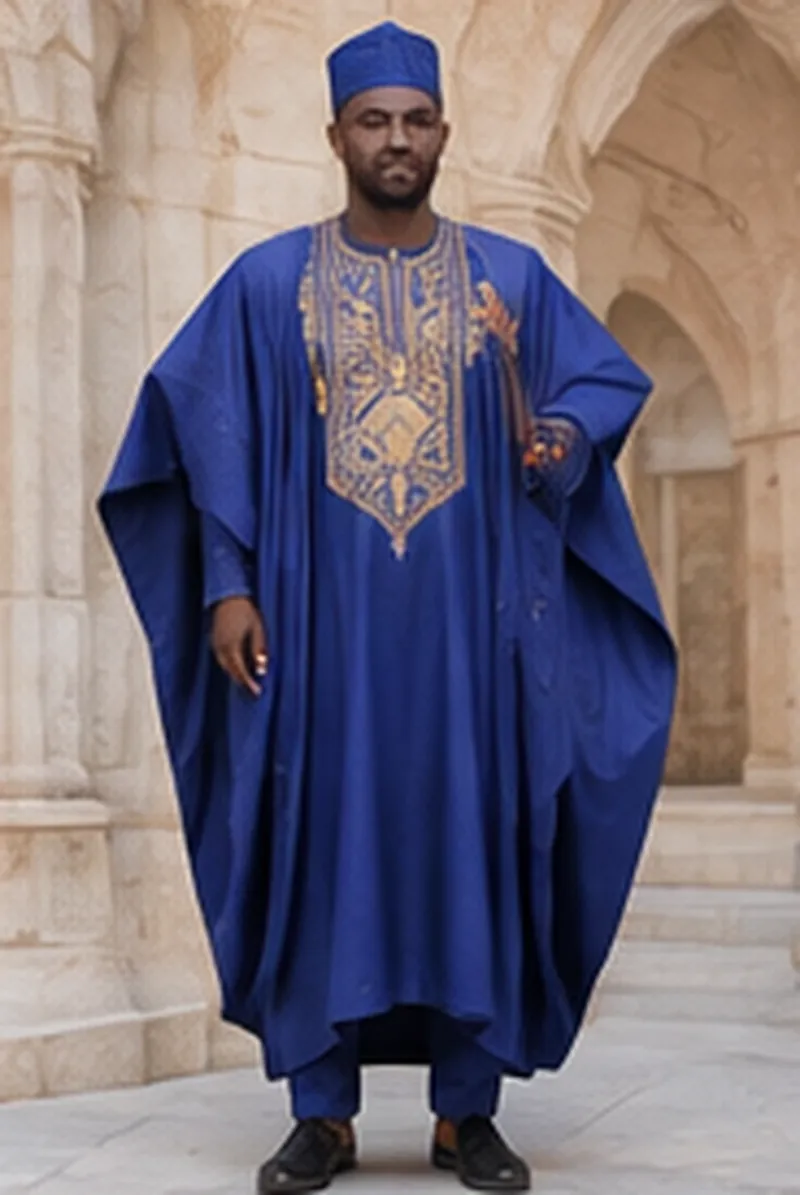
What a bisht is
A bisht is a loose, floor-grazing or shin-length cloak with wide sleeve openings that drapes over the shoulders and is worn open at the front. It is placed on top of the thobe, the long robe of the region, and it is traditionally made of fine wool or camel hair woven into a lightweight, slightly sheer cloth. The edges and collar are finished with a contrasting band, often in metallic thread.
The garment is known under several names. In the Gulf the word bisht is common, and the same cloak is also called a mishlah in parts of Arabia and Iraq. It is part of ceremonial dress rather than everyday clothing, and it carries associations of rank, hospitality and respect.
Because the cloak is open, it does not restrict the arms in the way a closed coat might. It hangs from the shoulders and moves with the wearer, which is why it looks so graceful when a man walks into a gathering.
Where the Gulf cloak comes from and who wears it
The bisht has a long history among Arab tribes, where a cloak was both a practical protection against cold desert nights and a sign of status. Over the centuries it became associated with tribal leaders, religious scholars, judges and rulers, and in modern times it is worn by officials, royal family members and dignitaries at formal and state occasions.
Several places are known for producing it. Al-Ahsa in eastern Saudi Arabia has a celebrated tradition of hand-weaving and finishing, and the cities of Najaf in Iraq and others in the Levant have also been recognised for their cloak makers. Workshops there often specialise in one stage, such as weaving the cloth or sewing the gold-thread borders.
Today the bisht is also worn by ordinary men on important days: the groom at his wedding, a father at a graduation, a worshipper at Eid or the imam leading a prayer on a festive occasion. Cloaks are sometimes given as gifts to guests of honour.
Cloth, colour and the decorated border
The finest cloaks are woven from very fine wool or camel hair and feel airy rather than heavy. Simpler versions use blends or synthetic fibres, which are easier to care for and more affordable. Hold a cloak up to the light: a good piece should be even in weave, with no thin patches or pulled threads.
Colour tells part of the story. Black is the classic formal shade, associated with authority. Brown, beige, cream, grey and camel are popular for daytime events and for wearing in warmer weather. Lighter cloaks are often chosen for weddings, while darker ones suit solemn gatherings.
The border, called zari when made of metallic thread, runs around the collar and down the front edges, and sometimes along the sleeve openings. Gold is the most prestigious shade, silver is a subtler alternative, and a tone-on-tone border offers a modest style. Opinions on men wearing gold thread differ among schools of Islamic law; some scholars take a strict view, others allow minor trim. A reader with a question should consult a qualified scholar.
How to wear a ceremonial cloak correctly
Start with a clean, well-pressed thobe in a plain tone, usually white or cream, and add the headcover that suits your region, such as a ghutra and agal. Place the cloak over the shoulders so the collar sits evenly and the front edges hang the same on both sides. Some wearers leave the front panels loose, whereas others fold one side across over the opposite forearm as they walk.
Do not fasten the cloak with buttons unless it has dedicated ties. It is meant to be worn open, and adjusting it with a gentle shrug is part of the traditional gesture. If you walk quickly, hold the front edges lightly with your hands so the garment does not slip.
Colour matching is simple. A white thobe suits almost any shade of cloak, while a darker thobe calls for a lighter or tonal cloak to avoid looking heavy. Keep jewellery and accessories restrained, since the border itself provides the decoration.
Occasions: weddings, Eid, graduations and official events
At weddings the groom often wears a cloak, sometimes chosen to match his family's tradition. In some communities the bisht is presented to him by his father or an elder. Male relatives and guests of honour may also wear one, so the wedding photographs show a row of elegantly draped figures.
For Eid prayers, many men in the Gulf wear a cloak over a newly pressed thobe as a mark of celebration. University graduations in the region have introduced the habit of wearing a bisht over graduation gowns, which has made the garment familiar to a younger generation. Official ceremonies, receptions and diplomatic events are other regular settings.
For daily prayer, a cloak is not needed. Some worshippers wear one when they lead prayer on special occasions, but its presence is a matter of custom. Mourning and condolence visits generally call for simple, dark clothing without decoration.
Bisht compared with other men's cloaks
The Gulf cloak is lighter and more refined than the hooded wool cloaks of North Africa, and it is typically worn without a hood and over a thobe. Its characteristic border and fine cloth give it a more regal appearance. Compared with the South Asian achkan, which is a close-fitted coat, the bisht is open, flowing and cut with generous volume.
Other parts of the Arab world have open cloaks of their own, with local names and differences in cut, border and weave, so it is helpful to ask a seller what a given word means in that place. A winter cloak lined for warmth is a different garment from the light, sheer cloth of a Gulf ceremonial piece.
For a traveller or a collector, the key point is that a ceremonial cloak is not just a coat. It represents a tradition of hospitality and respect, and wearing it carries expectations of good manners.
Choosing, caring for and storing a bisht
When buying, check the weight, the transparency and the quality of the border. Handmade borders show slight variations, while machine ones are uniform. Ask whether the thread is genuine metallic or imitation, as this affects both price and long-term appearance. Try the cloak over a thobe, because the sleeve openings and shoulder drop should feel comfortable with your usual clothing.
Cloaks are delicate. Keep them away from perfume and sweat, hang them on a wide hanger and cover them with a breathable garment bag. Avoid pressing the border directly with a hot iron, as heat can tarnish metallic threads. For cleaning, use a specialist cleaner who is experienced with embroidered cloaks.
When ordering abroad, request details of fibre composition in writing and read the seller's return conditions. If a problem arises, the consumer authority of your own country can explain your rights as a buyer.
Frequently asked questions
What is the difference between a bisht and a mishlah?
They are essentially the same kind of open cloak, with the name varying by region. Bisht is common in the Gulf, while mishlah is used in parts of Arabia and Iraq. Local sellers can explain how the cut differs.
Should the cloak be buttoned?
No. It is designed to be worn open over the shoulders, hanging naturally in front. If it has ties, they are decorative or for securing it in cold weather. Adjust it gently with the shoulders as you move.
Is gold thread permitted for men?
Scholars hold different views. Some consider gold ornament inappropriate for men, while others allow modest trim. Silver or tone-on-tone borders offer alternatives. If doubt remains, a local imam or teacher is the right person to consult.
When is a bisht worn?
Mainly at weddings, Eid, graduations, official events and receptions. It is not an everyday garment. Wearing one for ordinary prayer is not required, and customs vary between countries and families.