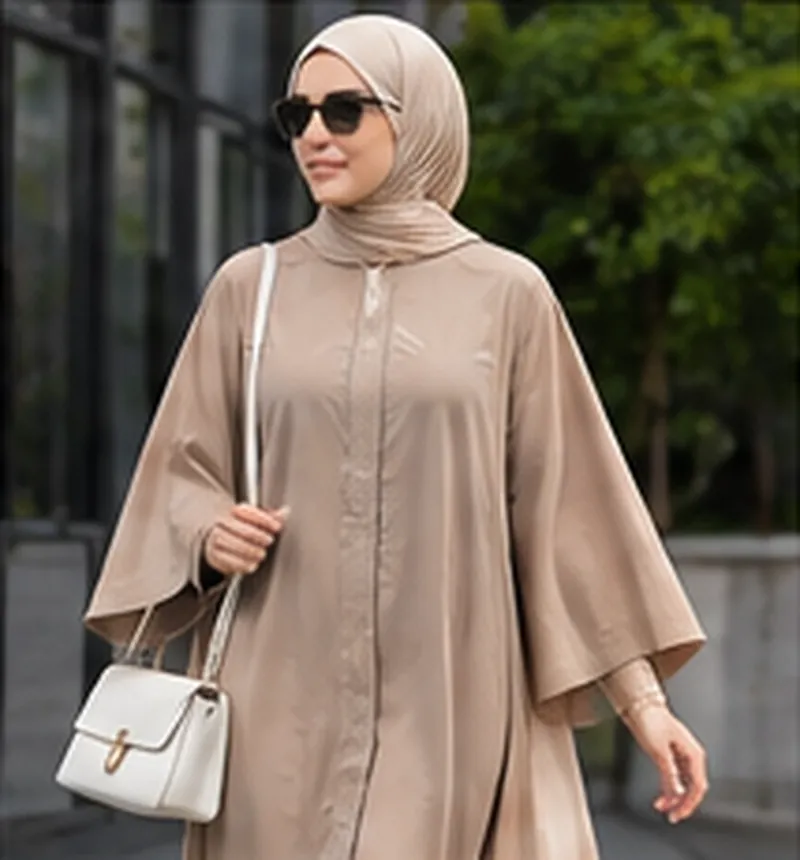
What shayla veils are and where they come from
A shayla is a long, narrow, rectangular scarf, generous in length and wide enough to cover the head and fall over the shoulders. In the Arabian Gulf, women wear it with an abaya, often in black or in a colour that matches the outfit. A lighter, sheerer cousin is sometimes called a tarha, a term used in several Gulf countries for a thin veil.
The word has spread in modern fashion to describe any scarf of this shape, and it has become one of the best-known rectangular hijab formats worldwide. It differs from the pull-on hijab, which is a ready-made tube, and from the square scarf, which is folded into a triangle. The rectangle gives the wearer room to decide how much coverage and volume she wants. Many shoppers browsing shayla veils for the first time are surprised by how different two scarves of the same shape can feel.
Fabrics for a rectangular hijab
Chiffon is the classic shayla fabric: light, airy and elegant, it falls in soft folds and suits hot climates, though it can slip and may need pinning. Georgette has a little more weight and a crinkled texture that grips the hair. Jersey is stretchy, comfortable and easy to wear without pins, while crepe has a smooth, matte appearance. Silk blends and satin appear for weddings and festive occasions.
Think about the setting. A shiny satin shayla might look elegant at an evening event but is slippery by day, while a matte chiffon or jersey works for the office. Pre-washed or pre-shrunk fabrics reduce surprises, and frayed or rolled edges can be a sign of a well-made piece, whereas cheap overlocking may look bulky. Fabric choice for a shayla scarf also changes how long a pin will hold, since slippery cloth needs more fixing points.
Sizes, lengths and edges
Rectangles vary in length and width, and the proportions affect the look. A long, narrow shayla produces a sleek, slim drape, while a wider one makes more volume and falls generously over the chest. Some wearers prefer to buy a longer size to create draping on both sides. A wide rectangular hijab is better for those who want to cover the chest and upper arms, while a narrower one suits a streamlined silhouette.
Edges matter as well. Hand-rolled hems look fine and drape well, laser-cut edges prevent fraying, and lace or embroidered trims are saved for special occasions. Always test one corner against your skin, because scratchy edges can irritate the neck after many hours.
Basic shayla draping step by step
Start with a snug undercap, then centre the scarf on the head so that one side is longer. Place the longer end across the chest or over the opposite shoulder and secure it near the ear with a pin. Bring the shorter end around and fix it under the chin or at the side, then adjust the front so that the forehead is covered as you prefer.
- The simple wrap: one end crosses the neck and is pinned on the opposite shoulder.
- The tuck-in: the ends are folded under the chin and fastened, leaving a neat, compact line.
- The cape drape: both ends are left to fall evenly over the shoulders, creating a veil-like shape.
- The back-throw: one end is flipped behind the shoulder, a favourite in Gulf-style looks.
Practise before a mirror in good light, and keep a few pins or a magnetic clip in your bag in case of adjustments. Learning shayla draping in stages, rather than copying a complicated tutorial at once, avoids frustration and wasted fabric.
Undercaps, volume and pinning
A good undercap stops the shayla from slipping, and a cap in a slightly different shade is useful if the fabric is thin. A small volumiser, such as a soft padded band, gives height at the crown that many wearers like. For pinning, safety pins, straight pins with pearl tops and magnetic pins all have fans. Magnets protect delicate fabric from holes but may not suit fine chiffon with a strong wind. Some women add a thin elastic band at the nape to hold everything tidy under the wrap, which also reduces the number of pins needed.
If you wear glasses, place the arms of the frame under the cap and over the first layer of the scarf for a comfortable fit. If you are active, ask yourself whether you need a wrap that stays secure over many hours, and test it by walking and turning your head before leaving. Rehearsing shayla draping at home with the exact outfit you plan to wear is the surest way to avoid last-minute adjustments.
Dressing a shayla for work, evenings and travel
For work, a plain jersey or matte chiffon in navy, grey, camel or black is hard to beat. For evenings, choose satin or printed silk-feel fabrics, perhaps with a contrasting pin or a lightly embroidered edge. In travel, packing a few lightweight pieces that can be washed in the sink and dry overnight is practical. The classic Gulf-style scarf is often shown with a soft peak at the crown and the ends falling asymmetrically over the shoulders.
Colour harmony is easier if you keep the outfit simple, and a shayla in a deeper shade can frame the face. Some women choose to match the scarf to their shoes or bag as a finishing touch. When you pack several shayla veils for a trip, fold them into rolls and place them in a pouch so chiffon does not snag on zips.
Care and storage
Delicate fabrics such as chiffon should be hand washed in cool water with a mild detergent, rinsed gently and left to dry flat or on a hanger. Jersey can usually go in the machine on a short cycle. Iron on the lowest heat with a cloth between iron and fabric.
Store scarves rolled or hung, not crushed, and keep pins in a small box so they do not snag. Replace a shayla when the edges start to fray heavily or the fabric loses its drape. Keeping each shayla veils set in a labelled drawer section makes it easier to choose quickly on busy mornings.
A short buying checklist, with room for different views
Check the dimensions, the fabric composition and the opacity, and ask whether the piece is pre-hemmed. Read feedback on whether the colour in the photograph matches the real thing. Keep a few base colours and add seasonal shades later. A scarf bought in the shop for a Gulf-style look should be viewed in daylight, because indoor lighting can hide transparency.
What counts as sufficient coverage is understood differently by scholars and communities, so the style of draping, the amount of hair or neck covered and the length of the ends are matters for your own understanding and for a qualified scholar if you seek guidance. Many women also appreciate a seller who gives clear measurements and a short care sheet, since they signal that the maker understands how the garment is worn.
Frequently asked questions
What is a shayla?
A shayla is a long rectangular scarf worn around the head and shoulders, associated with the Arabian Gulf. It is wrapped and pinned in different ways and often paired with an abaya, although it is now worn with many outfits worldwide.
What fabric is easiest to start with?
Jersey is the easiest for beginners because it stretches, grips the hair and stays in place with few pins. Chiffon is lighter and more elegant but slippery, so it is better after you have practised basic draping.
Do I need pins to wear a shayla?
Not always. Jersey and cotton can stay in place with a good undercap and careful tucking, while chiffon usually needs a pin or two. Magnetic clips are a gentler alternative that avoids puncturing the fabric.
How long should a shayla be?
Lengths vary by brand, and there is no single standard. A longer scarf gives more drape and coverage, a shorter one is lighter and easier to manage, so choose according to the look you want, the outfit and your own understanding of modesty.