What isbal means
Isbal is an Arabic word from a root meaning to let down or to lower. In discussions of dress it refers to letting a garment hang below the ankle bones, so that the hem trails or covers the foot. The classical term for the lower garment, the izar, was a wrapped cloth, and later discussions extended the principle to robes, shirts and trousers.
The topic arises because of several reports preserved in the major hadith collections that mention the lowering of garments. Muslim jurists have studied these reports, compared them and reached different conclusions. The main views are summarised here without choosing among them.
It is useful to remember that the discussion concerns men's garments in most sources, and that women's clothing is treated separately in the same literature. The questions most readers ask are practical ones: how long should a robe or trousers be, and does a longer hem carry a ruling.
The reports discussed by scholars
Two kinds of reports are central. One group warns in strong terms about the part of the lower garment that hangs below the ankles. Another group warns about dragging one's garment out of arrogance or vanity. Some versions of the reports link the two ideas, while others mention only the arrogance.
Scholars have noted that one report tells of a companion whose garment tended to hang low and who was told that he was not among those who did so out of pride. This account has been cited by jurists who distinguish between lowering the garment from arrogance and doing so without any such intention.
Other scholars understand the stronger wording as applying to the lowering itself, whatever the intention, and treat the arrogance reports as describing a more serious form. The disagreement is therefore about how the reports relate to one another, not about whether they exist.
The wording of each report, its chain of narrators and the circumstances in which it was spoken are all examined by scholars, which is why serious study of isbal takes time and why two respected teachers may give different answers.
The range of scholarly opinions
Broadly, there are two main positions, each with variations. One holds that isbal is unlawful when it is done out of arrogance and disliked, but not unlawful, when it occurs without that intention. Many classical scholars of the Hanafi, Maliki and Shafi'i schools are cited in support of a view of this kind, although individual rulings differ.
The other position holds that isbal is unlawful in itself, whatever the intention, because of the explicit wording of the reports. Many contemporary scholars, especially in the Salafi tradition and among Hanbali jurists, take this view, and it is widely taught in parts of the Arabian Peninsula.
Additional views exist. Some scholars make allowances for need, for example for people with a physical condition, or for particular circumstances. Others stress that the principle includes cleanliness and humility, and that the spirit of the teaching is to avoid pride. A reader who wishes to know the position of a specific school should consult a qualified scholar of that school.
Women's garments and the question of garment length
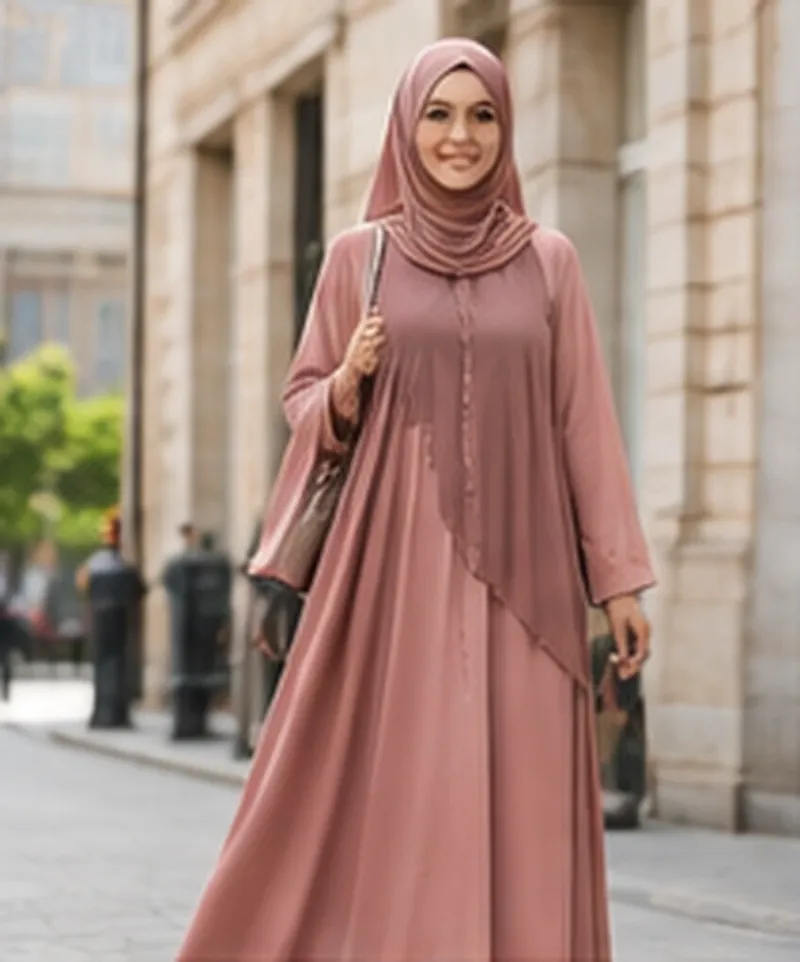
The literature treats women differently. Reports mention that women's garments may hang lower than men's, within limits, and scholars have discussed how far down a woman's hem may go. The reasoning is that women are generally expected to cover their feet in public according to many scholars, which leads to longer garments.
Details vary among schools. Some classical scholars say that a woman's garment may extend to the ground or a little beyond, while others specify a limit, and views differ in the modern period as well. In practice, long dresses and abayas are worn by women in many communities without controversy.
Again, a family with a particular question should consult a qualified scholar from its own tradition. The summary here reflects the existence of a range of opinions and should not be taken as a ruling.
Isbal in everyday clothing: trousers, thobes and shalwar
The principle is applied to modern clothing in different ways. Men who follow the stricter view choose trousers whose hems end above the ankle bone, often with a cuff or a shortened leg. Others wear a thobe whose hem stops mid-calf. In South Asia, the shalwar is often cut to finish above the ankle for the same reason.
Men who follow the more flexible view may wear standard trousers and robes that reach the ankles or slightly lower, while taking care that the hem does not drag or become dirty. They may regard the avoidance of arrogance, tidy appearance and cleanliness as the central concerns.
Practical details matter. Jeans and suit trousers can be hemmed or cuffed. Robes can be tailored to a chosen length. Shoes and socks affect how a hem looks, and a trouser that is long when standing may rise when sitting or praying. Trying garments on while seated helps check the actual length.
Whatever the chosen garment length, the tailor is a useful ally: a quick adjustment of the hem on trousers, thobes or shalwar costs little and spares the wearer from repeated worry about isbal.
Prayer, children and other special cases
Some scholars discuss garment length in the context of prayer, with differing views on whether isbal affects the validity of prayer. Most jurists say that the prayer is valid, though some regard it as disliked or sinful depending on their position. Anyone concerned about their own prayer should ask a qualified scholar.
For children, the question is usually treated as a matter of upbringing. Boys are often dressed in garments of the length that their families prefer, and parents may teach them the habit gradually. Young children grow fast and stumble often, so a hemline that lifts off the floor is also a simple way to prevent falls.
Other special cases include uniforms, workplaces and sports clothing. People in such settings often adapt, for example by wearing shorter trousers or cuffed hems while following the rules of their institution. The scholarly literature recognises that circumstances and necessity matter.
How to approach the question respectfully
Because the topic involves differing views, courtesy is important. A person who wears a longer hem is not necessarily acting from arrogance, and a person who wears a shorter hem is not necessarily being severe. Respect for those who follow another view reflects the long tradition of scholarly disagreement within Islam.
Those seeking guidance can ask a scholar they trust, preferably one trained in the school of law that they follow. Reading a classical text with a teacher can also clarify why scholars reached their conclusions. Short written summaries cannot replace personal guidance.
In the end, the choice of garment length is a personal one, made in the light of the teacher one follows. What most traditions share is the goal of humility, cleanliness and dignity in dress.
Frequently asked questions
What does isbal mean?
It is the Arabic term for letting a garment hang below the ankles, so that the hem trails or covers the feet. The discussion usually concerns men's robes, trousers and wrapped lower garments.
Do all scholars agree that isbal is prohibited?
No. Some scholars hold that it is prohibited only when done out of arrogance, and disliked otherwise, while others hold that it is prohibited in itself. Views differ by school and by period, so consult a qualified scholar.
Does the same ruling apply to women?
The sources treat women differently, and scholars generally allow women's garments to be longer, within varying limits. Opinions differ in detail, so a qualified scholar should be asked about a specific case.
How can I check my trouser length?
Try the garment on with the shoes you usually wear, standing and sitting. Mark where the hem falls relative to the ankle bone and ask a tailor to adjust. A cuff gives flexibility if you wish to change the length later.