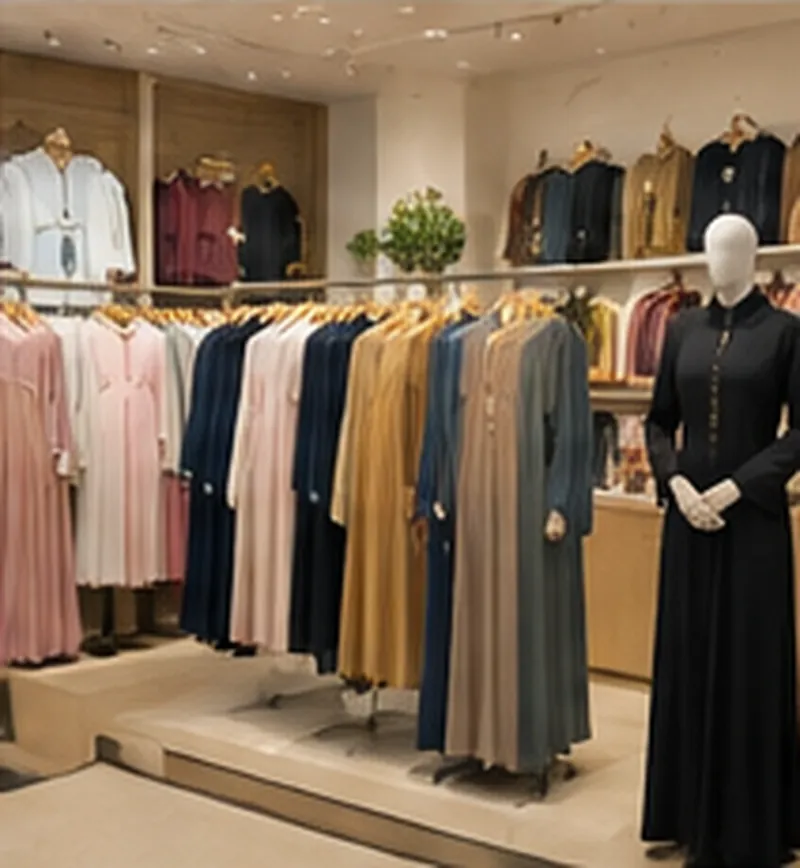
Tunisian Muslim clothing between Mediterranean and Sahara
Tunisian Muslim clothing grows from a country that sits at the crossing of Mediterranean trade routes and desert caravan paths. Phoenician, Roman, Arab, Ottoman and Andalusian communities all left influences, and Muslim refugees from Spain brought refined textile skills that shaped the capital's craft districts. The result is a wardrobe that is relatively light, with airy fabrics and moderate embroidery, rather than the heavy layering found in colder regions. Anyone looking at traditional Tunisian dress for the first time is struck by how much of it is white, cream and light blue, colours that reflect the coastal sun.
Today most Tunisians wear contemporary fashion in daily life, particularly in coastal cities, while traditional pieces mark Fridays, religious feasts, weddings and national celebrations. Many designers reinterpret the jebba or the blouza in modern cuts, and tourists meet the same garments in the medinas of Tunis, Sousse and Sfax. Tunisian Islamic clothing is therefore best seen as a living tradition that adapts, not a museum collection.
The jebba and the chechia: Islamic dress in Tunisia for men
The jebba is a long, loose, sleeveless or short-sleeved tunic made of cotton, wool or linen, worn over a shirt and trousers. Plain white or cream versions are chosen for Friday prayer, while embroidered versions in softer colours appear at weddings and on feast days. Craftsmen in Tunis, Nabeul and Moknine often work the collar and chest with fine thread. This form of Islamic dress in Tunisia suits the warm climate because the sleeves leave room for airflow and the cotton absorbs perspiration.
The chechia is a close-fitting red felt cap, traditionally made in the old city of Tunis, where the Souk des Chechias is devoted to its makers. It is dyed with natural pigments, brushed and shaped on moulds, and became a national symbol worn by men of all ages, though many now put it on only for ceremonies. The burnous, a hooded wool cloak, protects men in the cold season in the interior and mountains.
Women's traditional Tunisian dress: safsari, fouta and blouza
The safsari was a large rectangular wrap in white or pale cloth, usually silk or cotton, that women used to cover themselves outdoors in Tunis and other cities. It could be held at the mouth or chin, and over the twentieth century it gradually disappeared from daily use. Elsewhere, women wore dark wraps in the south and wool shawls in cold regions.
In the coastal Sahel, Nabeul, Djerba and other regions, the fouta and blouza combination remains a symbol of rural heritage. The fouta is a striped wrap, often in red and yellow, worn around the waist over trousers or a skirt, while the blouza is a loose tunic or dress with embroidery. Women wear a straw hat in the fields and fabrics woven with metallic threads for festivities. In cities, modern long dresses, abayas, long cardigans and the hijab are common, with great variety in style and colour. Tunisian modest dress for professional women often means a long jacket, straight trousers or skirt, and a plain scarf in a harmonious colour.
Berber and southern costumes in Tunisian modest dress
Tunisia's Amazigh communities, in places such as Matmata, Tataouine, Chenini and the island of Djerba, preserve dress that differs from the capital. Women wear long garments in dark or bright colours, heavy silver jewellery, and head wraps adapted to desert wind. Men wear long robes and turbans that guard the face against sand.
Understanding this variation matters because Tunisian modest dress is not only a city story. In the oases of Tozeur and Nefta, light fabrics in warm colours protect against the sun, while woven Kairouan wool offers warmth in winter. The shape is the same idea of covering the body, expressed in the material that the region produces. Visitors who buy such pieces from cooperatives help keep local weaving alive, and they can ask the weavers which pattern belongs to which village.
Climate and the fabrics Tunisians choose
The north has mild, rainy winters and hot summers; the centre is drier; the far south is hot and arid with cold nights. Cotton and linen therefore dominate, while wool appears in coats and burnouses. Many women choose viscose, crepe and chiffon for scarves, and avoid heavy synthetic cloth in the humidity of summer coastal cities. Craftsmen still dye some wool and felt by hand in traditional Tunisian dress, while factory colours dominate cheaper imported items.
Colour is also seasonal: whites and light pastels for summer, earth tones for autumn, and deeper shades for winter weddings. A practical tip is to wear a thin cotton underlayer beneath embroidered or metal-thread garments, because the trims can be abrasive.
Weddings, Eid and Ramadan
Weddings in Tunisia can include several days of events, and the bride may wear a traditional gown, a caftan and a white dress. Her family chooses regional costumes where possible, and henna night remains an important moment. Guests dress in long gowns, often with a shawl, and men may choose a jebba and chechia for formal celebrations. Tunisian Muslim clothing for brides therefore blends heritage pieces with new designs, and many families borrow a grandmother's jewellery.
At Eid, children wear new outfits and families visit each other. In Ramadan, evening prayers and gatherings bring out comfortable robes, and markets sell sweets as well as garments. For many families this is the best season to renew the wardrobe.
Where to shop for Tunisian clothing
The medina of Tunis, with its covered souks, offers chechias, jebbas, fabrics and ready-made robes. Sousse, Sfax, Kairouan and Nabeul have their own markets, and craft centres sell embroidered items at fixed prices. Modern boutiques and chain stores on main avenues stock long dresses, abayas and scarves, and many sellers use social media to advertise new arrivals.
Bargaining is common in souks, so compare quality, check embroidery stitching and ask about fabric content. Tunisia has consumer protection regulation and a national consumer institute that publishes advice, and complaints can be raised with the authorities responsible for commerce. Foreign visitors should keep receipts and be aware of customs rules on export. Looking for Tunisian Muslim clothing online, many buyers compare designers on social media before visiting a workshop in person.
Public debates and personal choices
Dress has been politically debated in Tunisia. Restrictions on headscarves in public institutions were applied for decades and were lifted after 2011, and public conversation about the matter has continued since. Today, Tunisian women make their own choices, shaped by faith, family, region and personal taste.
Opinions among scholars vary about how much to cover and about particular garments, so for religious rulings it is wise to consult someone qualified. When buying, choose comfortable, well-sewn pieces that fit your daily life, whether that is an office, a university or a family home.
Frequently asked questions
What is a jebba?
A jebba is a long, loose tunic worn by Tunisian men over a shirt and trousers, in cotton, linen or wool. White versions are common for Friday prayer, and embroidered ones are worn at weddings and feasts, often with a red chechia.
Why is the chechia important?
The chechia is a red felt cap made by specialised craftsmen in Tunis and elsewhere. The cap has come to stand for Tunisian national identity, yet today most men put it on just for ceremonies, festivities or formal events.
What is the fouta and blouza?
It is a regional women's outfit: a striped wrap called the fouta worn at the waist and a loose embroidered tunic called the blouza. It is strongly associated with rural and coastal areas and with cultural celebrations.
Are headscarves common in Tunisia?
Many women wear one, many do not, and practice differs by region, age and family. Public rules on headscarves have changed over time, and scholars differ on obligations, so individual practice remains a personal choice.