What Islamic sportswear for men involves
Islamic sportswear for men describes training clothes that follow ordinary ideas of modesty in a male context. A widely held scholarly view is that men should keep everything from navel to knee covered at all times, sport included, and many also favour garments that do not stick to the body. Opinions differ on details, so some men go further and others keep to the minimum. Modest gym clothing in this sense is simply sensible kit.
In practice this means knee-length or longer shorts, loose tracksuit trousers and tops that do not cling heavily. Sports brands sell plenty of suitable kit under ordinary names, so the category is more about selection than a separate product line.
The right outfit also depends on the sport. A footballer, a weightlifter and a long-distance runner each need different fabrics, and the most sensible approach is to choose by activity first and then check coverage.
Culture plays a role as well. Cricketers in South Asia, footballers in North Africa, runners in East Africa and martial artists in Southeast Asia all bring their own habits, from long cricket whites to loose pencak silat trousers. Muslim men's activewear therefore draws on many sporting traditions rather than one template.
Loose sportswear that still performs
Loose sportswear no longer means heavy cotton. Technical polyester blends are light, breathable and quick drying, and they are made in relaxed cuts as well as fitted ones. A straight-leg training trouser or a long running short with a built-in liner moves easily without clinging.
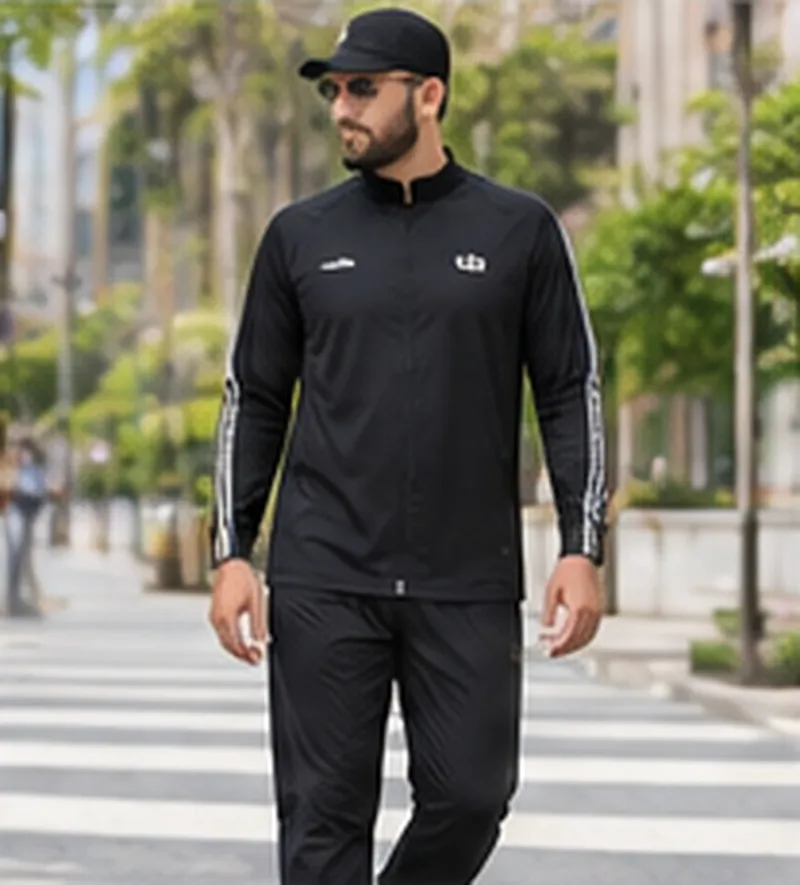
Tracksuits in wide cuts remain popular for walking, warm-ups and cooler days. A dark tracksuit with side stripes, a classic design, shows how a relaxed pair of trousers and a zip-up top can look neat and still cover well.
Pay attention to the waistband and ankles. Elastic and drawstring waists keep the trousers in place, while tapered or elasticated hems stop fabric catching on pedals or machinery.
Colour is a practical matter too. Dark tones hide sweat and grass stains, while light tones reflect heat and are more visible to drivers at dusk. Many runners combine a dark bottom with a bright top to get the best of both.
Shorts, trousers and tights beneath
For men who play football, basketball or run, knee-length shorts are a typical choice, and longer ones that fall past the knee are widely available. Check the length when you crouch or sit, since some shorts rise higher than they appear while standing. Islamic sportswear for men on the pitch is mostly a question of length.
Compression tights or leggings under shorts provide support and extra coverage. Many athletes wear them for muscle comfort, and they ensure that the legs remain covered when kicking or stretching.
- Knee-length or longer training shorts with a built-in liner
- Straight or tapered training trousers for the gym and walking
- Thermal base layers for cold mornings
- Light compression tights worn beneath loose shorts
Socks, shin guards and supports also matter. Long football socks cover the lower leg, and knee sleeves can add warmth and a sense of security without altering the shape of the outfit.
Tops, base layers and outerwear
Short-sleeved performance T-shirts are common, but some men choose long-sleeved tops for sun protection, cold weather or personal preference. A looser tee that reaches the hips offers more coverage when bending or lifting. Loose sportswear in tops is easy to find in most shops.
In winter, thermal base layers, fleece mid-layers and windproof jackets keep training sessions comfortable. Gloves and a beanie or cap complete the kit, and reflective details improve safety during dark mornings and evenings.
For the gym, avoid tops with very deep arm holes and choose fabrics that do not become transparent with sweat. A plain dark colour is more forgiving.
Hooded tops and zip jackets are practical on the way to and from training, as they cover the arms and shoulders and can be removed once you warm up.
Team sport, gyms and swimming-pool changing rooms
Team kit is often prescribed by a club, but long shorts or leggings underneath are generally allowed. Ask coaches and league officials about regulations before you buy, since rules vary between sports and organisations.
Gyms and changing rooms present a practical question for those who prefer privacy. Wear your kit from home if possible, use cubicles for changing, and bring a towel to cover when necessary. Many gyms have private changing areas, and staff can explain them.
Sport can also involve prayer times. Pack a small mat or a clean towel, and choose a kit that you can pray in without changing, so that a break does not become complicated.
Parents of boys should consider the same points. Young players need loose kit that grows with them, and clubs are usually happy to accept longer shorts or leggings when asked politely in advance.
Finally, think about footwear and bags. A bag with a separate shoe pocket keeps the mat and kit clean for prayer, and sturdy shoes that are quick to remove suit sessions that end at the mosque.
Training during Ramadan and in hot weather
During Ramadan many men continue to train, often after the evening meal or just before it. Light, breathable clothes help because the body is working without fluids in daylight, and lower-intensity sessions are common during fasting hours.
In hot climates, choose pale colours, vented panels and light fabrics, and consider a cap with a neck flap for sun protection. Loose garments allow air to circulate and help manage heat.
Health matters come first. If you have a medical condition or feel unwell during training, speak to a doctor, and for questions about fasting and exercise, ask a qualified scholar.
Hydration is vital, so carry a bottle and plan your session around the times when you can drink. In summer, wash your kit promptly, since sweat and heat quickly produce odours in synthetic fabrics.
Recovery clothing deserves a mention. A loose hooded top and soft trousers worn after training keep muscles warm while you cool down, and they cover comfortably on the walk home or the drive back, so you are never stuck in damp, clinging kit.
Buying, fitting and caring for modest gym clothing
Try kit with movement in mind. Squat, lunge, raise your arms and sit to check the length and opacity. Garments should stay in place without a tight grip. Islamic sportswear for men deserves the same attention to fit as any other clothing.
Check size charts, since cuts vary. A looser fit often means choosing one size up, but measure rather than guess, particularly when buying online.
Wash sportswear after every session in cool water, avoid fabric softener, which blocks the wicking properties, and air-dry. Replace garments when the fabric becomes thin or loses its stretch, because worn kit can become transparent.
Second-hand sports shops and clearance racks are good sources of loose sportswear at modest cost, and since sportswear is mostly plain, a pre-owned tracksuit often looks as good as a new one.
Frequently asked questions
How long should men's training shorts be?
For numerous scholars the navel-to-knee zone is the minimum for men, which means shorts reaching the knee satisfy that opinion. Some prefer longer lengths. Measure the length while sitting or squatting too, and consult a qualified scholar whenever you are unsure.
Can I use ordinary sportswear?
Yes. Most Islamic sportswear for men is simply regular kit chosen for a loose cut and adequate length. Look at the hem, the looseness of the fabric and whether it stays opaque when wet with sweat.
What do I wear under loose shorts?
Many men wear compression tights or a lined short beneath loose shorts for support and coverage. This keeps the legs covered during running, kicking and stretching, and it also helps prevent chafing on longer sessions.
How do I train comfortably during Ramadan?
Choose light, breathable clothes, reduce intensity during fasting hours and schedule sessions after the evening meal if possible. Follow medical advice if you have health conditions, and ask a qualified scholar about specific questions on fasting.