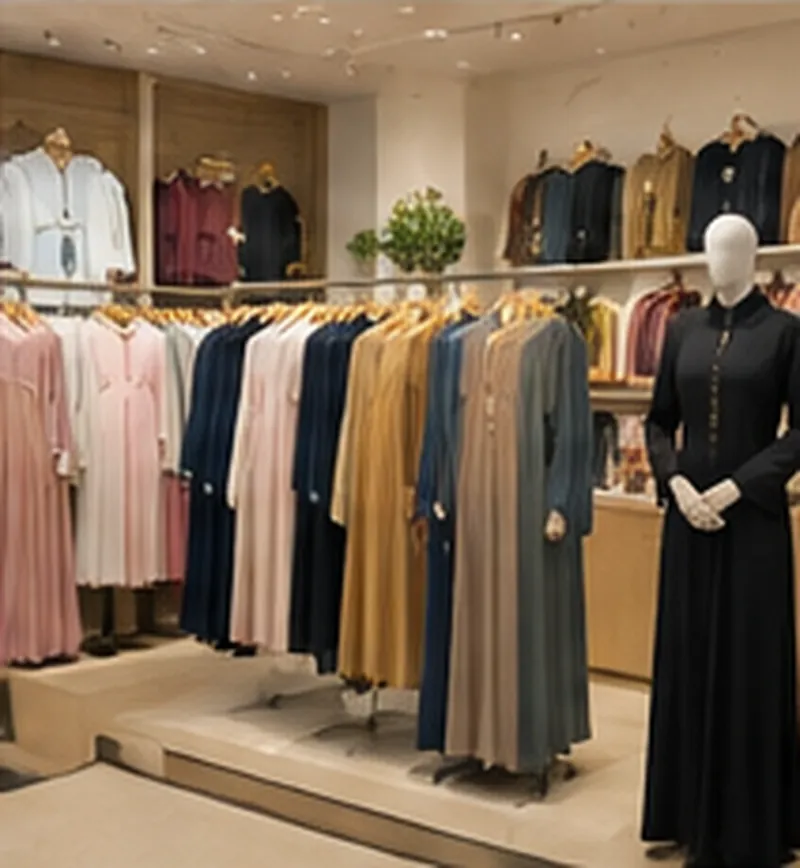
Where Muslim clothing shops are found in Quebec
Muslim clothing shops in Quebec are most numerous on the island of Montreal and in the neighbouring suburbs of Laval and the South Shore. Districts with long-established immigrant communities, such as Côte-des-Neiges, Parc-Extension and parts of Saint-Laurent and Saint-Michel, contain boutiques, fabric sellers, bookshops and tailors serving customers of Maghrebi, Lebanese, South Asian, West African and Middle Eastern origin. Quebec City, Gatineau and Sherbrooke have fewer specialist outlets, so residents there often rely on a small local seller, a visit to Montreal or the post.
Shops range from tiny counters inside a grocery or perfume store to larger boutiques with abayas, jilbabs, prayer sets and modest swimwear. Many independent owners are also designers or importers who bring pieces from Turkey, Morocco, Pakistan or the Gulf. Visiting before a special occasion lets you handle fabrics and try sizes, which is difficult online. Large festive sales are announced on social media, and several boutiques take pre-orders for hijab styles and abaya collections that arrive from overseas suppliers a few times a year.
Language, service and shopping habits
French is the official language of Quebec, and signage, receipts and customer service in shops are expected to be available in it. Staff in Muslim clothing shops commonly switch between French, English and Arabic, Urdu or Berber languages, so a customer can usually be served comfortably in whichever language suits. Product descriptions on local websites are usually bilingual, and searching in French with terms such as vêtements islamiques or boutique de hijab can bring up extra sellers.
Customers also tend to shop in groups, with relatives or friends giving opinions on cuts and colours. Boutiques near mosques and community centres often get busy after Friday prayers and in the evenings during Ramadan, so weekday mornings are calmer for unhurried browsing. Asking staff which fabrics suit damp snow boots weather, or which hijab holds its shape under a hat, is a good way to learn from people who sell to local customers every day.
Winter dressing at Muslim clothing shops: coats and layers
Quebec winters are long, snowy and very cold, and few countries demand more from modest clothing. Instead of one thick garment, most people build layers: a thermal base, a long tunic or dress, a jersey or fleece-lined hijab, and then a long parka that falls below the knee. Many women look for parkas that are cut generously through the hips, because a short, fitted coat defeats the purpose of loose dress.
Practical details make a difference in snow. Hems that touch the ground soak up slush, so some choose ankle-length skirts rather than floor-length abayas outdoors. Boots with good grip, insulated gloves, a neck warmer that can sit under the hijab, and wool socks keep the body comfortable without adding bulk. Because the same garments are worn in overheated buildings, breathable inner layers matter as much as the heavy outer one.
Many parkas, long wool coats and thermal garments are sold by mainstream outdoor and department stores rather than specialist Islamic clothing sellers, and shoppers often combine both.
Spring, summer and the festive calendar
Summers are warm and humid, with short, intense heat. Cotton, linen blends and viscose work well for long sleeves and loose trousers, and pale colours reflect sunlight. Some women prefer a thin cotton jersey hijab, while others choose a light chiffon scarf with an inner cap. Modest swimwear, covering arms, legs and often the hair, is sold by several specialist businesses and is useful for lakes, pools and the many cottage holidays that Quebec families enjoy.
Eid al-Fitr and Eid al-Adha are the main shopping peaks. Families look for new outfits for children, embroidered dresses and festive abayas, and tailors become busy weeks beforehand. Wedding guests commonly choose long gowns with sleeves, sometimes a caftan or a sari or shalwar suit, depending on the family background. Ordering early avoids disappointment. Fabric shops in Montreal also sell lengths of embroidered cloth for caftans and shalwar suits, which a tailor can then sew to order.
Buying from Muslim clothing shops online across Canada
Many people buy from online Muslim clothing shops, whether Quebec-based or from elsewhere in Canada, the United States or Europe. Cross-border orders can involve customs duties and handling fees charged at delivery, and returns are costlier, so it pays to read the seller's conditions on duties, shipping times and exchanges.
Quebec shoppers can turn to a public body, Office de la protection du consommateur, which applies the provincial consumer statute and clarifies the rules on written agreements, mail-order sales and money-back claims. Consumers who have a problem with a Quebec-based seller can contact the office for guidance. For any specific dispute, however, seek advice suited to your own situation.
Compare the size chart in centimetres or inches, find out if the cloth has a lining, and look through remarks about transparency. A good seller answers messages quickly and describes the length of the garment relative to the model's height. Reviews of Muslim clothing shops that mention how a returned item was handled are more telling than star ratings alone.
Tailors who complete Islamic clothing to your measures
Montreal has a large community of seamstresses and tailors trained in several traditions. They lengthen sleeves, add linings, convert a dress into a layered outfit or make a full caftan from fabric imported from Morocco or Pakistan. For many customers, the best Islamic clothing is a ready-made basic that a tailor then adjusts to fit exactly.
Prices depend on the complexity of the work, so ask for an estimate before leaving fabric. Bring the garment you want to copy, a photograph or a sketch, and agree on a completion date. Giving enough time before Eid or a wedding avoids rush charges and stress. Some hijab boutiques have an in-house seamstress, while modest clothing stores without one can usually recommend a trusted tailor nearby.
Dress in public life and at work
Dress is an openly debated subject in Quebec. The provincial law on the secularism of the State, passed in 2019, limits religious symbols for some public-sector staff, among them public school teachers, police officers and judges, while they are on duty. It does not apply to ordinary customers, students or private citizens in public spaces, but it shapes how many women think about careers in the public sector. Court challenges and public discussion continue, so anyone affected should consult current official information or a lawyer.
In private workplaces, shoppers often choose clothing that is neat, loose and adaptable, such as long blazers over tunics, wide trousers and plain scarves in neutral shades. Safety rules in some trades, such as machinery work, can affect which scarf styles are practical, and employers may suggest alternatives. Public libraries, community centres and university campuses are other places where women and men of many backgrounds are seen wearing everyday modest clothing.
Different views, one practical approach
People hold different views on what modest dress requires, and scholars differ on details such as face covering, fabrics or the exact length of garments. No general description replaces advice from a qualified scholar in your own community.
Whatever the interpretation, a few practical principles help: buy a few versatile base items, check opacity in daylight, keep the receipt, and favour sturdy fabrics that survive Quebec's frequent washing, drying and seasonal changes. When a garment seems costly, comparing it with similar pieces from two or three sellers shows whether the price reflects fabric quality or simply the brand. Browsing Islamic clothing in more than one shop also helps compare finishing quality.
Frequently asked questions
Where are most Muslim clothing shops in Quebec?
Most are in Greater Montreal, especially districts with long-established immigrant communities such as Côte-des-Neiges and Parc-Extension, plus Laval and the South Shore. Smaller cities have fewer outlets, so residents often combine a local seller, trips to Montreal and online orders.
What should I wear in a Quebec winter and stay modest?
Build layers: a thermal base, a long tunic or dress, a fleece-lined or wool hijab and a parka cut below the knee and generous at the hips. Insulated boots with good grip and a neck warmer under the scarf finish the outfit.
Do I need to speak French to shop at Islamic clothing stores?
Not always. Staff in many shops speak French, English and Arabic or another community language, and online listings are often bilingual. French is the official language, so learning a few clothing terms makes shopping and tailoring easier.
Who protects consumers when I buy clothing in Quebec?
Quebec's consumer watchdog administers the provincial consumer statute and explains what applies to contracts, remote sales and reimbursements. Keep receipts and written conditions, and contact the office if a Quebec seller will not resolve a problem.