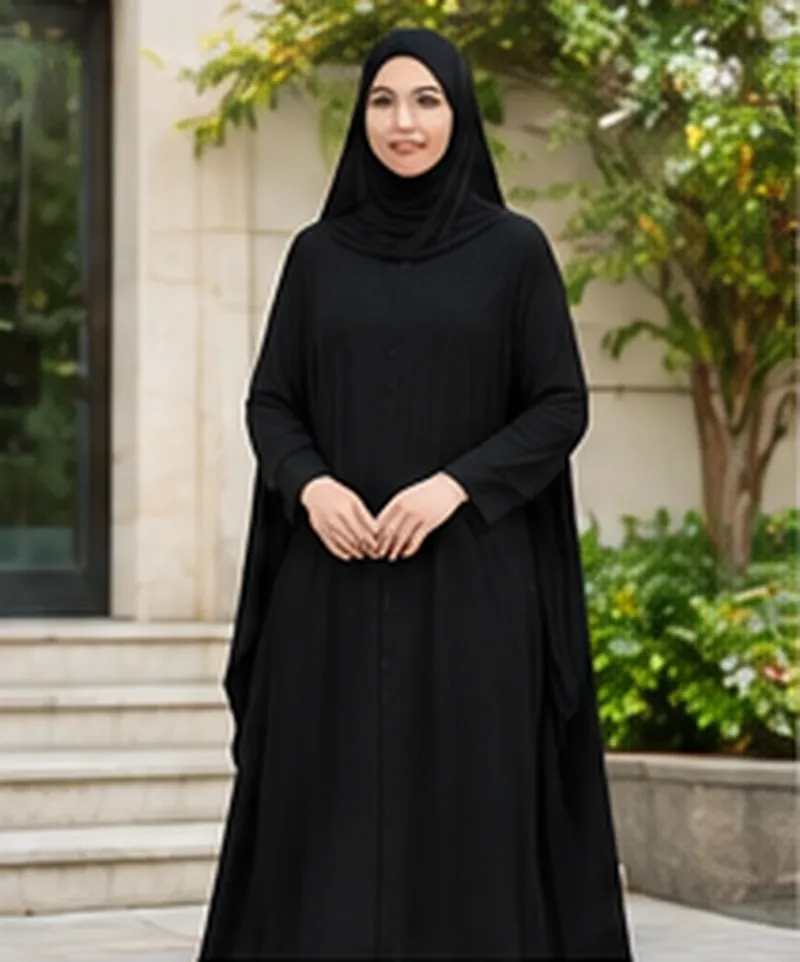
Halal clothing for veiled women: the starting point
Halal clothing for veiled women begins with the head covering, because the way a scarf is cut, draped and secured shapes the neckline, the shoulders and the overall impression of an outfit. A woman who wears a hijab daily usually thinks about her scarves first and her garments second.
The word hijab is used in several ways. In everyday English it refers to the scarf that covers the hair and neck, while in religious discussion it can mean a broader idea of modesty and conduct. Practices differ between women, families and countries, and nobody should assume that one way of veiling applies to everyone.
Whether a woman covers fully or partly, the practical goals are similar: a scarf that stays in place, fabric that breathes, and clothes that do not clash with the head covering.
Everyday hijab styles and how they differ
The simplest of all hijab styles is the square scarf folded into a triangle and pinned beneath the chin. It suits many face shapes, takes seconds, and works in cotton, viscose or light jersey. A rectangular shawl can be wrapped around the head and thrown over the shoulder for a looser, more flowing effect.
Instant or slip-on hijabs have a sewn-in cap and a fixed drape, which makes them popular for school runs, sports and busy mornings. Turban-style wraps tie at the back or side and leave the neck partly bare unless worn with an inner cover.
Longer scarves reaching the chest or waist, sometimes called khimar styles, provide fuller coverage over the shoulders. Choose the length that agrees with your convictions and your daily activities.
Experimenting at home in front of a mirror is the best way to learn which of these hijab styles flatters you, and a short video or a lesson from a friend can speed up the process. Keep the ones you can do quickly, since speed matters on busy mornings.
Fabrics for scarves: cotton, jersey, chiffon and satin
Jersey is stretchy, grips the head well and rarely needs ironing, so it is a reliable everyday choice. Cotton voile breathes in hot weather but can slip, which is where pins or an underscarf help. Chiffon is airy and elegant for formal occasions, though it benefits from a grippy cap beneath. Good hijab outfits depend on cloth that behaves.
Satin and silk-like materials are glossy and can slide, so wearers often wrap them over a cotton underlayer. Viscose and modal are soft and drape nicely without being heavy. For winter, light wool or a thick modal scarf adds warmth around the neck.
Whatever the cloth, check it in daylight. Sheer materials can show hair or skin tones if used alone, and a double layer or an underscarf provides reliable coverage.
Prints deserve attention as well. Small repeating patterns hide creases and small marks, while large graphic prints can overpower a plain tunic, so many outfits for hijabi women rely on one printed item at a time.
Matching outfits to the scarf
Coordinated hijab outfits start with a base colour. A cream tunic suits a dusty-rose scarf, while charcoal trousers set off a patterned scarf in blue and gold. If the scarf carries a print, keep the garment plain so neither element competes.
Neckline matters. High or round necklines look neat under a pinned scarf, whereas deep V-necks need a modest layer beneath. Shirts with wide collars can bunch awkwardly beneath a tied scarf, so try them together before buying.
- Plain jersey scarf with a patterned long tunic
- Printed scarf with a monochrome abaya
- Soft chiffon with a satin-trimmed dress for celebrations
- Ribbed knit scarf with a long coat in winter
Texture is another tool. Pairing a matte scarf with a lightly glossy dress, or a ribbed knit with smooth cotton, adds depth without introducing new colours.
Shoes and bags finish the picture. A bag in a shade drawn from the scarf ties the look together, and flat leather shoes in a neutral tone work with nearly every combination of hijab outfits.
Underscarves, caps and pins that keep everything in place
A good underscarf is the hidden element behind most hijab outfits. Tube caps, bonnet styles and headbands stop slipping, cover the hairline and provide grip for slippery fabrics. Cotton versions are best for warm weather. These small items are the quiet backbone of halal clothing for veiled women.
Pins are traditional, but they can snag delicate cloth. Magnetic pins hold through a layer without puncturing it, and some wearers prefer a small brooch or a tucked fold. Keep a few spares in a bag, along with a mirror and hair elastics.
If you wear glasses, choose scarves and caps that leave the temples clear, since thick folds at the sides can push frames out of place.
Outer layers and dresses that suit a veil
Abayas, long coats and kimonos work well because they hang from the shoulders and leave the head covering visible. Raglan or dropped shoulders avoid pulling on a scarf, and an open front is useful in changing weather.
Shirt dresses and maxi dresses with elbow-length or longer sleeves create a continuous line when worn with a scarf. Some women add a belt at the waist, while others prefer unbelted garments for a looser silhouette.
In cold seasons, a hooded coat can be awkward over a tied scarf. A stand collar, a wide scarf draped under the coat or a hat worn over the head covering are practical solutions.
Pockets, belt loops and sleeve cuffs are small details that make a difference to comfort. Halal clothing for veiled women is most successful when these practical touches are considered along with colour.
Wearing a veil at work, school and in the water
In offices a neat, secure scarf in a neutral shade and a blazer or long cardigan tend to feel appropriate. Healthcare, food and industrial workplaces may impose safety rules, such as tucked-in scarves or specific materials, and many employers can adapt uniforms if asked.
For sport and swimming, performance fabrics are the answer. A fitted sports hijab dries quickly and stays put during running, while a swim cap with an attached neck cover keeps the hair covered in the pool.
Laws on religious dress differ between countries and workplaces. Where there is doubt, seek advice from a consumer, employment or community organisation in your own country.
Teenagers and students often negotiate dress with schools and teams. A calm conversation, supported by a clear description of the garments needed, tends to be more effective than a confrontation.
Building a small wardrobe of hijab outfits
A compact collection is easier to manage than a drawer overflowing with scarves. Aim for a handful of neutral basics, a few mid-tone scarves and one or two special pieces for celebrations. Hijab styles you use often deserve a proper place in the wardrobe.
Pick colours that flatter your skin tone and suit your existing clothes. If most garments are navy, grey and cream, scarves in burgundy, olive or sand will combine with all of them.
Care for scarves by washing them gently, drying flat and ironing on the right setting. Store them folded by colour so selecting an outfit takes less time, and rotate frequently so no favourite wears out too fast.
Frequently asked questions
What is the easiest hijab style for beginners?
A square scarf folded into a triangle and pinned under the chin is the simplest starting point. Jersey or cotton blends hold well. Many beginners then move to slip-on styles or longer wraps as they discover what feels comfortable.
How do I stop my scarf slipping?
Wear a cotton or jersey underscarf, choose fabrics with some grip, and use pins or magnets placed carefully. Slippery materials such as satin work best over a textured layer. Test the arrangement by turning your head and bending down.
Can I wear ordinary clothes with a hijab?
Plenty of women do, mixing wide-leg trousers, maxi skirts, loose shirts and cardigans bought in ordinary high-street shops. The aim is a harmonious, modest outfit in which the garments cover to the degree the wearer considers appropriate.
Which fabrics are best in hot weather?
Light cotton voile, viscose and breathable jersey are common choices, since they wick moisture and feel soft on the skin. Avoid heavy synthetic materials that trap heat, and pick pale or mid colours that reflect sunlight.