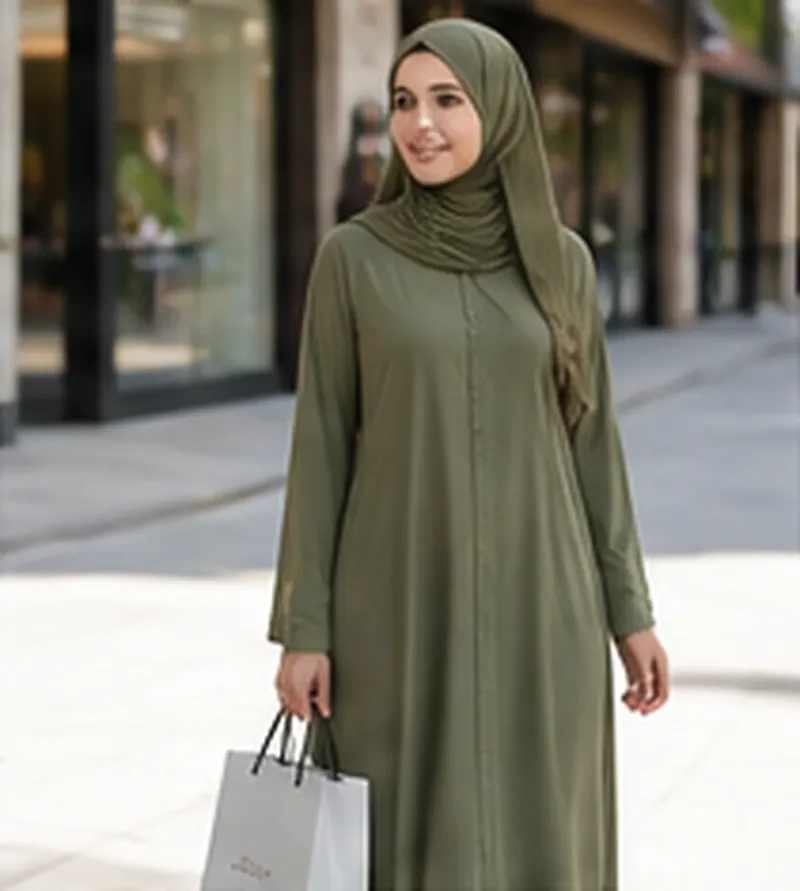
What affordable Muslim clothing really means
Affordable Muslim clothing does not mean the cheapest item on the shelf. It means garments whose cost, divided by the number of times they will be worn, is low. A plain jersey dress worn weekly for several years is better value than a bargain piece that fades or goes see-through after a few washes.
Modest dress has a built-in advantage for budgeting, because its basic shapes change slowly. A long, loose tunic or a wide pair of trousers looks right across many seasons, so there is little pressure to follow quick-moving trends.
Set a realistic monthly or seasonal limit first, then decide which categories deserve a larger share. Most people spend more wisely on the garments they wear every day and less on novelty pieces.
Think of the purchase as a long-term plan. Households that buy one carefully chosen piece at a time usually end up with a more coherent wardrobe than those who grab several inexpensive items on impulse, and the total spent over a year is often lower.
Priorities for a budget modest wardrobe
Begin with versatile basics in neutral shades: black, navy, grey, stone or olive. Two plain long tunics, one pair of wide trousers, one maxi skirt, a long cardigan and a few jersey scarves can be mixed into a large number of combinations.
Buy the item you will wear most often first, usually the everyday dress or abaya, and choose reliable cloth for it. Accessories and occasion wear can wait until the core is in place.
- Everyday robe or long dress in an easy-care fabric
- Two or three tunics that work with trousers or skirts
- Layering pieces such as a long cardigan or lightweight coat
- A small stock of scarves in colours that match several outfits
Keep a short list on your phone of what is missing, such as a dark scarf or a plain long skirt. Having it in hand during sales stops you buying duplicates, which is the quiet drain on most wardrobes of budget modest clothing.
Where to find cheap halal clothing
Markets and street stalls near busy mosques and in immigrant neighbourhoods often sell cheap halal clothing in volume. Prices are flexible, but inspect seams, lining and colour fastness carefully, as speed of production sometimes shows in the finish. Shopping for affordable Muslim clothing in these places rewards patience.
End-of-season sales on ordinary high street shops are another source. Long cardigans, maxi skirts, wide trousers and loose shirts are sold everywhere and often work as modest pieces without any special label, frequently at lower cost than specialist items.
Online marketplaces offer the widest choice, but shipping time, customs charges and returns can erase the saving. Compare the total landed cost, not only the listed amount, before pressing the buy button.
Wholesale districts in larger cities can be useful for families, since buying several matching items together often lowers the unit cost. Agree with relatives or friends to share an order and split the savings.
Second-hand, swaps and community exchange
Pre-owned clothing is one of the most sustainable ways to dress. Charity shops, online resale platforms and local community groups regularly carry long skirts, coats and dresses that are barely worn, because people often buy them for one event.
Many mosques and community centres run clothing swaps or collect donations for families in need. These can be especially helpful for children, who outgrow garments quickly, and for new arrivals building a wardrobe in an unfamiliar climate.
When buying used, check armpits, hems and necklines for wear, hold the fabric to the light for thinning and smell for lingering damp. A good wash and a few stitches usually restore a second-hand piece completely.
Do the same for your own outgrown items. Passing on a dress that no longer fits keeps affordable Muslim clothing circulating within the community and creates space for something you will wear.
Fabrics that keep low-cost Islamic clothing looking good
Fabric decides how long cheap garments survive. Cotton blends and jersey resist creasing and tolerate frequent washing, while stiff polyester in warm weather can feel uncomfortable and hold odours. Mixed fibres often offer the best compromise for a tight budget.
Check weight and opacity. A very light cloth may be inexpensive, yet it can reveal the outline of a body in sunlight and force the wearer to buy an extra slip. Slightly heavier material often costs a little more and saves money overall.
Look at the care label too. Items that need dry cleaning add running costs, whereas machine-washable pieces keep the lifetime price of low-cost Islamic clothing genuinely low.
Stitching, sewing and simple alterations
Learning basic sewing pays for itself quickly. Hemming a long skirt, taking in a tunic or shortening sleeves are small jobs that turn an almost-right garment into a perfect one, and they open up bargains that would otherwise be unwearable.
A local tailor can often perform the same changes for a small fee. This is worth considering for coats or formal robes where fit matters, since a good fit makes a modest purchase look considered.
Fabric by the metre offers another path. Simple patterns for wide trousers, skirts and long tunics are easy to follow, and the finished pieces are made to the wearer's own length and shape.
Even a small sewing kit helps: needles, thread in black, navy and cream, a seam ripper and a few safety pins. With these, replacing a button or closing an open seam takes minutes instead of sending a garment to the back of the cupboard.
Seasonal buying and care that saves money
Timing affects cost. Winter coats and long knitwear are usually marked down as spring arrives, while light linen dresses and cotton scarves are cheaper once summer fades. Buying out of season takes patience but rewards it, especially for cheap halal clothing in heavier fabrics.
Care is the other half of saving. Wash dark abayas inside out in cool water, avoid tumble drying delicate weaves, and air garments between wears so they need fewer washes. Scarves last longer when washed gently and dried flat.
Rotate your outfits. Wearing the same few items every day wears them out unevenly, whereas alternating between a handful of pieces spreads the strain. Hang long robes on wide hangers so shoulders keep their shape.
Finally, store garments clean and dry. Moisture and moths are the usual causes of ruined cloth, and a few cedar blocks or dry lavender bags are an inexpensive defence for low-cost Islamic clothing kept for months at a time.
Avoiding false economies and unfair sellers
Be sceptical of prices that look too low for the stated cloth. Sellers sometimes use photographs that do not match the delivered product, so read recent customer comments on independent platforms and look for pictures taken by buyers.
Know your rights. In numerous countries, consumer legislation grants online buyers a withdrawal window and obliges sellers to supply items that match the listing, and your national consumer body can outline the rules that apply in your area.
Finally, resist the habit of buying for the sake of a discount. If an item does not suit your daily routine, it does not matter how little it cost; the best budget modest clothing is the clothing that you reach for repeatedly.
Frequently asked questions
Can cheap clothes still be modest enough?
Yes, as long as the cut is loose, the length adequate and the cloth opaque. Price does not determine modesty. Test garments against light, sit down in them and check that sleeves and hems remain in place when you move.
Which pieces are best to buy first on a tight budget?
Start with versatile basics: a plain long dress or abaya, two tunics, wide trousers and a few scarves in neutral colours. These mix into many outfits, so each purchase gets used often and stretches the budget further.
Is second-hand clothing acceptable for modest dress?
Many Muslims buy pre-owned garments willingly, and the practice reduces waste. Check the condition, wash the item thoroughly and consider small repairs. Should a question of religious ruling arise about second-hand garments, put it to a trained scholar from your own community.
How do I avoid online bargains that disappoint?
Compare the total cost including shipping and returns, read independent customer feedback, check fabric details and measurements, and avoid sellers with no clear contact route. When in doubt, order one item first before buying more.