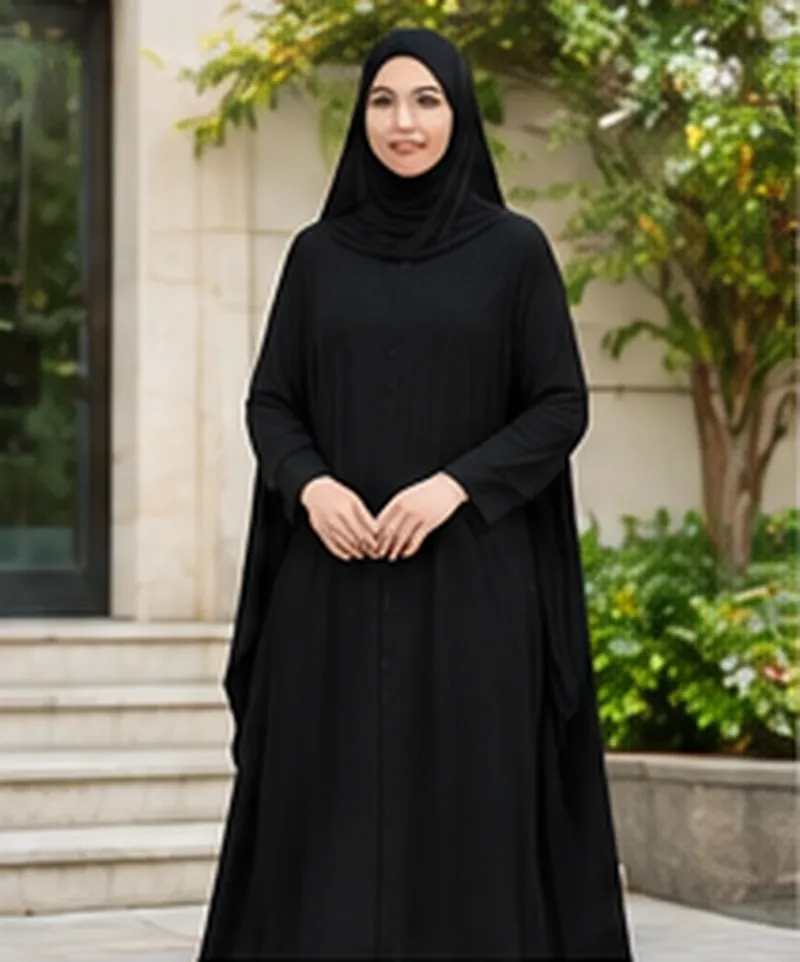
What ciput undercaps do
Ciput undercaps perform three jobs at once. They gather the hair so no strands escape from under the scarf; they provide a non-slip base on which the hijab grips; and they protect the scarf from oil and sweat from the scalp. Many women say that a scarf without an undercap feels unfinished, because slippery fabrics tend to slide and thin ones may show the hair beneath. Seamstresses in Indonesia and Malaysia have long sewn caps in dozens of colours, and the habit of owning a drawer full of them has travelled with the product.
Though small, the cap shapes the whole look. A well-chosen undercap gives a smooth forehead line, allows volume to be controlled, and keeps the neck covered if the cap extends downwards. The garment is simple to produce, yet the difference in comfort between a poorly fitting cap and a good one is large. Buying a few well-made pieces is therefore a better investment than searching for a single perfect one.
Types of hijab undercap: bonnet, tie-back and tube
The bonnet cap is a stretchy band of fabric covering the crown, leaving the forehead and often the ears free, and it is the simplest hijab undercap. The tie-back cap closes with a knot at the nape, adjusting to the head size, and is popular with those who want a tight fit. The tube or ninja cap is a loop of stretchy fabric that covers the head and neck together, often with an open face, and is a favourite for sport and for under chiffon. Several sellers also offer a hybrid with an open back, which lets a ponytail sit comfortably under a looser scarf.
Two-piece sets combine a tube with a bandeau for the forehead, and some pull-on hijabs include an attached cap. Choose by function: the bonnet for lightness, the tie-back for security, and the tube for complete coverage of hair and neck.
- Bonnet cap: light, simple, good for summer.
- Tie-back cap: adjustable, secure under slippery scarves.
- Tube or ninja cap: covers head and neck, ideal for sport.
- Bandeau and set styles: add forehead stability to a cap.
Fabrics: cotton, bamboo, modal and jersey
Cotton jersey is the standard because it is breathable, soft and forgiving. Bamboo-style viscose feels cool and silky and is gentle on sensitive scalps. Modal and lycra blends add stretch and recovery, which helps a cap return to its shape after washing. Mesh and moisture-wicking fabrics are used in sports versions.
Avoid thick polyester in hot weather. A cap with slightly textured fabric on the outside, or a silicone grip along the edge, gives better traction for chiffon and satin. Opaque colours are preferable, as a pale cap under a dark scarf can show through. When trying a new brand, buy a single piece first and wear it through a full day to judge how it feels after several hours.
Fit of an inner cap: size and avoiding headaches
An inner cap should be snug but never tight. If it leaves a deep mark on the forehead or causes a headache after an hour, it is too small or the elastic is too firm. Many brands offer more than one size, and adjustable tie-back styles can compensate for differences in head shape. Fabric with a four-way stretch usually fits more head shapes than one-way stretch, which can pull sideways.
Women with long or thick hair should consider a cap with a deeper crown or a stretchy tube, and many tie hair up loosely before putting it on. Those with short hair may prefer a grippier fabric to stop the cap from moving. Ears can be covered or left open; open-ear designs are more comfortable for glasses wearers.
Hair health under ciput undercaps
A cap that holds hair tightly can cause tension at the hairline, so choose a soft band and avoid pulling hair into a very tight bun beneath. Soft cotton or satin-lined caps reduce friction and may help with breakage, particularly for curly or fine hair. For those who wear a hijab all day, a clean cap is as important as clean hair, since sweat and oil gradually build up in the fibres.
Take the cap off when you are at home, wash it often, and let the scalp breathe. People with dandruff or sensitive skin should look for hypoallergenic, seam-free designs and wash new caps before first use to remove any finishing agents. Applying oils or creams to the scalp before wearing a cap can mark the fabric, so allow products to absorb first.
Sport, summer and winter use
For sport, choose a stretchy tube with moisture-wicking fabric and flat seams. In summer, thin cotton or bamboo bonnets with breathable weaves keep the head cooler. In winter, a slightly thicker cap adds a layer of warmth, and a tube extends coverage at the neck beneath a coat. Girls who wear a hijab at school often keep a spare cap in the sports bag for this reason.
If you swim, a dedicated swim cap in a suitable fabric is better than a regular undercap, since cotton absorbs water and becomes heavy. Keep a spare cap in your bag for hot days when one gets damp. On long journeys, a soft tube can also double as a light neck cover while you rest, and it packs into a small pocket.
Colour choices and matching
Neutral shades such as skin tone, beige, grey and black cover most situations. A cap close in colour to the scarf avoids visible contrast at the edge, and a lighter cap is better under a pale scarf. Having three or four colours means you can match nearly any outfit. Seasonal colour changes are easy too: earthy tones in autumn, soft pastels in spring.
For patterned or sheer scarves, choose a cap in a plain colour that blends with the dominant tone. A cap with a decorative edge is rarely necessary, since it is meant to be hidden. Many women find the neutral cap worth owning in duplicate, because it is the one that gets worn on most days.
Washing, storage and when to replace
Wash undercaps after every one or two wears, especially in warm weather. Use a gentle cycle or hand wash, and avoid high heat. Air-dry flat to protect the elastic. Because caps are small, a mesh bag keeps them from getting lost in the machine. Do not use fabric softener repeatedly, as it can reduce the grip that makes an undercap useful.
Replace a cap when the elastic loosens, the fabric thins or the band no longer holds the scarf. Many women keep a rotation of several, and buy them in packs, which is usually more economical than buying one at a time.
Frequently asked questions
What does ciput mean?
Ciput is an Indonesian and Malay word for the inner cap worn under a hijab. It describes a close-fitting cap that holds the hair, stops the scarf from slipping and gives a smooth base for wrapping or pinning.
Which undercap is best for sport?
A stretchy tube cap in a moisture-wicking fabric with flat seams is usually best, because it covers the hair and neck and stays in place during movement. Avoid thick cotton if you expect to sweat heavily.
Do I need an undercap with a pull-on hijab?
Many pull-on hijabs already include a cap. If yours does not, an undercap helps keep hair tidy and the scarf in place, particularly if the fabric is slippery or the style leaves the forehead exposed.
How often should I wash my hijab caps?
Wash them after one or two wears, more often in hot weather or after exercise. Use a gentle cycle, avoid strong heat and keep a few spare caps so you can rotate them.