Emirati clothing: national dress shaped by climate and faith
Emirati clothing is among the most recognisable regional dress in the Arab world. Men wear a long, loose robe called the kandura, and women wear a black cloak called the abaya over their clothes with a headscarf known as the shayla. The two outfits fit a climate that stays hot most of the year, with damp coastal air and parched desert inland, and each expresses the Islamic values of modesty and dignified public appearance.
Emirati clothing is more than a uniform. It is worn with pride as a statement of national identity, particularly in government offices, at formal events and on national holidays. At the same time, it is flexible: details of cut, embroidery and fabric change with fashion, and Emirati designers have made the abaya in particular a platform for experiment.
Emirati clothing for men: kandura, ghutra and agal
The kandura, sometimes called a dishdasha or thobe elsewhere in the Gulf, is an ankle-length shirt-robe with a plain collar. Emirati men usually wear it in white, above all in the hot season, cut from thin cotton or a comparable fabric through which air passes easily. In winter, men sometimes choose darker or wool-blend versions in grey, brown or navy.
A distinctive Emirati feature is the small cord tassel at the neck, called a tarboosha, which is often scented with perfume. A white scarf called the ghutra forms the headdress, kept in position by a black cord loop known as the agal. Under the ghutra many men wear a small cap, the gahfiya.
For official ceremonies, wedding days and Eid, a man may add the bisht, a light cloak edged in gold thread and worn over the kandura. Traditional sandals complete the outfit. Men take great care over ironing and starch of their Emirati clothing, and the crisp look of a freshly pressed kandura is part of its appeal.
Emirati dress for women: abaya, shayla and thobe
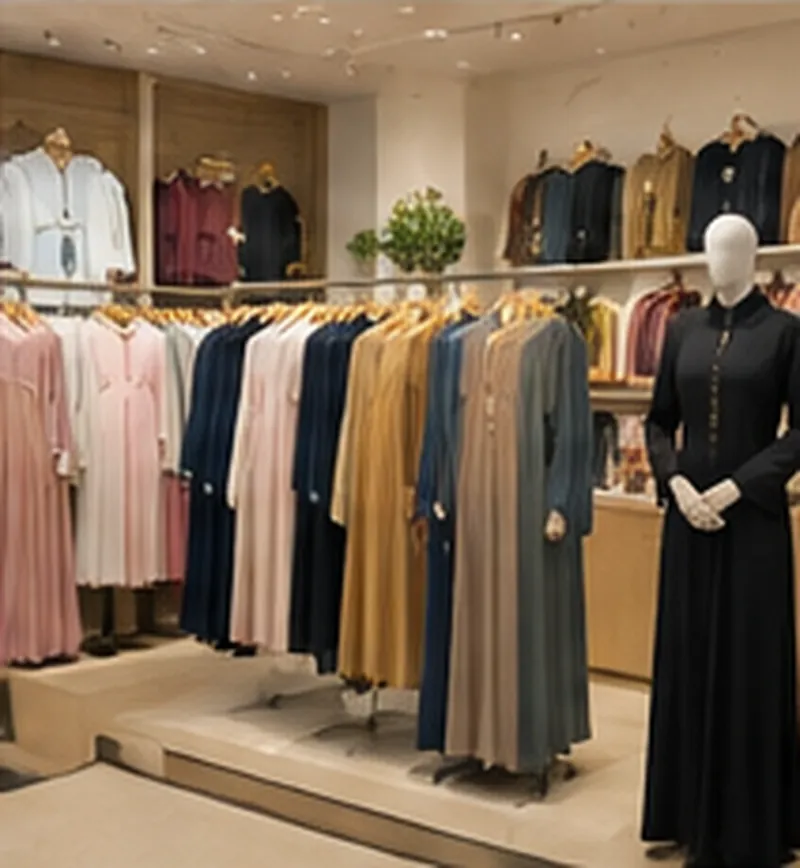
In public, Emirati women commonly wear a black abaya, a long cloak open at the front or closed, with a shayla draped over the hair. Over recent decades, abayas have become a fashion item, with embroidery, bead work, contrasting trim, pleats and capes. Some women choose coloured or lighter abayas, and cuts range from simple to elaborate.
Beneath the abaya, women wear their own clothing. Traditional Emirati dress for women includes the thobe, a long, wide-sleeved dress often decorated with fine thread, sometimes called thobe al-nashal when it features embroidered borders. Women also wear loose trousers, called sirwal, under the dress in the older style.
Children often wear small versions of adult Emirati clothing at school events, which helps pass the tradition on. Older generations in some families still wear the burqa, a stiff face mask used in parts of the Gulf, although younger women generally do not. Perfume is also a major part of dress culture: bakhoor, incense of wood chips, is used to scent clothes, and oud perfumes are widely appreciated.
Fabrics and colours in Emirati clothing
The climate shapes every choice in Emirati clothing. Pale tones throw back the sun's rays and roomy cuts let air flow around the body, which is why white and soft shades prevail in men's clothing. Cotton is the traditional fibre, valued for comfort, though blends are common for easy care. Women's abayas are often crepe, georgette or nida, a matt synthetic fabric that hangs well, and a light lining reduces heat.
Air-conditioned interiors can be cold, so many people carry a light shawl or jacket, while the evening desert air can turn cool in winter. During the hottest months, the traditional outfits are comfortable in a way that tight clothing is not, which helps explain their endurance.
Visitors who wish to try traditional Emirati garments should choose breathable fabrics and avoid heavy synthetics. Washing instructions matter, since embroidered abayas often need gentle cleaning.
Occasions, weddings and national celebrations
Emirati dress takes particular forms on important occasions, and traditional Emirati garments are chosen with care. At Eid, families wear their best, with new kanduras for men and embroidered thobes and abayas for women, and children join in with small versions. The National Day celebrations bring out national colours and traditional dress in schools and public events.
Weddings involve elaborate dress. Brides wear rich gowns and ornate jewellery, and the henna evening, with its patterned hand designs, is a major event for women. Gold jewellery is a traditional part of a bride's gifts, and perfumed incense scents the gatherings.
At majlis gatherings, where guests are received, formal dress signals respect for the host. Visitors invited to such occasions are generally welcome in modest clothing, and a scarf for women and long sleeves are appropriate.
Where Emirati clothing is bought and made
Tailoring is central to Emirati clothing. Many men order their kanduras from tailors, who cut to measure, and shops across the Emirates offer a range of fabrics and collars. The older souks in Deira and Bur Dubai, the textile areas of Dubai, the souks of Sharjah and Abu Dhabi, and the markets of Al Ain are traditional places to find cloth, scarves and accessories.
Modern shopping malls sell Emirati dress, with abaya boutiques and designer labels, along with department stores that sell ready-made kanduras and ghutras. Online shops deliver in the country and abroad. Women often return to favourite abaya makers season after season, and tailors can adapt designs to personal tastes.
Prices of Emirati clothing vary according to fabric, embroidery and brand, from simple everyday pieces to couture items. A good approach is to start with one basic, well-cut garment, such as a plain kandura or a simple black abaya, and add details such as a bisht or an embroidered border later. Ask about care and alteration services, since a well-fitted abaya makes a big difference.
Etiquette, expectations and consumer protection
The UAE is a diverse country with a large population of residents from many nations, and dress norms in daily life are varied. Public spaces generally expect modest clothing, with shoulders and knees covered, and religious sites expect more. Emirati national dress is respected, and visitors should not wear it as a costume or mock it. At the Sheikh Zayed Grand Mosque in Abu Dhabi, for instance, visitors are required to dress modestly, and facilities are provided for those who need to borrow suitable clothing.
Consumers are protected by federal consumer protection legislation overseen by the Ministry of Economy, and each emirate has its own authority, such as Dubai's Department of Economy and Tourism, to receive complaints. Keep receipts, ask about exchange policies and check that a tailor agrees to the price and delivery date.
Visitors should be mindful of local rules and behave respectfully, and residents are expected to follow public decency guidelines. When in doubt, choose long, loose and opaque clothing, which is accepted everywhere.
Frequently asked questions
What is a kandura?
A kandura is the ankle-length robe worn by Emirati men, usually white in warm months and made of light cotton. It has a plain collar and often a small perfumed tassel, the tarboosha, at the neck.
What do Emirati women wear in public?
Many wear a black abaya with a shayla headscarf over their own clothing. Abayas range from simple to richly embroidered, and under them women may wear a thobe, dress or everyday clothes.
What are the ghutra and agal?
The ghutra is the white scarf worn on a man's head, and the agal is the black cord ring that holds it in place. Many men also wear a small cap, the gahfiya, underneath.
Where can visitors buy Emirati clothing?
Traditional souks in Dubai, Sharjah, Abu Dhabi and Al Ain sell cloth and accessories, tailors make kanduras to measure, and malls and online shops sell ready-made abayas and kanduras to visitors and residents.