Islamic clothing in Nigeria: north and south
Islamic clothing in Nigeria is a vivid mixture because Muslims live across the country, from the Hausa-Fulani heartland of Kano, Sokoto and Kaduna to Yoruba cities such as Lagos, Ibadan and Ogbomosho, and among Kanuri, Nupe and many other peoples. Islam reached the north centuries ago through trans-Saharan trade and the southwest through later contact, and Muslim clothing grew out of those histories.
In many northern communities men wear flowing robes and caps and women wear long wrappers, tunics and veils, while in the southwest the same faith is expressed through Yoruba tailoring such as the buba and sokoto, the agbada and the gele headtie. Both are widely seen as dignified, and both are adapted to a hot climate.
Muslims in Nigeria hold different views on the details of covering, influenced by their local scholars and families. What follows describes common practice rather than a rule.
Younger Nigerians blend these traditions with global style, so a student in Abuja might wear a long Ankara skirt with a plain scarf, while a young man in Lagos pairs a short kaftan with jeans. Social media has made it easier to share designs and to commission a favourite outfit from a tailor in another city.
The babban riga, jalabiya and the Hausa cap
The best-known male garment in the north is the babban riga, which means big gown in Hausa. It is a wide, voluminous robe with generous sleeves, often heavily embroidered at the chest and worn over a tunic and trousers. Simpler versions of the jalabiya and kaftan are everyday wear, and the robe is worn for Friday prayer and festivals.
A cap completes the outfit of Islamic clothing for men. Hausa men favour the hula, a rounded cap with decorative embroidery, and the zanna cap, striped and worn in the north-east, while in the southwest the soft Yoruba fila is folded or tilted to the side. In some places a turban is wound around the head, especially for religious or ceremonial occasions.
- Babban riga: wide embroidered robe of the north.
- Kaftan and jalabiya: lighter robes for daily wear.
- Hula, zanna and fila: caps with regional styles.
- Agbada: the large flowing outer robe of Yoruba tradition.
Muslim clothing for young boys follows the same pattern in miniature, with small robes and caps for Friday prayer and Sallah.
Muslim clothing for women: wrappers, hijab and gele
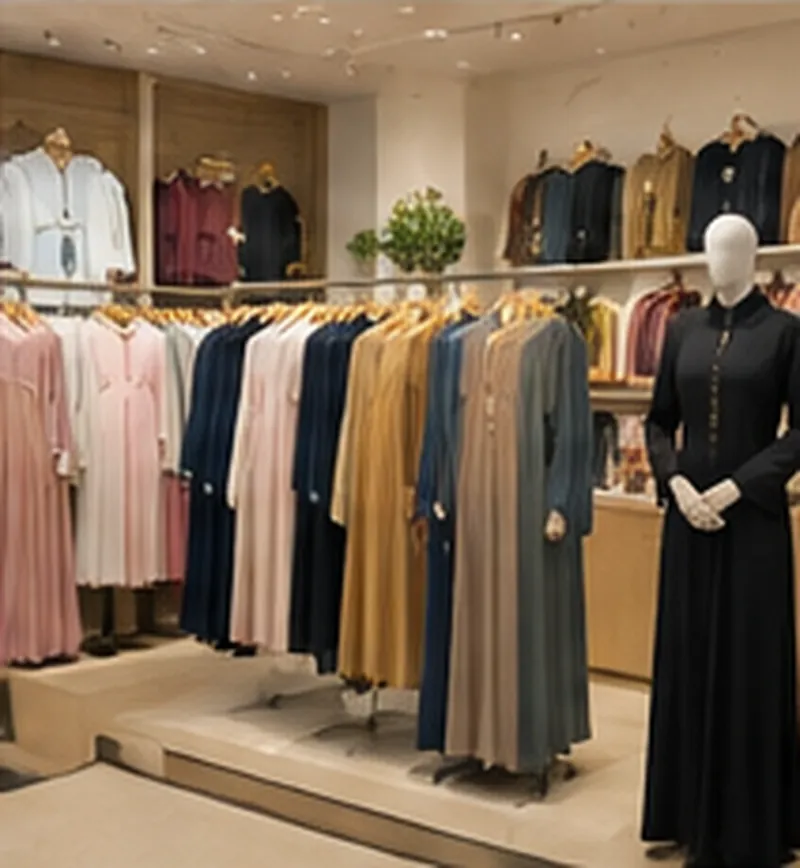
Women choose among a wide range. In Hausa communities, a set of matching wrapper, called a zani, a blouse and a large scarf, called a gyale, is a staple for everyday life, and a long hijab or veil is worn outdoors. Some women prefer modest fashion in the form of a plain abaya or jilbab, imported or tailored locally, and more recently modest fashion influencers have popularised layered long dresses with scarves.
In the southwest, women wear iro and buba, a wrapper and a loose blouse, with a gele headtie in stiff aso oke or lace that is carefully folded for celebrations. For prayer, a lightweight prayer outfit with a long headscarf is worn, which can be carried in a bag and is washed often.
In the heat, women generally choose loose, breathable fabrics and light colours. Many also look for hijabs that stay in place in Harmattan winds and in crowded markets.
Fabrics for Islamic clothing: lace, brocade, Ankara, cotton
Fabric choice is central to the culture of Islamic clothing in Nigeria. Cotton is popular for daily wear because it breathes in the heat. For celebrations, people choose guinea brocade, often called shadda in the north, lace, damask and Ankara wax print, with colour-coordinated sets worn by families, friends and age groups.
Aso oke, a handwoven cloth of the Yoruba, is used for caps, headties and ceremonial robes, while Kano is known for dyeing and embroidery. Scholars hold differing opinions about silk for men, so some men choose cotton, brocade or blends for festive outfits.
The seasons matter. During the rainy season, quick-drying fabrics are more practical, and in the dry Harmattan months cool nights and dusty days bring scarves and light jackets over robes.
Markets and tailors for halal clothing
Markets are the heart of the clothing trade. Kano's historic Kurmi Market is celebrated for textiles, crafts and dyed cloth, and Lagos has huge trading areas such as Balogun Market and the surrounding streets, where merchants sell lace, Ankara and ready-made robes. Every major city has a central market, and many neighbourhoods have a row of tailors working at sewing machines.
The usual process is to buy cloth, choose a style from a catalogue or a photo and have a tailor take measurements. Orders for Sallah, the festival days, are placed well in advance because tailors are busy, and customers are advised to ask for a delivery date in writing and to expect last-minute rushes.
Online shops and social media sellers also deliver Muslim clothing nationwide. Check reviews, ask for videos of the fabric and agree on payment terms before sending any money.
Sallah, Durbar and weddings
The two Eids, called Sallah in Nigerian English, are the high points of the clothing year. Families commission new outfits, often in matching fabrics, and join prayers at the Eid ground before visiting relatives. In some northern emirates the celebrations include a Durbar, a parade of horsemen in colourful robes and turbans in front of the emir.
Weddings are elaborate, and halal clothing for the wedding party is chosen months ahead. Brides may wear lace gowns with long sleeves and head coverings, with grooms in embroidered babban riga or agbada, and guests dress in coordinated fabrics, called aso ebi in the southwest. Naming ceremonies and graduations similarly call for new outfits.
At mosques, men typically wear a clean robe and cap, and women wear a long scarf or veil. During Ramadan, shops stock plenty of prayer outfits and modest house dresses.
School and university rules on head coverings vary, so parents often ask the school before term begins and keep copies of any written agreement.
A good tailor is the most valuable partner in a Nigerian wardrobe, because even ready-made Islamic clothing is usually taken in or let out to fit, and many buyers keep one trusted tailor for years.
Rights, schools and consumer protection
The Constitution of Nigeria protects freedom of thought, conscience and religion, including the right to manifest religion in worship and practice. Rules on dress in schools and workplaces differ between states and institutions, so families and employees should consult the relevant uniform policy.
As a consumer you benefit from the Federal Competition and Consumer Protection Act, which established the Federal Competition and Consumer Protection Commission, the body that receives complaints about unfair trading. The Standards Organisation of Nigeria sets standards for many manufactured goods.
Nobody issues a halal certificate for a robe or a wrapper, so the word on a label simply tells you what the seller wishes to say. When buying expensive fabrics, ask for a receipt, check the quality of the weave in daylight and keep records of what was agreed with the tailor.
Frequently asked questions
What is a babban riga?
Babban riga means big gown in Hausa. It is a wide, flowing robe with large sleeves, often embroidered at the chest, worn over a tunic and trousers for Friday prayer, Sallah and weddings in northern Nigeria.
What do Nigerian Muslim women wear?
It varies by region and taste: matching wrapper, blouse and scarf in the north, iro and buba with a gele in the southwest, and abayas or long hijabs in many cities. Fabrics are chosen for the heat.
Where can I buy fabrics and robes?
Major markets such as Kano's Kurmi Market and Lagos's Balogun Market sell lace, brocade and Ankara, and tailors in every city make robes to measure. Order early before Sallah. Ask the tailor for a delivery date in writing and expect long queues just before the festival.
What is a Durbar?
A Durbar is a ceremonial parade of horsemen in colourful robes and turbans, held during festivals in some northern emirates such as Kano and Katsina, often at Eid, in front of the emir.