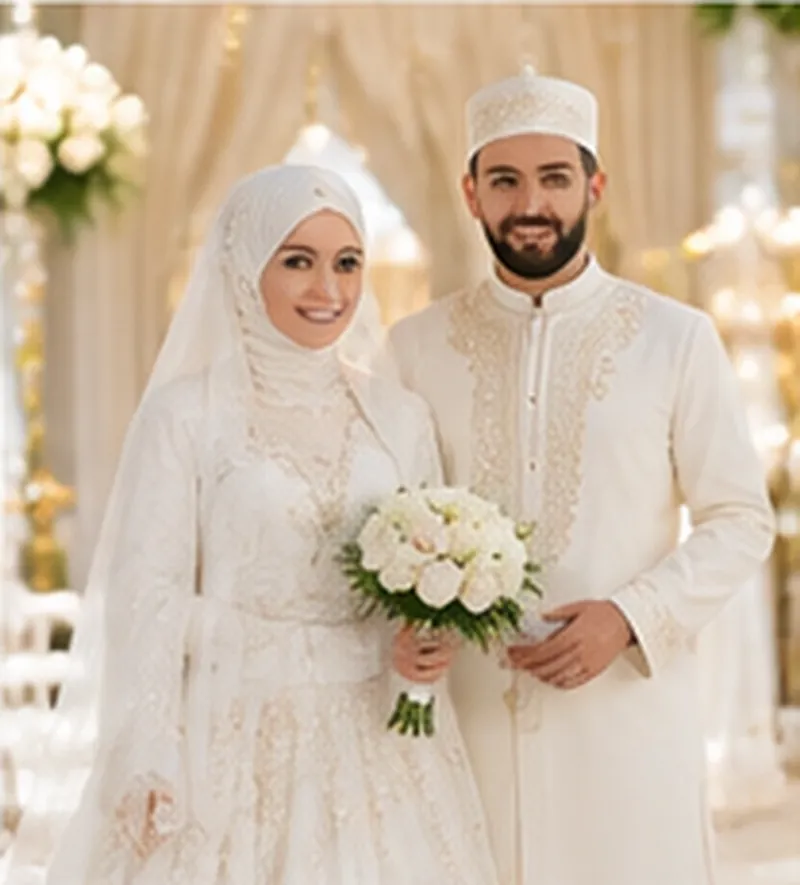
What modest wedding dresses are
Modest wedding dresses are bridal gowns built around coverage. They typically have sleeves to the wrist, a neckline that sits at or near the collarbone, and a skirt that reaches the floor, often in layers of tulle, lace or satin. The goal is a dress that feels celebratory and complete without exposing the arms, chest or legs.
Muslim brides choose such dresses for a range of reasons. Some wear a hijab daily and want it to be part of the bridal look, others simply prefer to be covered, and many families expect certain standards at religious ceremonies. Opinions on what is required differ, and the final decision rests with the bride and her family.
Modest does not mean plain. Lace overlays, beaded belts, long trains and veils can be very ornate, and many brides spend months shaping a design with a dressmaker.
Family involvement is common. Mothers, aunts and sisters often join the shopping, and their opinions shape the final choice, so it helps to agree early on the level of coverage and the style of Muslim bridal wear that suits everyone.
The nikah, the walima and several outfits
Muslim weddings often involve more than one event. The nikah, the marriage contract, may be a quiet ceremony at a mosque or at home, where the bride wears a simple dress, often in white, ivory, pastel or a deep colour. The reception or walima that follows is larger and can include a second outfit. Modest wedding dresses for the nikah are often simpler than those worn at the reception.
Many cultures add pre-wedding events. A henna evening, called mehndi in South Asia and henna night in North Africa, calls for vivid colours and traditional garments such as green or yellow lehengas, kaftans or embroidered dresses. Hijab bride outfits for these evenings are often coloured to match the garment.
Planning outfits for each event early is wise. A bride may choose a comfortable dress for the nikah, an elaborate gown for the reception and a traditional outfit for the henna night, then ask a seamstress to coordinate details.
Gowns, fabrics and silhouettes
A-line and ball-gown skirts are popular because they conceal the shape of the legs and move gracefully. Column and fit-and-flare silhouettes are chosen by brides who prefer a sleeker look, though they must be cut with enough room to walk comfortably. Muslim bridal wear built on these cuts feels timeless.
Lace with a nude lining gives sleeves and necklines a delicate appearance without being revealing. Satin and crepe give a clean, modern line, while chiffon and organza add softness to veils and overskirts.
Test opacity under photographers' lights. Fabrics that look solid indoors may thin under flash, so ask the dressmaker to line sleeves and bodices carefully.
Weight is an underrated factor. A heavy gown with a long train may look splendid but exhausts the wearer after hours of standing, so ask for trial walks, sits and turns during fittings.
Veils, scarves and headpieces for hijab bride outfits
A bride who wears a hijab has many ways to include it. She might wear a plain scarf pinned neatly with a veil attached over it, a lace-trimmed hijab in matching fabric, or a turban-style wrap decorated with pearls or crystals.
Some women choose a long cathedral veil on top of the scarf for the ceremony and remove it for the dancing and meal. Others prefer a sculpted headpiece, a tiara placed above the scarf or a fine chain across the forehead.
Whichever combination is used, test it for several hours. Pins, weight and heat affect comfort, and a bride who is relaxed in her hijab bride outfits will be at ease in the photographs.
Do not forget the practical side: a hijab pin hidden in the bouquet, a comfortable underscarf and a spare headpiece can rescue the day if something slips.
What the groom and the families wear
Grooms choose among a wide range of attire. A suit with a bow tie is common in Europe and North America, while a white or cream thobe is often chosen in the Gulf. In South Asia many wear a sherwani with a stole, and in West Africa a flowing agbada in rich fabric is a favourite. Islamic wedding clothing for men is generally less constrained by rules and more by regional custom.
Parents and relatives often wear traditional dress that reflects the family's heritage. Mothers may wear a kaftan, a sari or a long embroidered gown with a matching scarf, and fathers may choose a robe or suit with a cap.
Coordinating colours between bride, groom and wedding party makes photographs cohesive. A simple palette of ivory, sage and gold can suit both modern and traditional events.
Henna nights, kaftans and regional bridal traditions
Regional traditions bring a great deal of variety. A Moroccan bride may change several times into richly embroidered kaftans and takchita dresses, often carried in on a decorated platform. An Indian or Pakistani bride may wear a heavily embroidered lehenga or sharara in red, maroon or gold, with a dupatta draped over the head.
In Malaysia and Indonesia, brides wear songket or batik fabrics, often with a matching headdress, and in Turkey a long white gown might be combined with a red ribbon tied at the waist as a sign of good luck. Gulf weddings usually involve elaborate evening dresses with detailed beadwork.
These traditions can be combined with modest cuts. A heavily embroidered sleeve can be lined for opacity, a lehenga can be paired with a high-necked choli, and a kaftan is by nature a loose and covering garment.
Choosing one element of heritage, such as a belt, a scarf or a pattern of embroidery, links a modern gown to family history and gives Muslim bridal wear a personal meaning.
Choosing guest outfits that respect the occasion
Guests in modest dress normally select long dresses, tunics with wide trousers, abayas with lace or beading, or traditional garments from their regions. Brighter colours are welcomed at celebrations, but it is polite to avoid white, since it is generally reserved for the bride.
Check the venue and the style of the event. Some weddings are gender-segregated while others are mixed, and this may influence how formally or how comfortably guests choose to dress. Hosts usually explain these details in the invitation or when asked.
Practical clothing matters too. Comfortable shoes, a wrap for cool evenings and a spare pin or scarf in the bag will help you stay relaxed through a long event.
Tailoring, timing and budget for Islamic wedding clothing
Custom dressmaking is common for modest bridal wear, since ready-made gowns often need sleeves extended or necklines raised. Start early, because fittings, adjustments and fabric sourcing take time. Modest wedding dresses can be altered more easily than many assume.
Hiring or buying second-hand are other options. Some bridal shops rent gowns, and resale sites list barely worn dresses. Alterations can add sleeves or lace panels at lower cost than a new dress.
Set a clear budget, factor in alterations, veils and shoes, and keep receipts. Islamic wedding clothing should bring joy rather than anxiety, and a sensible plan lets the couple concentrate on the meaning of the day.
Frequently asked questions
Do Muslim brides have to wear white?
No. White and ivory are widely chosen, especially in the West, but many brides wear red, green, gold or pastel colours according to their culture. Customs vary, and the choice is usually made by the bride and her family.
Can a modest wedding dress still be glamorous?
Yes. Lace, beading, long trains, satin and layered veils can make a very striking gown while keeping full coverage. A skilled dressmaker can adapt almost any style by lengthening sleeves, raising necklines or adding lined panels.
How early should I start planning the outfit?
Several months before the wedding is wise, particularly if you want a custom gown. This leaves time for design, fittings and alterations. Order veils, shoes and accessories early so they can be tested with the dress.
What should guests wear to a Muslim wedding?
Modest, festive clothing is appropriate, such as a long dress, an abaya with beading or traditional regional dress. Men often wear suits or traditional robes. Avoid white if the bride is wearing it, and ask the hosts about specific expectations.