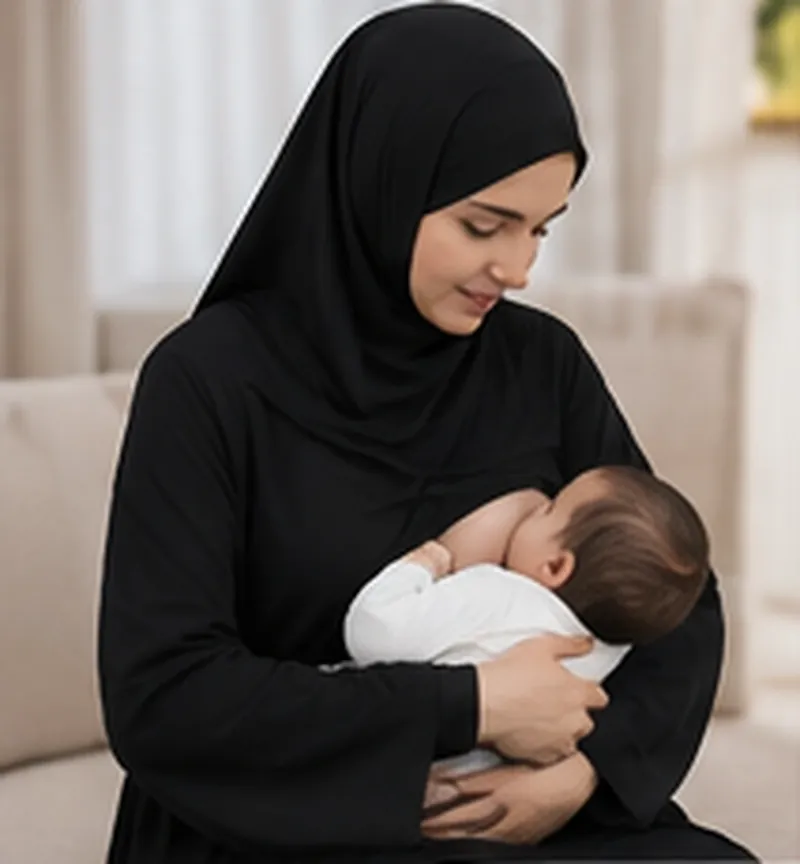
Modest clothing for breastfeeding: the basic idea
Modest clothing for breastfeeding aims to give quick, quiet access for feeding without exposing more of the body than the mother wishes. Most designs achieve this with hidden zips, wrap overlaps, buttoned plackets or layered panels, so that the outer fabric lifts or opens while an inner layer stays in place. For many mothers, modest nursing wear is the difference between staying out for an hour and heading home early.
Mothers feed in many settings: at home, in cars, at mosques, in parks and workplaces. A garment that works in all of them is usually loose, front-opening and made from stretchy cloth, and it avoids fastenings that require two hands while a baby is crying.
Many women find that the clothing they already own can be adapted, while others prefer purpose-made pieces. Either way, the practical needs are the same: easy access, reliable coverage and comfort.
Designs for halal nursing clothes
Layered tops are among the simplest solutions. A loose tunic is worn over a fitted camisole with a clip-down or stretch neckline, and the baby is fed beneath the outer tunic. The result is flexible and can be built from ordinary garments.
Nursing abayas and dresses often include concealed openings along the front seam, under a pleat or beneath a decorative overlay. Wrap dresses and kimono-style robes allow access by loosening the tie, and shirt dresses with full-length buttons open from the top.
- Layered tunic over a nursing camisole
- Front-opening abaya with a soft tie
- Wrap dress with an overlapping bodice
- Dress with concealed side or chest openings
Whichever design you choose, practise opening and closing it before you need to feed in public. A little rehearsal at home builds confidence.
Pay attention to the neckline. A wide boat neck can slip off the shoulder as a baby moves, while a gently crossed neckline stays put. Halal nursing clothes with adjustable straps or ties let you fine-tune the fit as your body changes in the months after birth.
Fabrics that handle milk, heat and frequent washing
Breastfeeding brings leaks, spills and frequent laundering, so clothing should tolerate hard use. Cotton jersey, modal and bamboo viscose feel gentle against skin and survive washing well, while patterned or marl-coloured fabrics hide little stains better than plain light tones. Good halal nursing clothes behave well under repeated washing.
Avoid delicate materials that stain easily, such as unlined silk or thin satin, for everyday feeding. Heavier crepes and patterned fabrics are more forgiving, and breast pads in a slim style prevent leaks from showing through.
Temperature matters too. Holding a baby close generates heat, so breathable, lightweight fabrics are more comfortable. Keep a cardigan or scarf to hand for cooler places.
Care labels deserve a glance. Garments that withstand frequent hot washes are practical for cloth that meets milk and baby spit-up daily, and colourfast dyes avoid transferring to other laundry.
Using scarves and covers while feeding
Some mothers wear a large scarf or shawl that drapes over the shoulder and the baby. A light muslin or cotton wrap works well, and a long rectangular hijab can be arranged as both head covering and feeding cover.
Dedicated nursing covers are also sold, with a boned neckline that lets the mother see the baby. These are optional, and some babies resist being covered. If your child fusses, try loosening the cover or choosing garments with built-in layers instead.
Where several scarves are used together, avoid heavy pins near the baby. Magnets or soft clips are safer, and a firm arrangement stops cloth drifting over the infant's face.
Whatever you use, make sure the baby can breathe freely and that you can check on them easily. Safety and comfort for the child come before appearance.
Maternity and nursing outfits that work across both stages
Many families prefer to buy maternity and nursing outfits that are useful through pregnancy and afterwards. Wrap dresses, front-opening abayas and stretch jersey tunics fit both stages, and the initial investment spreads across several months.
Neutral colours help the garments stay in circulation. A navy wrap dress or a charcoal front-opening abaya is easier to combine and less likely to show spills than a very pale piece.
Keep the postpartum body in mind. Many women prefer elastic waists and soft layers for the first weeks, and dressing for comfort is not a luxury but part of recovery.
When funds are tight, share items within the family or swap with friends. Maternity and nursing outfits are worn for a limited period and often remain in excellent condition.
Sleepwear, home wear and night feeds
A lot of feeding happens at night or inside the house, and clothing for those hours can be even simpler. Soft front-buttoned pyjama tops, long nightdresses with a wrap front and roomy loungewear sets make night feeds easier, particularly when you are half asleep.
Many mothers keep a long cardigan or light robe by the bed so they can feed in a warm, covered way if a relative or visitor is staying. A scarf or underscarf kept within reach also saves time when someone knocks at the door. Maternity and nursing outfits for home can be as plain as a cotton nightdress.
Keep fabrics gentle against the skin. A tight waistband or scratchy seam is more annoying at three in the morning than at any other time, so choose loose waists and flat seams for the clothes you wear most when tired.
Finally, wash home wear often. Because it takes the brunt of leaks and spills, having several sets lets you rotate without delay, and modest clothing for breastfeeding at home does not need to be expensive.
Feeding away from home with confidence
Planning makes outings easier. Carry a spare top, a cover or scarf, muslin cloths and a small bag with essentials. Think about where you might feed, such as a quiet corner, a parent room or a prayer area, and choose clothes with that location in mind.
Workplaces and public venues increasingly provide private spaces for feeding or expressing milk, and laws on the matter differ between countries. A consumer or employment organisation in your own area can explain what applies locally.
Remember that confidence grows with practice. Many mothers become comfortable quickly, and a supportive friend or family member can make the first public feed less daunting. Many families see modest nursing wear as simply part of ordinary household dress.
Prayer, modesty and religious questions
Mothers often ask how nursing affects prayer, for example how to handle leaks or stains on clothing. Scholars from different schools give different answers, and a qualified teacher you trust is the right person to ask rather than general advice.
On a practical level, keeping a spare top or prayer outfit in the bag can solve many problems. Two-piece prayer garments in cotton are quick to put on, and a long skirt with an elastic waist is easy to wear when time is short.
Different communities hold varied views about feeding in the presence of others, and families often agree their own customs. Choosing modest clothing for breastfeeding that suits your household is a personal decision.
Frequently asked questions
Do I need special nursing clothes?
Not always. Loose tunics worn with nursing camisoles, wrap dresses and front-opening abayas can all work. Dedicated nursing garments add concealed openings and are convenient if you feed often or in public, but they are optional.
What is the best way to feed discreetly?
Choose layered tops, wrap dresses or garments with concealed openings, and carry a light scarf or cover if you wish. Practise at home first so that opening and closing the garment feels natural when you are out.
Which fabrics cope best with leaks and spills?
Soft cotton jersey, modal and patterned or heathered fabrics hide marks well and wash easily. Avoid delicate silks and pale plain satin for everyday wear, and use slim breast pads to protect the cloth.
Can I use ordinary clothes for feeding?
Yes. Many mothers use stretchy tops, front-buttoned shirt dresses and loose tunics from regular shops. Look for easy access, adequate coverage and comfortable fabric, and try the outfit with your baby before relying on it.