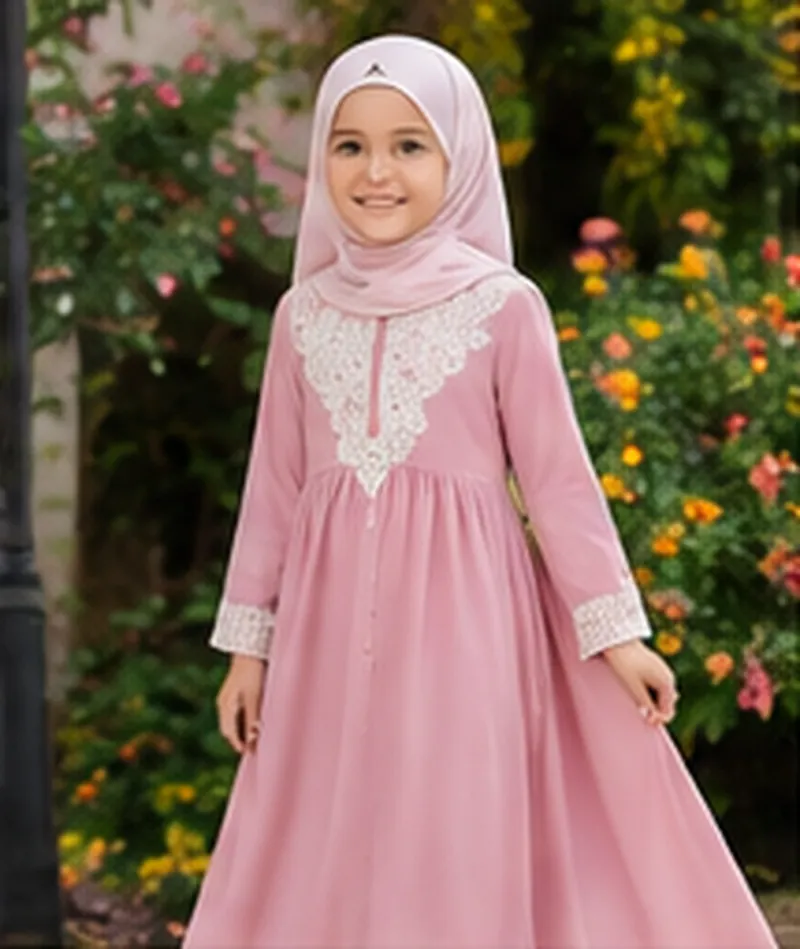
What Islamic clothing for girls covers
Islamic clothing for girls covers the modest outfits that Muslim families choose for their daughters, from toddlers in long-sleeved dresses to teenagers in abayas and scarves. It is not a uniform. Parents decide what suits their child's age, climate and daily routine, and their choices reflect family tradition and personal belief.
Religious teaching about covering is generally understood to apply from puberty, so many families do not require a headscarf for young children. Some girls choose to wear a hijab early because they enjoy dressing like older sisters or mothers, while others begin as teenagers. Scholars and communities express different views on timing, and families usually make decisions together.
For younger girls the priorities are practical: freedom to run and climb, easy care and comfort. Modest style is built on those foundations.
Regional dress offers rich choices. A Pakistani girl may wear a small shalwar kameez, a Malay girl a baju kurung with a tudung, a Moroccan girl a miniature kaftan and a Somali girl a colourful dirac. Parents often keep one such outfit for celebrations, so that Islamic clothing for girls also carries heritage.
Halal clothing for girls by age
For toddlers and pre-schoolers, soft cotton dresses with leggings underneath, long-sleeved bodysuits and pinafores layered over tops are common choices. Hems should be easy to walk in and clear of the ground, and fastenings simple enough for small hands. Halal clothing for girls at this age is mainly about softness and freedom.
For primary-school age, tunics with leggings, long skirts with elastic waists and shirt dresses work well for play. Girls at this age may try a hijab for special occasions or the mosque, and slip-on styles are ideal because they require no pins.
For teenagers, wardrobes move closer to adult styles: abayas, maxi dresses, wide trousers, long cardigans and fashionable scarves. Teens usually want to choose their own style, so involving them in shopping builds confidence.
Shoes and tights matter as well. Closed shoes with grip protect small feet, and cotton tights under dresses provide warmth and coverage without restricting movement.
Child hijabs and girls' hijab outfits
Children's hijabs are made smaller and lighter than adult scarves. Slip-on jersey versions with an elastic edge are the easiest for school and play, and they stay put during games. Cotton squares in bright prints are favoured for Eid and Friday prayers.
Match scarf and clothes simply. A cream scarf with a pink tunic, a navy scarf with a patterned dress or a white scarf with a pastel abaya makes girls' hijab outfits look tidy without much effort.
Avoid pins for younger children, since they can scratch or prick. Soft magnets, clip-free caps and pre-sewn designs are safer, and teachers at school often appreciate clear guidance on how to help a child who needs to readjust a scarf.
Let a child try the scarf at home before wearing it out. Playing in it, running in it and sitting in it reveal whether it will survive a school day, and a calm first attempt makes children happier about the idea.
Fabrics that survive play and washing
Children are hard on clothes, so choose fabrics that tolerate rough use: cotton jersey, cotton poplin, denim, corduroy and sturdy blends. Light linen is cool but creases easily and may suit special days more than playgrounds. Good halal clothing for girls is designed to be worn hard.
Check labels for machine-washable fabric and colourfast dyes. Pale colours show stains quickly, while mid-tones and small prints hide marks.
Look for flat seams, soft collars and no scratchy labels, particularly for children with sensitive skin. Comfort at school and at play shapes whether a child wants to wear a garment again.
Colour fastness is a quiet but valuable feature in clothing that will be washed constantly. Test a new garment by washing it separately the first time, and avoid mixing bright new items with pale ones.
School, sport and playground practicalities
Schools set their own uniform policies, and many welcome long sleeves, trousers and headscarves in the school colours. Contact the school early to talk through options. Equality and education bodies in each country can explain what families may reasonably ask for.
For physical education, choose loose tracksuit trousers, long-sleeved tops and a sports hijab if wanted. Swimming lessons may involve a modest swimsuit with leggings and a hooded top, which many schools allow when families ask in advance.
- Name labels in every garment
- A spare scarf in the school bag
- Leggings under skirts for playground games
- Shoes with secure fastenings for running
Teachers, coaches and swimming instructors are usually willing to help once they understand a child's needs. A short written note listing the garments the child will wear, and why, often resolves questions before the first lesson.
Eid, weddings and family occasions
Festive clothes matter to children. Girls often receive new outfits for Eid, with pink, lilac, gold and green embroidered dresses among the favourites. Frilled tulle skirts, satin sashes and sequinned cuffs add sparkle.
Choose comfort over drama. A beautiful dress with scratchy lace may be abandoned within an hour, so check linings and seams. Soft cotton underlayers prevent irritation, and flat shoes help girls keep dancing.
At weddings, matching dresses for sisters or cousins make good photographs, and they often feature traditional embroidery from the family's region, tying children to their heritage.
Photographs can be a lasting reminder. Dressing a child in a favourite embroidered dress for Eid, then storing it carefully, lets it pass to a younger sister or cousin and become a family keepsake.
Buying, sizing and passing clothes on
Children outgrow clothes quickly, so buying a little large is common, but hems that drag are hazards on stairs. Look for adjustable hems, elastic cuffs or garments with room that can be shortened and let down. Modest girls' dresses with deep hems can be let down as the child grows.
Second-hand shops, family hand-me-downs and community swaps are excellent sources of modest girls' dresses. Items are often barely worn, and washing and mending restore them well.
Teach children to care for clothes in simple ways. A basket for dirty laundry, a hook for the scarf and a tidy drawer all help, and sharing the process builds responsibility.
Budget carefully by buying core items first: two long-sleeved dresses, a few tunics, leggings and a couple of scarves. Girls' hijab outfits can then be varied with accessories such as headbands and cardigans.
Letting girls grow into their own style
Dressing a child is also a conversation. Girls often have strong opinions on colour and design, and listening to them respects their independence while allowing parents to uphold family values.
If a girl wants to wear a hijab, or decides not to, take her feelings seriously and talk with her about the reasons. Questions of religious obligation are best discussed with a qualified teacher the family trusts.
Whatever the choices, the aim is a happy child who feels comfortable in what she wears. Islamic clothing for girls is at its best when it supports confidence, play and learning. A modest dress that she loves wearing counts for more than any rule imposed on her.
Frequently asked questions
At what age should girls start wearing a hijab?
Views differ. Many families associate the obligation with puberty, while some girls try a scarf earlier by choice. Parents and a qualified scholar they trust are best placed to advise. Comfort and the child's own wishes matter alongside religious considerations.
What is the most practical outfit for school?
A long-sleeved tunic or shirt dress over leggings or trousers, with a slip-on hijab if worn, suits most schools and playgrounds. Check the uniform policy and choose washable, durable fabrics in the school colours.
How can I stop a child's scarf from slipping?
Choose slip-on jersey styles with elastic edges or soft magnets instead of pins. A thin cotton cap beneath can add grip. Let the child practise adjusting it herself so she feels in control.
Where can I find affordable modest children's clothing?
Ordinary children's shops sell long dresses, tunics and leggings that work well. Second-hand shops, hand-me-downs and community swaps are also good sources, and a tailor can lengthen hems or sleeves to suit modest preferences.