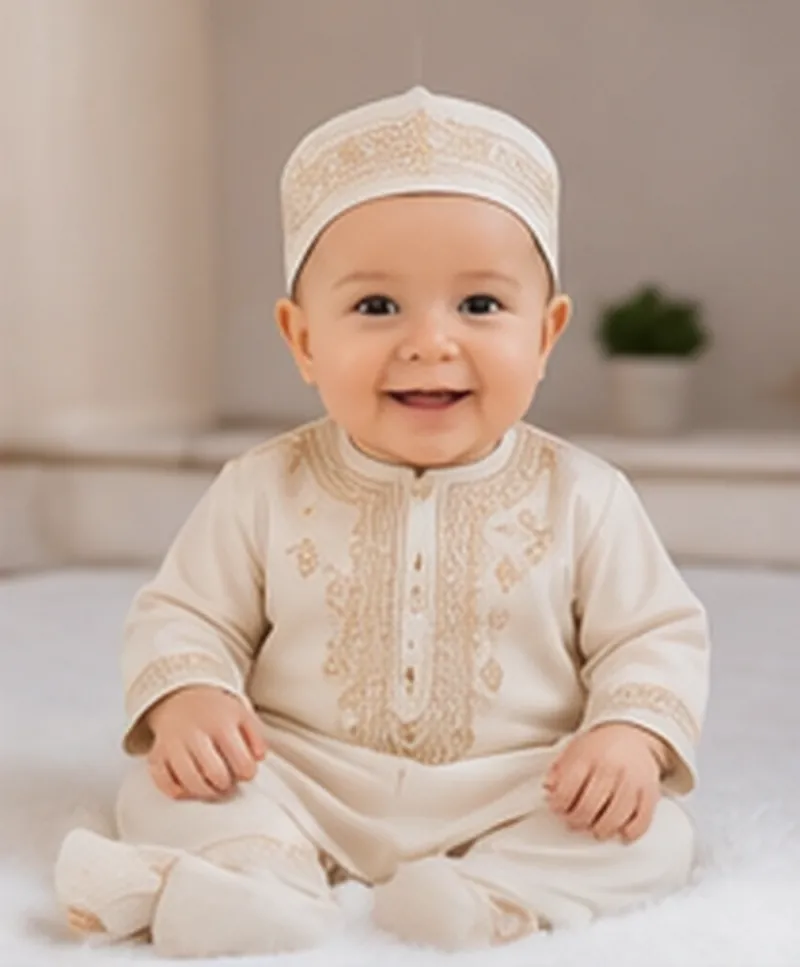
What halal baby clothes really means
Halal baby clothes are clothes for babies that a Muslim household considers suitable in material, cut and purpose. The word halal here is not a certificate: no official label exists for it, and a sleepsuit does not need one. It simply describes clothing that avoids what the family regards as impermissible, such as imagery they consider inappropriate or fabrics they would rather not use, while remaining safe and comfortable for a very small child.
Because a baby is not yet expected to observe the rules of covering that apply after puberty, most of the choices are about values and practicality rather than obligation. Parents often prefer long sleeves and full-length trousers or a gown, simply because infants feel the cold quickly and because tidy, covered outfits suit the sense of dignity many families associate with childhood.
Scholarly opinion does not give one single instruction on what a baby must wear, and families follow their own tradition. Anyone with a specific question, for example about decoration on ceremonial outfits, can ask a qualified scholar in their own community.
Baby clothing fabrics that are kind to new skin
A newborn's skin is thin and easily irritated, so the best fabrics are soft, breathable and easy to wash. Plain cotton jersey, interlock cotton and muslin cotton are the usual starting points. Muslin in particular is light, loosely woven and dries quickly, which is why it is popular for swaddles, bibs and layered summer dresses.
Wool and wool blends can be valuable in cold climates, provided the yarn is fine and the garment is worn over a cotton layer. Heavy embroidery, stiff lace and metallic thread look lovely in photographs but can scratch, so it is wise to turn a garment inside out and run a finger along the seams and lining before buying.
Silk is a question that comes up in Muslim households. Many scholars treat the prohibition on silk for men as applying to adult males, and some allow it for young children while others advise caution, so opinions differ. If the matter is important to you, ask a scholar you trust rather than relying on a shop description.
Everyday baby outfits: sleepsuits, vests and design
Everyday baby wear is built around easy changes. Envelope necklines slide down over the body rather than over the head, and press studs along the legs make nappy changes quick. Footed sleepsuits keep feet covered at night, and a long gown with a drawstring hem, often called a sleep gown, is a traditional choice that many families like.
Safety matters more than decoration. Loose ribbons, long cords and small buttons or beads can detach and become a hazard, so embroidery should be flat and stitched firmly. Hoods and neck ties are best avoided in a cot. If a gift arrives with ornate trimming, keep it for supervised moments and photographs.
- Choose seams that sit flat, or garments with seams on the outside.
- Cut out scratchy labels or choose tagless designs.
- Pick a size that leaves room for growth without bunching around the neck.
- Keep one spare outfit within reach for messy moments.
The first outfit and welcoming ceremonies
Many Muslim families mark a child's arrival with prayers, whispering the call to prayer into the newborn's ear and sharing sweetness such as a softened date. The aqiqah, a celebration with a sacrificed animal and shared food, is customarily held around the seventh day, though families schedule it according to their circumstances and tradition.
Dress for such a gathering is usually white or cream, soft and modest. A baby boy might wear a small kurta with trousers, a long cotton shirt or a simple robe, while a girl might wear a smocked dress with leggings underneath or a matching gown. Neutral colours photograph well in baby outfits and hide little.
In some regions the outfit is a family heirloom, such as an embroidered christening-style robe in Turkey and the Balkans or a hand-stitched gown from South Asia. Reusing such baby clothing from sibling to sibling is common and appreciated.
Caps, bonnets and covering a little girl's head
Soft knitted caps, bonnets and hats complete baby clothing and keep a newborn warm, because infants lose heat through the head. A fine cotton cap is usually all that is needed indoors, and a sun hat with a brim is useful outdoors in warm weather. Look for stretch that does not leave a mark on the forehead.
A headscarf is not required of a baby girl, and the common view among Muslims is that covering becomes expected after puberty. Some families nevertheless dress toddlers in small scarves to make hijab feel familiar and happy before it carries any obligation. Others prefer to leave it entirely until the girl is older and chooses it herself.
If you do try a scarf on a small child, use a light jersey or cotton piece with a soft elastic or tie fastening that cannot tighten around the neck. Never leave a young child asleep in a scarf or hood.
Sizes, gifts and growing quickly
Infants outgrow their first garments quickly, sometimes after only a handful of wears. Buying a small number of newborn baby clothes and moving to the next size as the baby grows prevents waste. Sizes are usually given in months, but proportions differ between makers, so a tape measure and the height and chest figures on the label are more reliable than the age printed on it.
For gifts, practical sets of baby wear work best: a set of bodysuits, a soft blanket, a modest dress or a matching waistcoat and trousers for a boy. For Eid or a naming party, a smart outfit one size up lets the child wear it for longer. Presenting clothes unwrapped in soft tissue and avoiding extra packaging keeps it simple and thoughtful.
Hand-me-down baby outfits are part of the culture in many Muslim communities. Passing on clothing is regarded as a kind and thrifty act, so do not hesitate to accept good quality second-hand garments after a hot wash.
Buying, labelling and caring for them
When you shop for baby clothes, read the fibre content and care label first. Reputable sellers state the composition clearly, and clothing for babies is subject to the product safety rules of the country in which it is sold, so choose shops that give their name, address and a way to return things. Online, photographs can be misleading about colour, so check reviews describing the true shade.
Wash new baby clothes before the first wear, using a gentle detergent without strong fragrance, and rinse thoroughly. Dry flat or on a low heat to protect elastic and prints. Store out-of-season sizes in a breathable cotton bag rather than in plastic.
A small, versatile collection of halal baby clothes, simple and tidy, will see a child through the first year more comfortably than a cupboard crowded with occasion pieces.
Frequently asked questions
Is there a certificate for halal baby clothes?
No. Clothing has no official halal certification, so any label claiming one should be treated cautiously. The term simply describes outfits made from fabrics and designs that a Muslim family finds acceptable, safe and modest for a child.
Does a baby girl have to wear a headscarf?
No. The widely held view is that covering becomes expected around puberty. Some families introduce small scarves earlier for familiarity, while others wait. Any questions about your own practice are best put to a qualified scholar in your community.
What colour should a baby wear for the aqiqah?
No fixed rule applies here. White and cream are popular because they look clean and suit many traditions, but many families choose pastel or regional colours. Comfort and a modest cut matter more than the exact shade.
Which fabrics are safest for newborn skin?
Soft, breathable cotton and muslin are the usual choices, with fine wool layered over cotton in cold weather. Avoid stiff lace, scratchy trims and loose beads, and wash every new garment before the first wear.