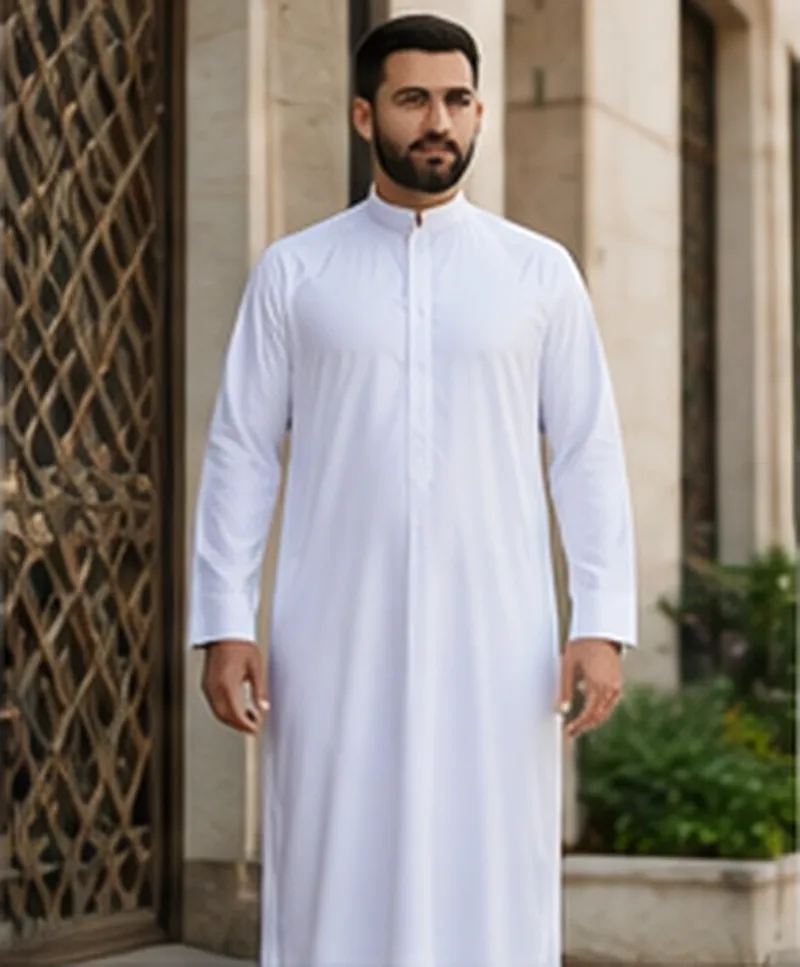
Shalwar kameez outfits and what they include
The shalwar kameez is a matched set of two loose garments. The kameez, whose name is related to the Arabic qamis, is a long shirt that reaches the thigh or knee. The shalwar is a wide trouser, cut with a generous seat and fastened at the waist by a drawstring or elastic. Together they make an outfit that allows complete freedom of movement and covers the body from shoulder to ankle.
In Pakistan the set is the national dress for men and is worn in cities and villages alike. In Afghanistan, a related set is known as perahan and tunban. In India and Bangladesh it is common among Muslim and non-Muslim men, and in the diaspora it appears at mosques, weddings and community festivals.
Many Muslim men in the diaspora think of it as their Friday and Eid outfit, and many keep a favourite set that is washed and ironed for the occasion. Unlike formal trousers and a shirt, it is easy to put on, forgives a long day and can be dressed up or down with a waistcoat.
How the kameez and shalwar are cut
The kameez hangs straight with side slits, a front placket and either a band collar, a shirt collar or no collar at all. Sleeves are long with a plain or button cuff. Chest or side pockets are common. The cut is traditionally generous, though modern tailoring offers slimmer versions.
The shalwar is made from a wide piece of cloth pleated into the waist. Its volume tapers to the ankle, where the leg may be gathered with a narrow cuff. The drawstring, called a nada or izarband, runs through a casing at the top. Straighter trousers, called pyjama, are sometimes worn instead, and the choice affects how formal the outfit appears.
A good tailor will check that the rise is long enough for sitting and prostration, and that the kameez falls over the seat so that the set is comfortable in prayer.
Some tailors offer a stitched-in lining at the waist of the shalwar to stop the drawstring from twisting, and a hidden pocket at the side seam. Both are small improvements that matter in daily wear.
Regional styles of the shalwar kameez
The Pathani or Peshawari style, associated with the Pashtun regions of Pakistan and Afghanistan, uses a longer kameez and very full shalwar, often with a pocket at the chest. Punjabi styles are somewhat trimmer. The Sindhi tradition has its own embroidery. In Bangladesh and eastern India, lighter cotton is more common, and in Kashmir warmer wool is used.
In Afghanistan the perahan tunban is usually made in cotton or wool blends and may be worn with a waistcoat. Each region has its own habit regarding collar, pocket and colour, so when ordering from a tailor it helps to name the style you have in mind.
Shorter kurta and pyjama sets are close relatives, but a shalwar suit proper includes full trousers with a gathered waist.
Women wear the same type of set in many regions, though with different cuts and fabrics, and the men's shalwar kameez keeps to plainer colours and less decoration. When buying online, check that the listing is for men, since sizes and lengths differ.
Fabrics for a shalwar suit in each season
For a salwar kameez, cotton is the base of most sets, from fine lawn to heavier cambric. Wash-and-wear blends, a mix of cotton and polyester, are prized for keeping a crisp finish with little ironing. In summer, light cotton and linen are comfortable, while in winter wool, karandi, a coarse hand-spun cotton, and flannel provide warmth.
- Cotton: breathable, easy to wash and available in many weights.
- Wash-and-wear blends: wrinkle-resistant and economical, though warmer.
- Linen: cool and textured, but needs ironing.
- Wool and karandi: winter fabrics for the northern regions.
- Silk and blended silk: for weddings and special days.
Look for a fabric that is opaque in light shades. A white shalwar can show shadows if the cloth is thin.
If the weather is very hot, choose the shalwar in a lighter cloth than the kameez, and consider a tailor-made option with a thin lining only at the hips. Cold-weather sets may add a second layer of wool at the chest.
Colours, waistcoats and occasions
White, cream and pastel shades are common for Friday and daily wear. Grey, brown and navy suit work and cooler months, and black is used for formal evenings. At festivals and marriage ceremonies, a pristine white or soft pastel set is popular, frequently completed by an embroidered or differently coloured vest. Colours vary by region and age, and a simple palette lasts longest.
A waistcoat adds formality and warmth. For a wedding, a groom may wear a sherwani, a long fitted coat, over a shalwar or churidar. For business, a plain shalwar kameez in a muted colour with a waistcoat is acceptable in Pakistan, and many offices there treat it as standard dress.
In Britain, North America and Europe, the set is often reserved for religious events and family gatherings, though some men wear it more regularly.
Boys are often given a small shalwar kameez for Eid morning, and brothers sometimes pick matching shades. Younger men sometimes choose slimmer cuts and shorter lengths, while elders favour a fuller shape.
Caps, footwear and accessories
Headwear includes the white prayer cap, the Jinnah or karakul cap, a pointed lambskin hat, and the pakol, a rolled woollen cap worn in the north-west of Pakistan and Afghanistan. Turbans are used in Punjab for special occasions. For footwear, leather chappals, including the Peshawari style, and khussa slippers complete the outfit.
Accessories are simple. A wristwatch, a prayer-bead string and a pocket handkerchief are enough. In winter, a shawl worn over the shoulders adds warmth, and some men wear a woollen waistcoat over the kameez.
Choosing the cap and the footwear last is sensible. Once the kameez and shalwar are in place, add a cap whose colour echoes the waistcoat or the cuffs, and shoes that are easy to remove for prayer.
Modesty, prayer and practical comfort
The set suits prayer because it is loose, long and easy to move in. The shalwar permits deep bowing and prostration without pulling at the thigh. Because the trouser hem sits near the ankle, many men choose a slightly shorter cut for comfort and cleanliness. Opinions among scholars about the proper length of men's trousers and garments differ, and a knowledgeable scholar can help with personal questions.
In practical terms, wearing a shalwar kameez in hot weather is more comfortable than jeans, because air circulates through the wide legs. It also forgives changes in weight and posture. The only difficulty is tripping on a long drawstring or catching a wide leg in a bicycle chain.
Stitching a set and caring for it
Off-the-peg sets are stocked by bazaars, shops and web sellers in standard sizes, and many men have them stitched from a length of cloth. Buy enough fabric for both pieces, and ask the tailor to cut the shalwar with a good rise and an extra seam allowance. Take your preferred cap or waistcoat to the fitting.
Wash cotton sets in cool water and turn the kameez inside out when embroidered. Iron the placket and collar while slightly damp, and press the shalwar along the leg folds. Store sets folded or hung, and air them out after wearing to reduce the need for washing.
A final point on quality: look at the stitching at the crotch of the shalwar, which takes the most strain. Double stitching there is a sign that the tailor expects the garment to be worn hard.
Frequently asked questions
What does shalwar kameez mean?
Kameez is the long shirt and shalwar is the loose trouser. Together they make a two-piece outfit worn by men and women across South and Central Asia. The set is worn by men and women alike, with different cuts and decoration for each.
Is it appropriate for prayer?
Yes, it is widely worn for prayer because it is loose and easy to move in. Choose an opaque fabric and a comfortable trouser length, and ask a scholar if you have specific questions.
What is the difference between a shalwar and a pyjama?
A shalwar is a wide, gathered trouser, whereas a pyjama is straighter and slimmer. Both are worn with a kameez, depending on style and formality. Pyjama trousers are common with shorter tunics, while the full shalwar suits longer kameez and more formal occasions.
Which fabric is best for Eid?
Fine cotton, a cotton blend or silk blend in white or a soft colour, often with a waistcoat. Choose a weight suited to the weather where you celebrate. Many families pick one colour for the whole household so that the group looks coordinated in photographs on the day.