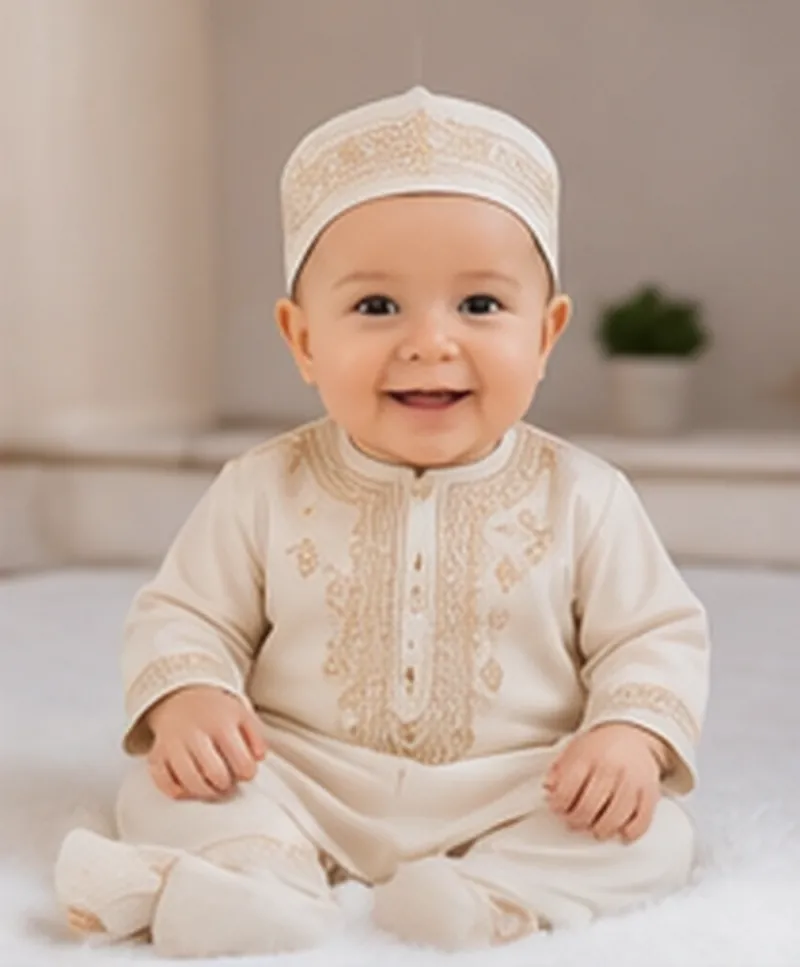
What aqiqah is and how it is observed
Aqiqah is the celebration through which many Muslim families welcome and give thanks for a newborn. In the commonly taught form, it takes place around the seventh day after birth and includes giving the baby a name, offering an animal for a meal that is shared with relatives and the poor, and, in some traditions, shaving the baby's head. Schools of thought describe its status differently, from strongly recommended to optional, and communities carry it out in various ways.
Some families hold the event on a later day because of travel, health or finances; others combine it with a gathering at home or a hall. Many simply offer food donations or a family meal. The details are a matter for each household and the scholars they consult.
Whatever form it takes, the day is a family occasion with visitors, photographs and many arms passing the baby along. The clothing is therefore chosen for softness, easy changing and a gentle, celebratory look.
Dressing a baby for the aqiqah naming day
White or cream is the usual choice for the naming celebration, although nothing requires it. A simple gown, a two-piece set or a romper with a matching cap and booties is typical. A long gown is easy to manage for a baby who cannot yet move, but it must have an opening at the base or be worn with a nappy cover so changes are quick.
Practical clothing matters more than elaborate decoration. A guest who holds the baby may be tempted to hold on to the embroidered trim, which can scratch or be pulled loose. Prefer smooth fabric, light embroidery on the outside of the garment and padded or soft lining.
If the head is to be shaved as part of the tradition, a soft hat will be required afterwards, and a cap that opens widely at the neck helps. Choose a size with a little spare room, because newborn heads vary and a snug cap may feel uncomfortable on sensitive skin.
Newborn Eid outfits for the first festival
A baby's first Eid, whether it comes at a few weeks or a few months old, is another occasion for a special outfit. Newborn Eid outfits are similar to aqiqah clothes: soft white or pastel sets with a tiny cap, perhaps embroidered or with a ruffle for girls, and a pair of socks or booties. Families who decorate their homes for the festival often add a matching cardigan or blanket for the photographs.
On Eid the baby will be carried, passed around and kissed by many relatives, so choose clothes that survive being touched. Avoid delicate pieces such as long beaded dresses, fine lace that snags and ribbons that can come loose. A romper with a built-in skirt for girls, or a short qamis with trousers for boys, remains attractive after hours of handling.
Think too about the timing. Eid prayers are held early in the morning, and a baby who is tired or hungry will not enjoy a complicated outfit. A comfortable cotton set that can be topped with a lightweight outer layer for the photograph usually works best.
Outfit ideas for boys and girls
Different styles suit different babies, and parents often choose to follow the traditions of their families. These examples show the range available.
- A white cotton gown with a drawstring or open hem, worn with a cap, for babies of either sex.
- A small qamis or kurta with matching trousers for boys, in white, cream or pastel blue.
- A smocked or embroidered frock with a lace-edged bonnet for girls, in ivory, blush or pale green.
- A one-piece romper with snaps, in soft jersey, for an easy outfit that can be worn after the ceremony.
- A wrap-over cardigan or shawl in fine knit or cotton muslin for added warmth.
Girls who attend with covered heads are usually dressed in a soft scarf or bonnet, depending on family custom. Views differ on when a child begins to cover, and for newborns most families simply choose practical headwear for warmth and for the photographs.
Fabrics, trims and safety for newborns
A newborn's skin is delicate, so natural fibres are the safest choice. Cotton muslin, interlock and fine jersey breathe and wash well. Avoid shiny polyester satin, which can trap heat and irritate. Silk is lovely to look at, but it needs careful washing and is not necessary for a baby who will soon spit up.
Trims should be flat. Small buttons, sequins, beads and long ribbons can come away and are choking or strangulation hazards. Prefer embroidery stitched through the fabric, covered snaps and ties short enough to be sewn into the seam. Check every hook, press stud and decorative element before each wear.
Seams, labels and elastic should not press on the baby's skin. Turn the garment inside out and run your fingers along the inside; if it feels rough to you, it will feel worse to a newborn. Wash the outfit before the first use to remove finishing chemicals and soften the cloth.
Caps, booties, blankets and a changing bag
Newborn caps keep the head warm and cover a freshly shaved scalp. Choose cotton, with a soft edge that does not leave a mark, and remember that babies should not wear hats indoors for long periods or while sleeping, as the NHS and similar health bodies advise. A cap is best removed once the baby is in a warm room.
Booties and socks should stay on without squeezing. A pair with a wide elasticated cuff or a gentle tie slips off less often than plain socks. A light cotton or muslin blanket protects the baby from a draught and can double as a cover during feeds.
Pack a changing bag with spare outfits, wipes, nappies, a bib and a small plastic bag for soiled clothes. At a long family occasion the baby may need two or three changes, and having the second outfit matched to the first keeps the photographs consistent.
Buying ahead, borrowing and sharing outfits
Newborn clothing is worn for a very short time, so many families borrow or share. A gown worn by a cousin may be passed to the next baby, and some communities keep a christening-style outfit as an heirloom. Check that stored items are clean, free of yellowing and in sound condition before use.
If you buy new, order early, because the baby's birth weight and the date of the ceremony may not match expectations. Choose a size labelled for newborns or the first few months, and avoid buying several small outfits in advance. Keep receipts and review the seller's return policy, as consumer rights vary between countries.
After the day, wash the outfit gently and store it in a breathable bag. Many parents keep the first aqiqah outfit as a memento along with a photograph, to show the child when he or she grows up.
Frequently asked questions
Is there a recommended colour for a baby's aqiqah outfit?
There is no required colour. White and cream are the most common choices because they look clean and festive, but pastel shades are equally acceptable. Families follow local custom and personal taste, with comfort as the main concern.
Does the baby need a special outfit for the first Eid?
No special outfit is required. Many parents like to dress the baby in new or best clothes to mark the day, in line with the general custom for Eid. A soft cotton set and a cap are enough.
Is shaving a baby's head part of aqiqah?
In the commonly taught form of the tradition, yes, often on the seventh day, but practice varies by school and region. Some families skip it for health or personal reasons. Someone qualified in your own tradition can guide you further.
What fabrics should I avoid for newborn celebration clothes?
Avoid stiff polyester satin, scratchy lace, loose beads and anything with long ribbons or hard trims. They may irritate, trap heat or come loose. Soft cotton with flat embroidery is far safer for a newborn.