Muslim clothing in Belgium: a bilingual setting
Muslim clothing in Belgium has a specific character because the country itself is divided into language communities. Moroccan and Turkish workers were recruited in the 1960s to work in mines, factories and construction, and their families settled in Brussels, Antwerp, Ghent, Liège, Charleroi and the mining towns of Limburg. Later arrivals came from the Balkans, the Middle East and sub-Saharan Africa.
That history appears in the shop windows. A boutique selling Muslim clothing in Brussels might display djellabas and caftans with signs in French and Arabic, while one in Antwerp advertises hoofddoeken, the Dutch word for headscarves, and a shop in Genk might sell Turkish-style long coats. Customers move easily between French, Dutch, Arabic, Berber and Turkish.
Muslims in Belgium follow a range of practices and scholarly opinions about modesty, and choose the clothing that corresponds to their family customs and beliefs.
Newer shops reflect a second and third generation born in Belgium. They tend to combine a Belgian sense of understatement with inherited colours and embroidery, and they promote their collections through social media and pop-up sales rather than only through a shop front.
Muslim clothing on Belgian shelves
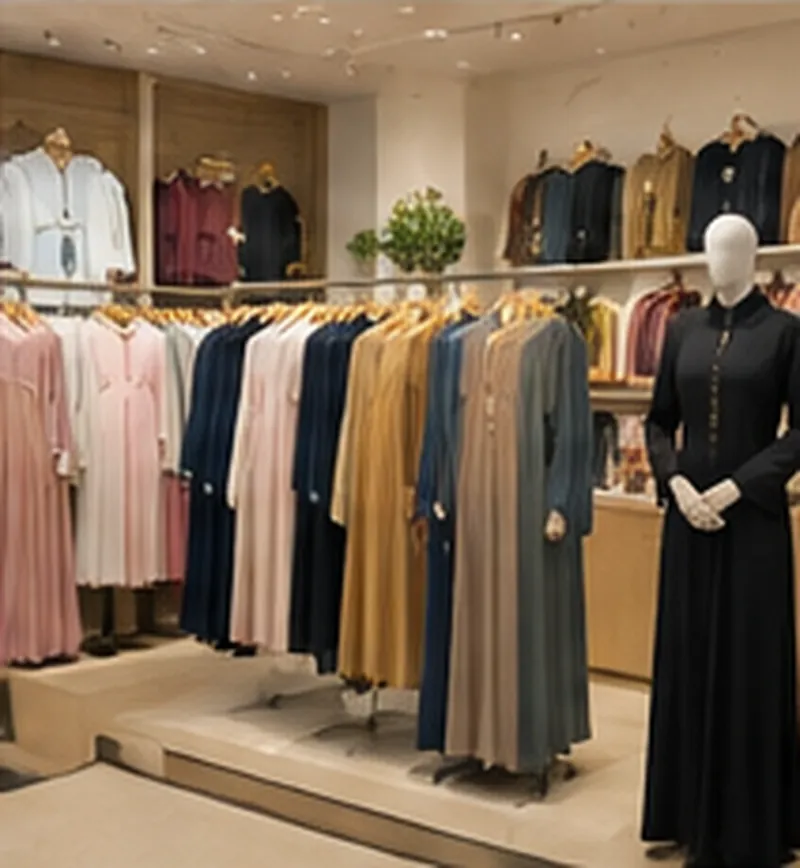
The shelves reflect the community. Moroccan families looking for Islamic clothing choose the djellaba, a long hooded robe, and the caftan and takchita for weddings. Turkish shoppers look for long coats, called pardösü, with coordinated scarves. Abayas, jilbabs and khimars attract customers of Arab and Somali heritage, and men buy qamis, thobes and prayer caps.
Younger customers mix halal clothing with European basics. A long cardigan, wide trousers and sneakers can sit beside a printed hijab, and loose denim shirt dresses have become a quiet favourite. Brands that specialise in modest clothing have emerged in Belgium and neighbouring countries, offering minimalist cuts in earth tones.
- Djellaba, caftan and takchita for Moroccan-Belgian families.
- Long coats and scarves for Turkish-Belgian customers.
- Abayas and jilbabs from Gulf and Levantine styles.
- Qamis, kufis and prayer outfits for men and boys.
Where to find halal clothing in Belgian cities
In Brussels, the Midi market beside the Gare du Midi, held on Sunday mornings, is one of the biggest street markets in Europe and sells fabrics, clothes and household goods. Shops of Muslim clothing also line the streets of Molenbeek, Anderlecht, Schaerbeek and Saint-Josse, and the Rue de Brabant and Chaussée de Haecht are well known for their many shop windows.
In Antwerp, Borgerhout and parts of the area around the central station have specialist shops of Islamic clothing, and in Ghent, Liège, Charleroi and Genk, you will find a smaller number clustered near mosques and Turkish and Moroccan cafés. Fabric dealers sell cottons, laces and brocades by the metre for tailors and home sewers.
Belgium is small, and a Brussels order of Muslim clothing can arrive the next day. Belgian web shops and sellers in neighbouring France and the Netherlands deliver quickly, and many shoppers combine a visit to a physical shop for fitting with an online order for variety.
Dressing for a wet, grey climate: modest clothing
Belgian weather is mild but wet, with frequent drizzle, wind from the North Sea and short winter days. Modest clothing here needs layers and rain protection, and halal clothing is no exception. A mid-length waterproof coat with a hood, over a knit tunic or jersey dress, fits most of the year, while thermal leggings and warm boots are essential from November to March.
Scarves in jersey and viscose stay put in wind better than slippery satin, and an inner cap helps. In the summer months, linen and cotton djellabas or gandouras can be worn with sandals, but sudden showers mean a light raincoat should stay in your bag.
Cycling is common in Flanders, so long skirts and robes are often replaced by wide trousers, and clip-on skirt guards stop hems from tangling in wheels.
Belgian rules on face coverings and religious dress
Belgium protects freedom of religion in its Constitution, and adults may wear a headscarf in public. Since a federal statute passed in 2011, garments hiding the face are forbidden in public places, a rule that covers the niqab and the burqa. The European Court of Human Rights examined this law in 2017 in Belcacemi and Oussar v. Belgium and found no violation of the Convention.
Rules for schools and workplaces differ. Education is organised by the language communities, and public and private schools set their own dress policies, so families should read the school regulations. Employers may adopt neutrality policies in certain circumstances, within the limits of anti-discrimination law.
This is a general overview, not legal advice. The federal equality body, Unia, and the Institute for the Equality of Women and Men receive discrimination complaints.
Fabric stores supply the families who sew at home, and several neighbourhoods have haberdashers selling buttons, trims and lace, which are useful when adapting a ready-made dress to a more covering cut.
Consumer rights and labels
Belgian consumers are protected by European and national rules. For online or phone purchases, the buyer has 14 days to withdraw, except for custom-made items. A statutory two-year guarantee protects new products against faults that existed when they were delivered. The federal public service for the economy handles consumer information and has a platform for filing complaints.
Clothing labels must show fibre composition and be readable in the language of the region where the goods are sold, which in practice means French, Dutch or German depending on the area. If a product is described as halal, it is a seller's term, not an official label, and it cannot replace reading the label and asking questions.
Keep receipts, since many small shops are cash-oriented, and take photographs of defects. Disputes can be resolved through the consumer ombudsman or mediation services before going to court.
Each new season, shops restock Islamic clothing in lighter fabrics for Suikerfeest in warm years and in heavier knits when the festival falls in winter, so it pays to look a few weeks ahead.
Suikerfeest, Aïd and wedding wardrobes
Belgian Muslims celebrate Eid al-Fitr, known as Suikerfeest in Dutch and Aïd el-Fitr in French. Families dress up, children receive new outfits, and relatives gather in homes and mosques. Women wear embroidered caftans or elegant long dresses, men wear a djellaba or a suit with a cap, and the evening photographs are a regular part of the day.
Weddings can be long and elaborate. Moroccan-Belgian brides often change dress several times in the course of the celebration, and dressmakers, hairdressers and decorators work together. Turkish weddings include the henna evening, and Syrian and Lebanese ceremonies bring their own style. Rental of gowns and caftans is widely available.
Overall, halal clothing in Belgium is a mixture of home traditions and a European, rainy-day pragmatism: well-cut coats, soft scarves and tailors who know how to adapt old patterns to modern needs.
Frequently asked questions
Is the niqab allowed in Belgium?
A 2011 federal law bans clothing that conceals the face in public places, which covers the niqab and burqa. Wearing a scarf around the head with the face showing is permitted. The European Court of Human Rights upheld the law in 2017.
Where is the Midi market?
The Midi market is held on Sunday mornings beside the Gare du Midi in Brussels. It is one of the largest in Europe, with stalls of fabric, clothes and food that attract many shoppers.
Can I send back an abaya ordered online?
For a purchase made at a distance, Belgian buyers normally get a 14-day cooling-off period, though made-to-measure goods are excluded. Defective goods are covered by a two-year legal guarantee. Keep the packaging, the receipt and any emails with the seller in case of disagreement.
What does Suikerfeest mean?
Suikerfeest, literally the Sugar Feast, is how Dutch speakers refer to Eid al-Fitr, the festival that closes Ramadan. In French-speaking Belgium it is called Aïd el-Fitr. Families wear new clothes and visit one another.