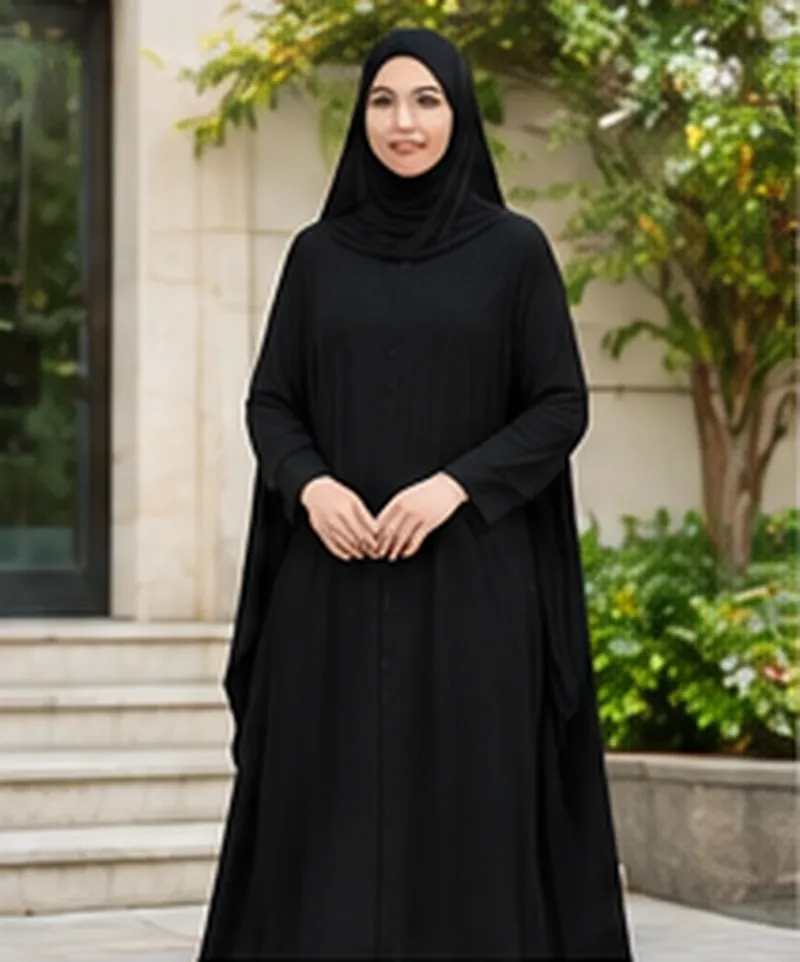
What modest jilbab outfits are
The word jilbab is Arabic and has been used for a long time for a loose outer garment worn by women. In modern shopping, it usually means a long, roomy dress or coat in plain fabric, often with a front closure and a design intended to hide the shape of the body. In Indonesia and Malaysia, however, the same word is often used for the headscarf itself, so shoppers should read product descriptions carefully. A shopper new to the category will meet several labels for similar garments, such as prayer jilbab, instant jilbab and jilbab sets, and the differences are mostly about how many pieces come in the package.
Compared with an abaya, a jilbab is typically more utilitarian and less decorated. Many women like it for its simplicity, its coverage and its freedom of movement. Others prefer abayas or coats, and communities and scholars hold different views about which garments best express modesty, so the choice is personal. Modest jilbab outfits also vary by region: a Gulf model tends to be longer and more fluid, while a Southeast Asian model is often lighter and made of stretchy fabric for the warm, humid climate.
One-piece jilbab outfits: simple and quick
A one-piece jilbab is a single, long garment, either a pull-over dress with a head opening or a front-zip coat. Some include a hood-like attachment that serves as a headscarf, while others require a separate scarf. The one-piece format is the easiest to put on and is popular for prayer and quick errands. For students and busy mothers, a one-piece jilbab is a practical way to leave the house dressed within a minute.
Look at the neckline and the fastening. A zip should run smoothly and have a cover to protect the skin, while buttons and snaps should be well sewn. The sleeves usually have elasticated or knitted cuffs to keep them in place. The silhouette is generally straight or slightly A-line, with enough room at the hips and shoulders. When trying one on, sit down and raise your arms to check that the garment does not pull across the shoulders.
Two-piece jilbab: top and skirt
A two-piece jilbab combines a long overgarment that reaches the knee or below with a matching skirt, often with an elastic waist. The top may be a loose tunic with a built-in head covering, while the skirt provides coverage from waist to ankle. The advantage is flexibility: both pieces can be worn separately, and sizes can differ for top and bottom. Many sellers photograph the two-piece jilbab on a model with a single colour, but it is worth confirming whether the pieces are sold together or whether you need to order each one on its own.
For women with different proportions, a two-piece jilbab fits better than a single garment. It is also easier to wash and to repair. Check that the top overlaps the skirt generously so no gap appears when walking, and that the waistband sits comfortably. A skirt with an elastic waist is comfortable, while a drawstring allows fine adjustment for different layers of clothing.
Jilbab with attached hijab
A jilbab with an attached hijab features a cape-like head covering sewn into the garment, which falls over the chest and back. Some are knee-length, others reach the hem, and the scarf may be a single or double layer. They are used by many women for prayer and daily wear, as all parts stay together and nothing needs pinning. A jilbab with attached hijab is especially helpful for women who find it hard to keep a scarf neat during travel or school drop-offs.
Consider the opening around the face, which should be wide enough to remain comfortable but stay in place without slipping. A snug inner cap helps. In warm weather, the number of layers matters, so lighter fabrics such as cotton or thin crepe are preferable. Some brands design two-piece jilbab sets in which the scarf is a separate piece that attaches with snaps at the shoulders.
Fabrics and seasonal choices
Cotton and cotton blends are comfortable and breathable for spring and summer. Crepe and jersey give a smooth fall and resist creasing. In cold months, thicker crepe, wool mixes or a fleece lining keep you warm, and a thermal base layer underneath is a common addition. Polyester is easy to care for but can feel warm, so test the fabric on your skin if you live in a hot area. Always match the lining to the outside colour, since a pale lining can show through at seams and hems under bright light.
Opacity should be checked in daylight, especially in pale colours. Fabrics with a slight weight hang better and hide the shape of the body. Cheaper materials may pill or lose shape after washing, so read reviews and look for neat seams.
Layering and styling jilbab sets
Under a jilbab, a plain long-sleeved top and trousers or a long skirt suit most days. In cold weather, thermal base layers and leggings are comfortable and invisible. Over it, a coat or a shawl can be added, and a belt may define the waist in sets with a loose cut.
Colour choices lean towards black, navy, brown, grey and olive, but pastel and print options exist for spring. Pair with sturdy shoes, a bag with a long strap, and a scarf in a coordinating tone. For work, a neat, ironed jilbab in a dark shade looks professional. Jilbab sets in bold colours are sometimes chosen by teenagers and young women who want to stand out while keeping the cut modest.
Sizing, length and fit
Measure across the shoulders, from the shoulder down to the hem, and along the sleeve. A jilbab should clear the ground while walking but cover the ankles, so measure with shoes on. Tall women may need extra-long sizes, and shorter women can have the hem altered.
Do not choose a size solely by the label, because cut differs between makers. Wide cuts need room for movement when bending, prostrating in prayer or climbing stairs, and the sleeve cuffs should not ride up. If you plan to wear a one-piece jilbab for sports activities, choose stretchier fabrics.
Care, durability and respect for differing views
Wash according to the label, usually gentle machine washing for cotton and jersey, and avoid high heat for synthetics. Hang to dry and iron on low. Store on a hanger to avoid creasing the long fabric. Fabric softener should be used sparingly on synthetics because it can leave a residue that attracts dust.
Scholars hold different positions on whether a jilbab is obligatory, recommended or just one acceptable choice among several. Anyone looking for advice can turn to a knowledgeable teacher they trust locally.
Frequently asked questions
What is the difference between a jilbab and an abaya?
An abaya is generally a long robe, often with decorative details, worn open or closed. A jilbab is usually plainer, closer to a loose dress or coat, and often includes a head covering. The terms overlap, so check the description.
Is a jilbab good for prayer?
Many women use a jilbab for prayer because it covers the whole body and often includes an attached scarf. Choose a soft fabric that does not ride up when bowing or prostrating, and make sure the hem is long enough.
What does a two-piece jilbab include?
It usually includes a long overgarment with a built-in or matching head covering and a separate skirt, often with an elastic waist. Some sets add a third piece such as a belt or an undercap.
Does jilbab mean headscarf?
In Arabic it refers to a loose outer garment, but in Indonesia and Malaysia people often use the word for a headscarf. When shopping online, read the product description and photographs to see what is actually sold.