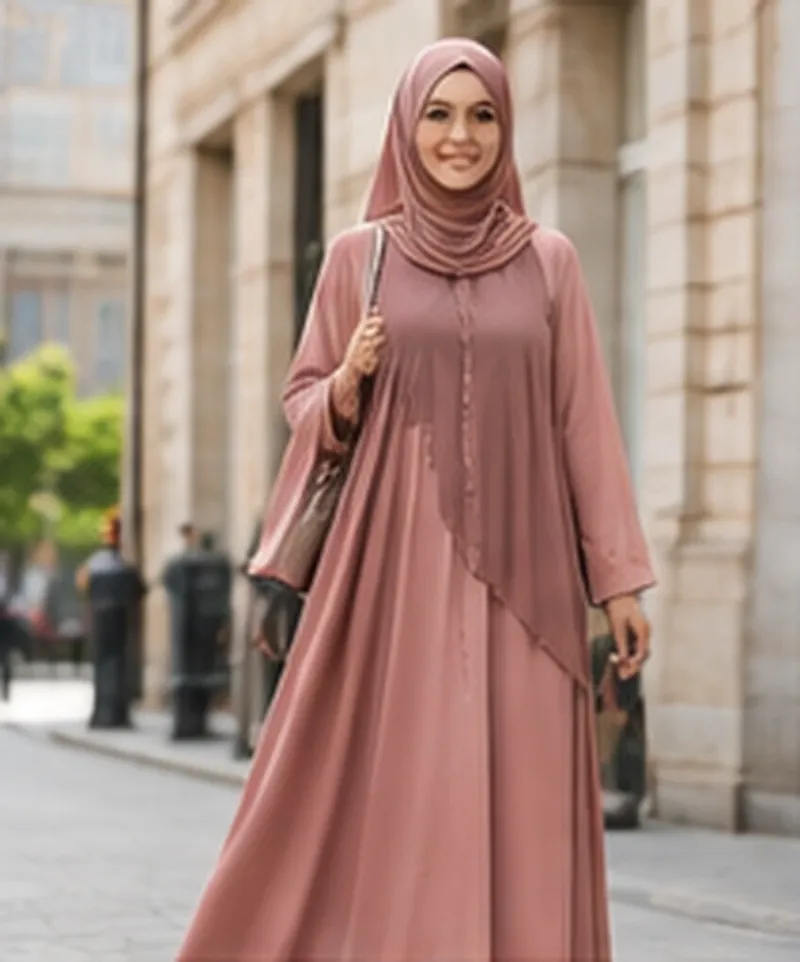
What counts as modest wide-leg trousers
Modest wide-leg trousers are trousers cut with generous width from the hip down, so the fabric hangs freely and does not cling to the thigh, knee or calf. What separates them from fashionable flares or skinny cuts is not a label but a test anyone can run in front of a mirror: when you stand still, can you see the shape of the leg through the cloth, and when you walk, does the fabric swing instead of stretching?
Wide trousers are sold under several names. Palazzo trousers have a very full leg that often starts at a high waist. Wide-leg trousers is the broader term and can include straighter, more tailored shapes. Harem or sarouel styles gather at the ankle. Culottes belong to the same family but stop short of the ankle. Knowing these labels helps when you search online, because the same garment may be filed under any of them.
Culottes versus full-length wide trousers
Culottes are cut like a skirt that has been divided in the middle. Seen from the front they can look like a short A-line skirt, and the leg openings are usually wide enough that you only notice the division when the wearer walks. Their appeal is practical: they free the ankles for walking, summer heat and cycling, and they stay clear of wet pavements.
The trade-off is coverage. A culotte that ends at mid-calf shows the lower leg, so many women add opaque tights, long socks or boots beneath it, or choose a version that skims the ankle bone. Full-length wide trousers cover the whole leg on their own and usually need nothing extra, but they ask for more care about the hem, which can fray, drag in puddles or tangle in a bicycle chain.
A useful rule of thumb is to match the garment to the day. Culottes suit warm weather, short outings and anyone who moves a lot. Floor-skimming wide trousers suit cooler seasons, formal settings and occasions where the outfit has to look composed from the first minute to the last.
Fabrics that drape without clinging
The same pattern can look modest or revealing depending on the cloth. Fabrics with some weight and a fluid drape, such as crepe, heavy viscose, lyocell blends, washed linen and thick cotton twill, fall away from the body and keep their shape through the day. Very thin voile or jersey can follow the legs, show underlayers and cling with static in dry weather.
- Crepe and fluid viscose: soft movement and little transparency; they hold a crease poorly, which many wearers prefer.
- Linen and linen blends: breathable for warm climates, but they wrinkle, so a looser cut avoids visible stress lines at the seat and knee.
- Cotton twill and gabardine: structured, opaque and suited to workwear, though stiffer fabrics add volume at the hip.
- Satin and shiny weaves: festive and elegant, yet their sheen catches light and can emphasise body contours, so they are better in a dark or matte finish.
Before buying, hold the fabric against a window or a phone torch. If you can see your hand clearly through a single layer, the trouser will probably need a lining or a longer top to feel comfortable in bright light.
Rise, waist and the line beneath a tunic
A wide leg looks balanced when the waist is treated deliberately. High-waisted palazzo trousers sit at or above the navel and are usually worn with a tucked or short top; they suit women who want height and a clean vertical line. Mid-rise versions with an elasticated or drawstring waist are more forgiving under long tunics, because the waistband disappears beneath the top layer and nothing bunches.
If the upper layer is long, the trouser should be simple. Pocket flaps, big buttons and heavy belts at the hip add bulk exactly where the tunic falls, and they can create a bulge that draws attention. Flat-fronted styles with side pockets, a hidden zip or an elastic back panel keep the silhouette smooth.
Moving, praying and travelling in loose trousers
Prayer involves standing, bowing and prostrating, and a garment that restricts the knee or pulls tight across the thigh makes this uncomfortable. Wide trousers and culottes generally allow the full range of movement without needing to be adjusted. Women who pray in them often keep a long tunic or an open abaya over the top, and many pair them with a prayer garment when a communal setting calls for it.
Everyday movement is the second test. Sit cross-legged, climb two flights of stairs and step up onto a bus, and see whether the hem stays clear of the ground and the crotch seam does not pull. In airports and train stations, a leg width that is full but not enormous avoids catching on escalators and luggage wheels.
Views on trousers and what remains personal
Muslim scholars and communities do not all say the same thing about women wearing trousers. A widely shared starting point is that clothing should be loose, opaque and not shaped to the body, and many people who hold this view regard properly loose trousers and culottes as acceptable in daily life. Others prefer skirts or long dresses as a matter of custom or conviction, and some consider trousers acceptable only under a long top.
Local culture matters as well. In some places loose trousers are a normal part of traditional dress, for instance the shalwar worn across South Asia, while elsewhere a skirt is the expected choice for formal gatherings. Rather than adopting a position found online, it is sensible to ask a qualified scholar or a knowledgeable person in your own community, who will know the school of thought you follow.
Whatever you decide, the garments described here can be worn under a long layer, so they leave room for different preferences without forcing a choice between comfort and conviction.
Putting an outfit together
A long cardigan or an open abaya over wide trousers creates a tall, flowing column that suits most body types. Keep the colours in the same tonal family for a calm effect: sand with stone, navy with charcoal, olive with black. If the trouser has a pattern, such as a subtle check or a block print, let the top be plain.
Shirt dresses worn open as a coat, tunics that reach mid-thigh and loose knit tops all work on top. For work, a straight-cut wide trouser in crepe and a long blazer-style jacket give a polished result. For a wedding or a festival, a satin culotte in a deep jewel shade with a longer embroidered tunic can feel festive without being tight.
Buying and caring for them
Check the garment in three positions: standing, walking and sitting. Look at the inner leg seam for strain, at the seat for pulling, and at the hem for how it falls against the shoe. Ask whether the fabric is lined, whether the waistband can be adjusted, and whether the length can be altered without spoiling the leg line.
Wide cuts use more cloth, so their quality shows in the stitching. Look for flat-felled or neatly overlocked seams, a firm waistband facing and pocket bags that lie flat. Reading the fibre label also helps: natural fibres breathe, while blends with some viscose or polyester keep their drape and need less ironing.
Frequently asked questions
Are culottes more modest than wide trousers?
Neither is automatically more modest; it depends on length, width and fabric. Culottes show the lower leg unless worn with tights, socks or boots, while full-length wide trousers cover everything but need hem care.
Which fabric is best for loose trousers in summer?
Washed linen, light cotton and fluid viscose breathe well and hang away from the body. Check opacity against bright light, and choose a looser cut so that creases and stretch marks do not appear at the seat.
Can I pray in wide-leg trousers?
Yes, many women do, because the generous cut allows standing, bowing and prostration without pulling. Check that the fabric is opaque and that a long top or prayer garment covers what your tradition requires.
How do I stop the hems from dragging?
Choose a length that ends just above the shoe or ankle bone when you wear your usual footwear, have it altered by a tailor, and add a small hem facing if you walk on wet ground regularly.